Bulk Wooden Products from China: A Practical Guide for Importers
Importing bulk wooden products from China works best as a sequence of verifiable steps: define the specification, confirm who is making the product, approve a physical sample, hold the bulk run to that sample, and pack for ocean freight. Each step exists because wooden products carry variables a quotation line cannot show — wood is […]
Importing bulk wooden products from China works best as a sequence of verifiable steps: define the specification, confirm who is making the product, approve a physical sample, hold the bulk run to that sample, and pack for ocean freight. Each step exists because wooden products carry variables a quotation line cannot show — wood is a natural material, moisture moves with the seasons, and surface work varies piece to piece. This guide covers each step in buyer terms.
Quick answer: five questions behind a workable bulk order
A bulk wooden products order from China is manageable when the buyer can answer five questions in writing:
- What exactly is being bought? A specification covering material, dimensions, finish, logo and packing — not a product name.
- Who is making it? A factory, a trading company, or a mix, with responsibilities agreed.
- What does the bulk order match? An approved sample with a recorded condition and change rule.
- How will the run be checked? Agreed checks during production and before shipment, against that sample.
- How will it survive the shipment? Export-grade packing specified in the purchase order, not improvised at loading.
Skipping a step usually shows up later as rework, dead stock or crushed cartons — rarely as the factory price itself.
What “bulk” means for a wooden products order
Minimum order quantities are usually set per item, not per order. A catalog design in a standard material can often be made at a lower MOQ than a new structure needing tooling, a special finish route or an uncommon species. Customization matters too: engraved logos carry a different setup burden from full colour printing.
Two habits keep MOQ talks practical. Ask for tiered quotes at several volumes, and ask what changes between the tiers — material yield, finish setup, packaging. Then size the first order deliberately, accepting a higher unit price to test before scaling.
Example Conversation
Buyer: “Our first order would be 300 units, but your listed MOQ is 1,000. What can you actually do?”
Supplier: “For this box in a standard material and finish, 300 units is workable at a slightly higher unit price, because setup cost is spread over fewer pieces. If you can plan two shipments, we can quote 300 now and hold the 1,000-unit price for the second run.”
The explanation matters more than the number: a factory that can say why an MOQ exists is easier to plan with than one that repeats a figure.
Confirm who is actually making the product
B2B platforms mix factories and trading companies, and a listing alone rarely tells you which you are dealing with. Neither is automatically wrong: a factory gives direct access to process decisions, while a trading company can combine several products into one shipment and handle smaller mixed orders flexibly. The real risk is the gap between what the buyer assumes and who is accountable.
Verification does not require a site visit. Ask for a live video walk through the workshop — production lines, sanding and finishing areas, raw-material storage — and compare it with the products quoted. Ask which processes are outsourced; painting, laser engraving, metal hardware and packaging are commonly handled by specialist workshops even at factories.
More prompts are listed in the questions to ask a wooden products manufacturer, and similar selection logic appears in the wooden kitchenware supplier guide.
Write the specification the way the factory reads it
Most bulk-order disputes start with a specification that was clear in the buyer’s head and ambiguous on paper. A workable production sheet names the material (species or engineered panel, and which faces are visible), critical dimensions with tolerances on the ones affecting fit, the finish route, the logo method and position, and the packing configuration.
Wood deserves specific attention. Species differ in machining behaviour, weight and colour, and moisture content should be conditioned for the destination climate, because a product dried for one market can move after delivery to another. The document does not need to be technical — it needs to be unambiguous. “Smooth surface” is not a specification; a named sanding step plus a finish description is.
Example Conversation
Buyer: “The sample felt smoother than this production piece. Is the finish different?”
Supplier: “The sample was hand-sanded to a finer grit after the standard line. If that surface is what you approved, we should specify the sanding step in the production sheet and adjust the price accordingly — otherwise bulk pieces follow the standard route.”
This is a useful exchange, not a failure: it surfaces a cost difference before it becomes an argument about whether goods are defective. The wood material selection guide covers species trade-offs in buyer language, and the wood moisture control guide explains how moisture is recorded during production.
Approve a sample before releasing the bulk order
The approved sample is the contract the factory can physically hold. It should represent the product as it will be made: same material, construction, finish route and logo method, and the same pack-out where packing affects presentation or protection. Photograph it, date the photos and note accepted deviations; a sample without a record is easy to reinterpret later.
Example Conversation
Buyer: “We like the sample. How do we make sure the bulk order looks the same?”
Supplier: “We record the material, dimensions, finish and approved sample as the production reference, and any proposed change comes back to you in writing before bulk use. For a fully custom item we can also arrange a pre-production sample for your sign-off.”
What makes this work is the change rule: the difference between a routine adjustment and a problem is whether the buyer agreed to it. The sample approval checklist turns that into a step-by-step gate, and the sample-to-bulk development guide covers the route from prototype to repeatable order.
Hold the bulk run to the approved reference
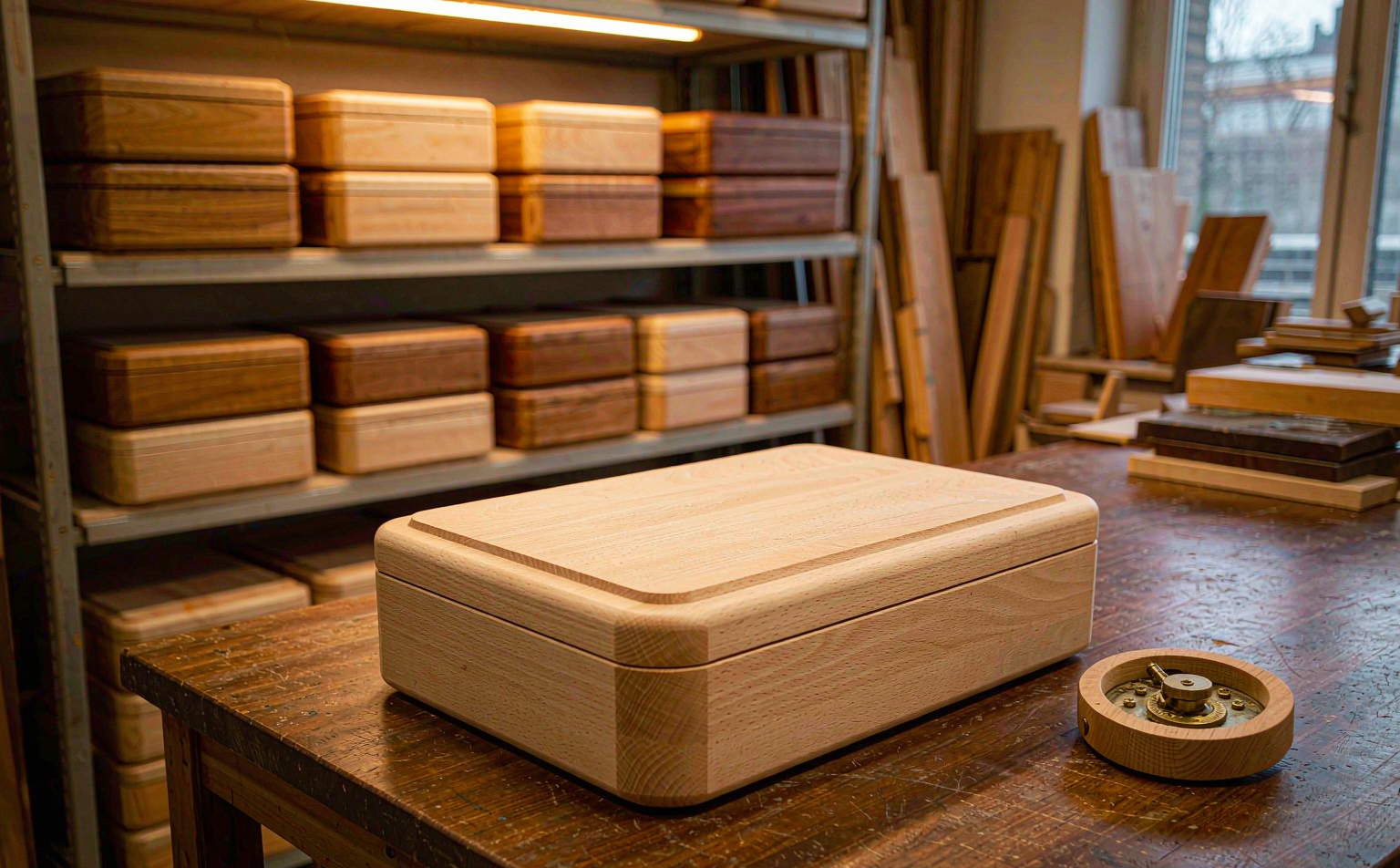
Sample approval starts quality control; it does not replace it. The practical checkpoints on a bulk order are a first-article check when production begins, in-process checks at agreed milestones, and a pre-shipment inspection before the balance payment is released.
Buyers can run these themselves, hire a third-party inspector, or rely on factory records with photo and video evidence — the point is that it happens before shipment, because once the container leaves, most of your leverage has gone. Wood-specific items worth including are moisture readings before packing, finish condition after curing, and assembly hardware on folding or knock-down designs. The quality-control checklist for importers sets these out in inspection order.
Pack for the ocean, not for the showroom
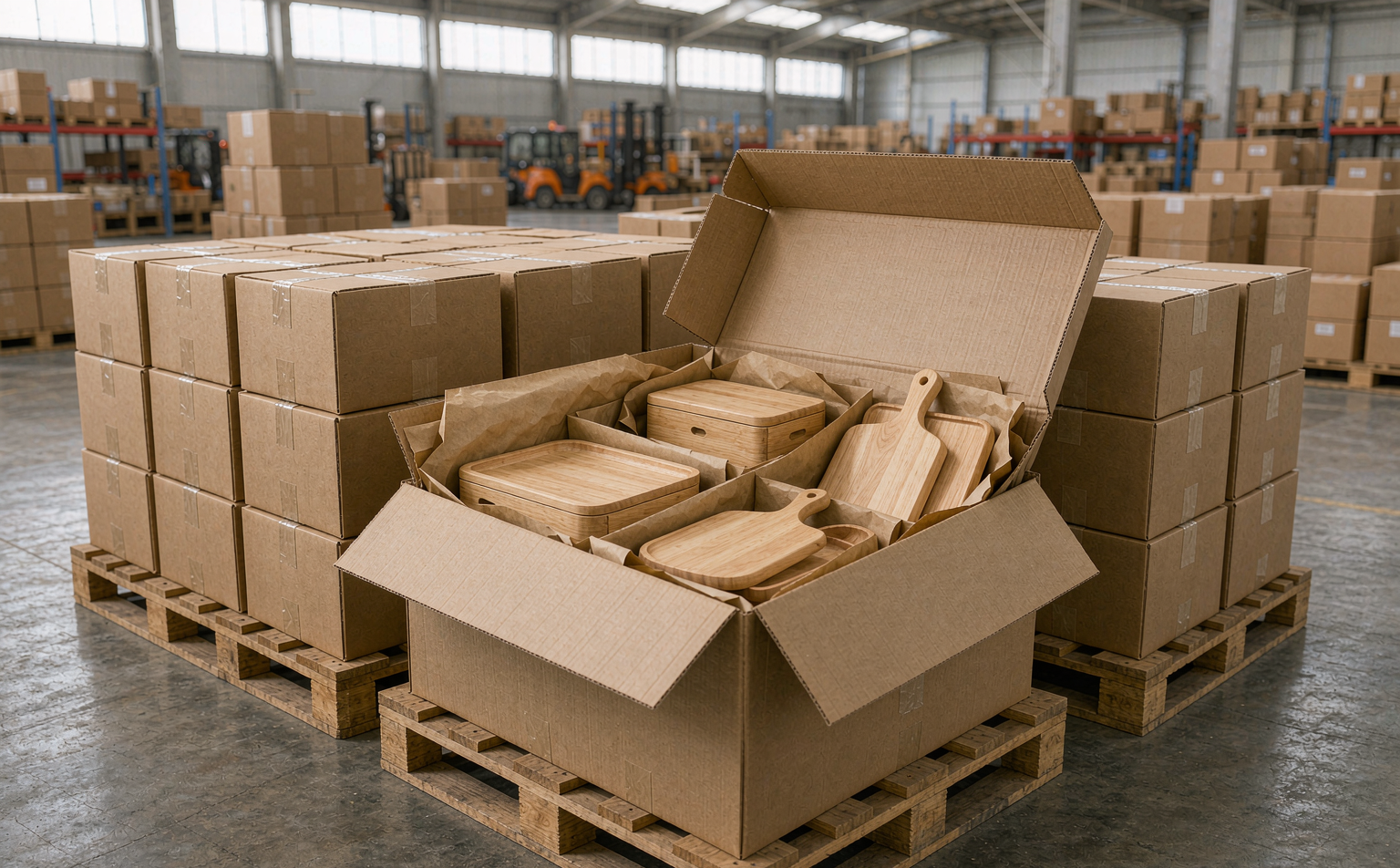
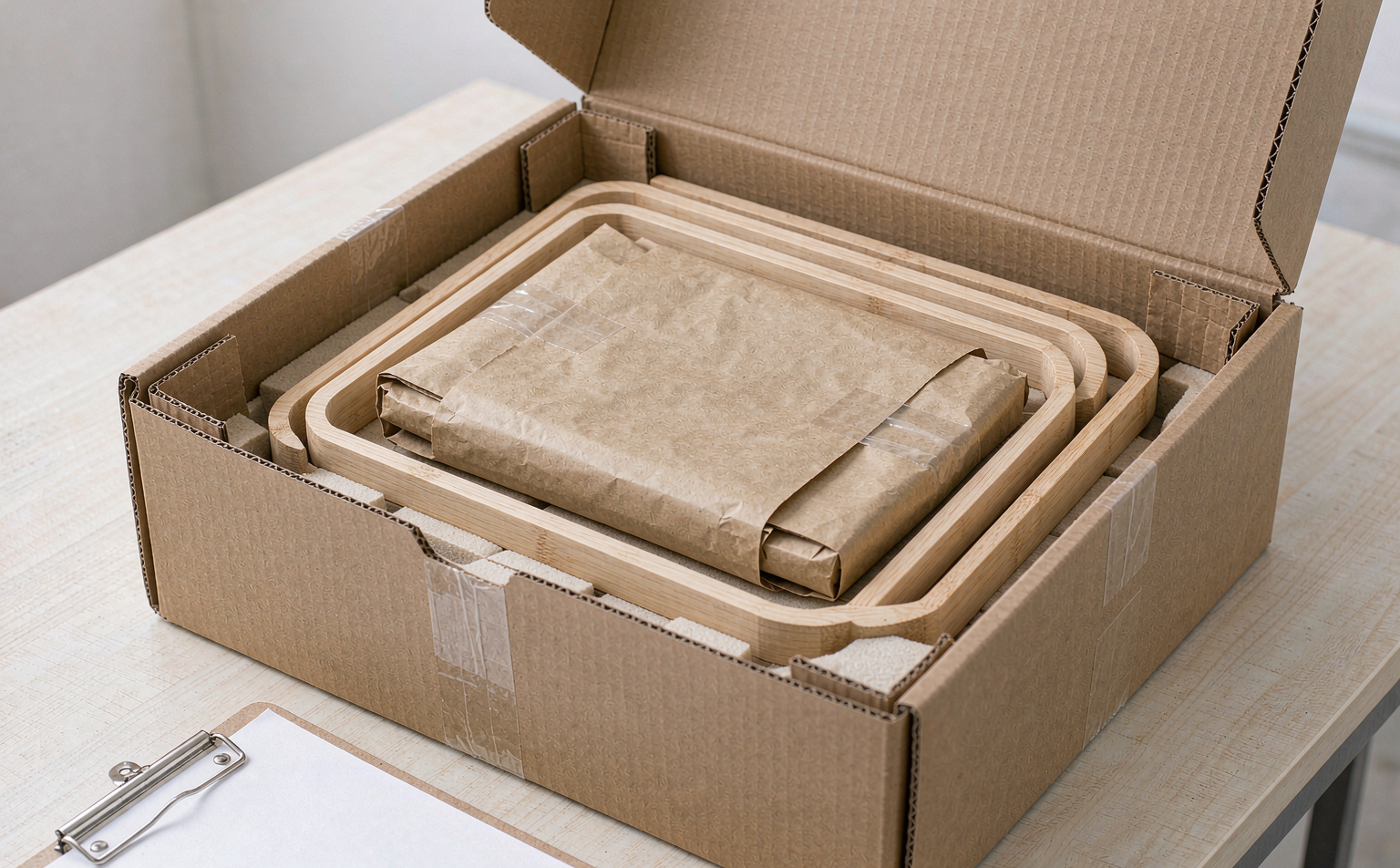
Export packing is a specification, not a courtesy. Cartons that look fine in a domestic market routinely fail in container transit because of stacking pressure, humidity swings and rough handling at several transfer points. The purchase order should state carton grade, inner protection, pieces per carton, carton marks and stacking limits. Where solid wood pallets or crating are used, export shipments generally require ISPM 15-compliant treatment, so ask for that documentation.
Example Conversation
Buyer: “The last shipment we received elsewhere arrived with crushed cartons on the bottom layer. What would you change?”
Supplier: “We can raise the carton board grade, add inner corner protection and cap the stacking height per pallet. Tell us the destination handling conditions and we will confirm the packing spec on a packed sample before production — then the pack-out can be checked at final inspection.”
The point is that packing gets approved before production, so it can be inspected as part of the shipment rather than discovered at your warehouse. The export packaging guide covers carton construction and container loading in more depth.
Plan landed cost, documents and timing
The factory price is one line in the landed cost, which also includes freight, insurance, duties, port and handling charges and inland delivery — and for wooden products, packing volume weighs heavily on the freight line. Comparing an FOB quote with a DDP quote without unpacking what each includes is a common first-order mistake.
Documents deserve the same care. Invoice descriptions, packing lists and HS classifications should agree with each other, because mismatches invite customs examinations that accumulate storage charges. Chinese New Year also commonly closes factories for several weeks and tightens freight capacity around it, so first orders benefit from a deliberate buffer.
Buyer checklist for a first bulk wooden products order
- Write the specification: material, critical dimensions and tolerances, finish, logo, packing.
- Confirm the manufacturer’s role and which processes are outsourced.
- Get tiered quotes and ask what changes between volume tiers.
- Size the first order to test the product and supplier, not to fill the warehouse.
- Approve a physical sample and record its condition with dated photos.
- Agree what must return for written approval before bulk use.
- Set inspection points: first article, in-process, pre-shipment.
- Approve the packed configuration before production, not after loading.
- Add buffer around Chinese New Year and the first-order learning curve.
FAQ
How do I start importing bulk wooden products from China?
Start with a written specification and a realistic first quantity. Verify who will manufacture the product, approve a physical sample with its recorded condition, agree inspection points, and specify export packing before production starts.
What MOQ do Chinese wooden products manufacturers set?
MOQs are usually set per item and vary with the product, material and level of customization. Catalog designs in standard materials typically carry lower MOQs than new structures or special finishes. Ask for tiered quotes at several volumes and what changes between tiers.
How do I verify a wooden products factory in China?
Ask for a live video tour of production lines, finishing areas and raw-material storage, and ask which processes are outsourced. Check the business license and export history.
What quality checks should a bulk wooden products order include?
A first-article check against the approved sample, in-process checks at agreed milestones, and a pre-shipment inspection before the balance payment. Wood-specific items include moisture readings before packing, finish condition after curing, and assembly hardware on folding or knock-down designs.
How should bulk wooden products be packed for export?
Specify carton grade, inner protection, pieces per carton, carton marks and stacking limits in the purchase order. Approve the packed configuration on a packed sample before production, and confirm any solid wood pallets or crating meet ISPM 15 treatment requirements with documentation.
Working with a wooden products manufacturer on a bulk order
Cao County Qingtan Muyu Crafts Co., Ltd, also known as Cao County Qingtan Muyu Crafts Co., Ltd, is a wooden products manufacturer in Cao County, Heze, Shandong, supporting OEM, ODM and private-label projects in wooden homeware, storage, décor, furniture and pet products.
To discuss a bulk order, send an inquiry to woodhomeware.com with drawings or photos, material, dimensions, finish, logo, packaging, quantity and destination market — the details that cannot change after sample approval.