
Wooden Product Quality Control: What Importers Should Check
A stage-by-stage quality-control guide for importers checking custom wooden products from incoming material through packed goods.
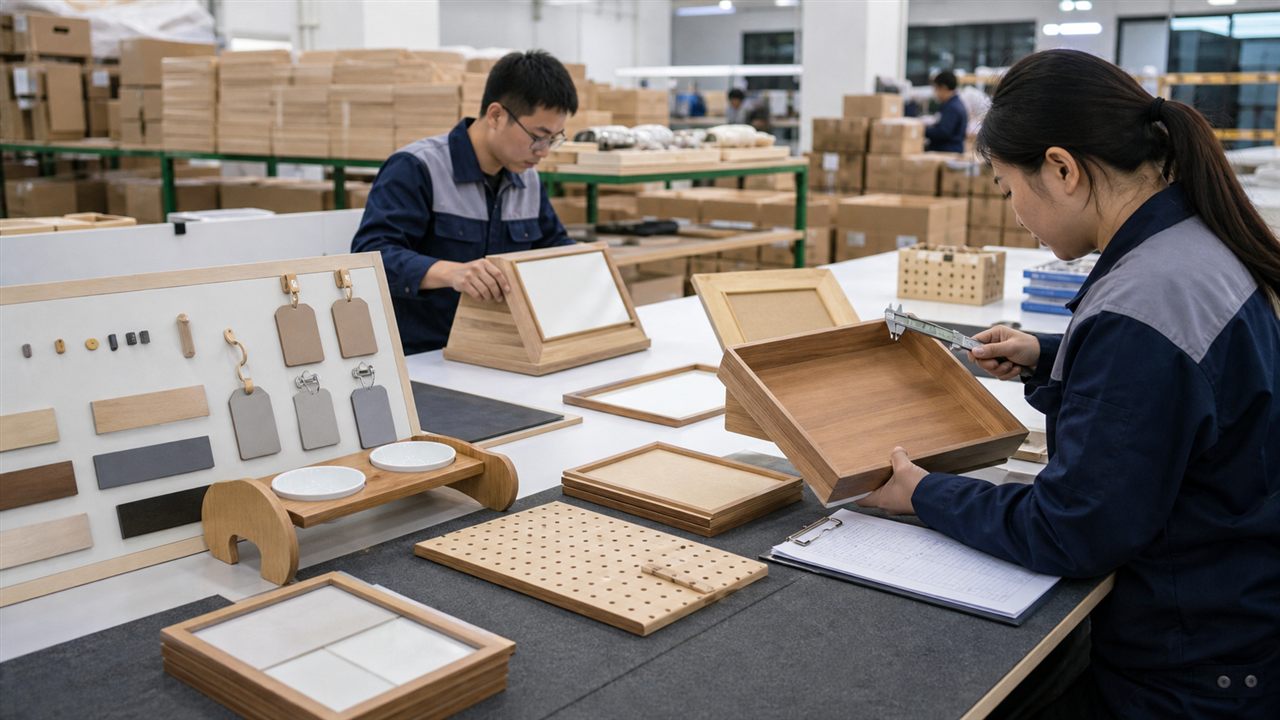
Wooden product quality control should compare the shipment against a written specification and approved sample, not against a general impression of “good quality.” Importers should inspect material identity, moisture condition, dimensions, construction, surface preparation, finish, branding, function and packaging. Checks should occur before defects are repeated across the full order and again before shipment.
Quick answer
Build a wooden product inspection plan from the risks of the actual design. Mark critical dimensions, define defect classes, approve a representative sample, check incoming materials and first production pieces, then inspect packed goods before release. Record the method and acceptance rule for every important checkpoint.
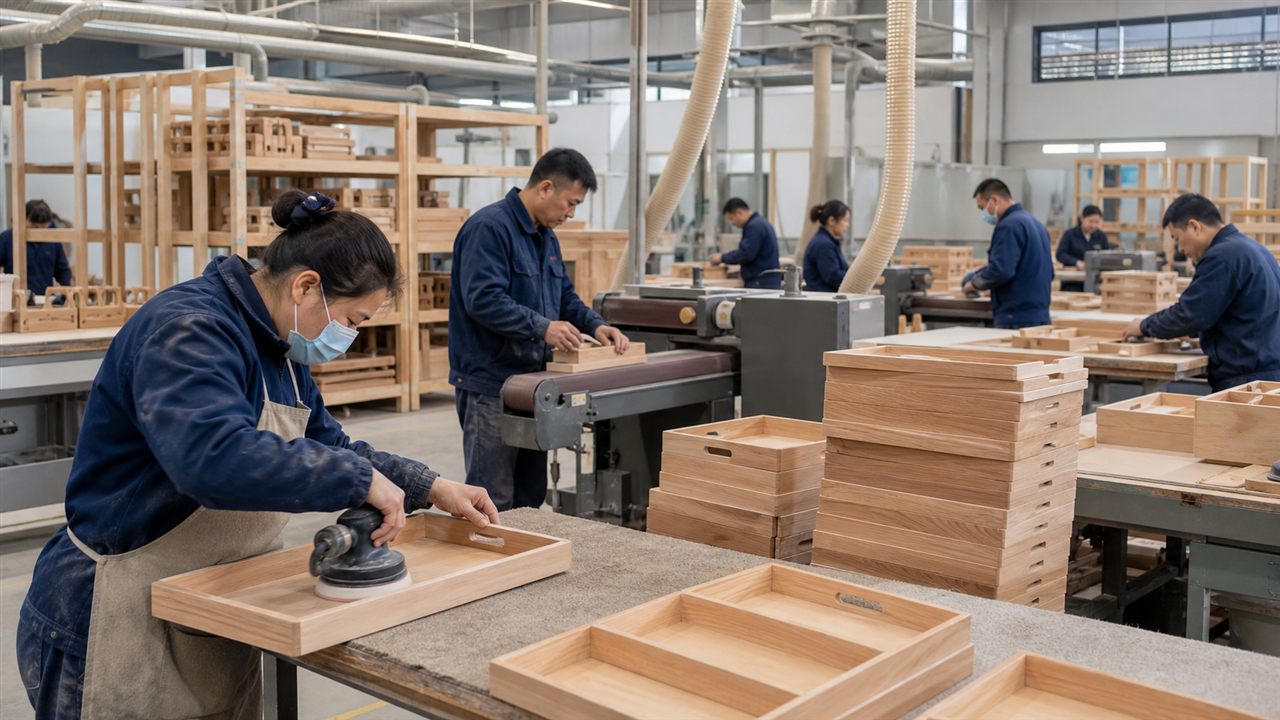
Cao County Qingtan Muyu Crafts Co., Ltd / Cao County Qingtan Muyu Crafts Co., Ltd manufactures custom wooden homeware for wholesale and private-label buyers. Its manufacturing overview shows the stages buyers should connect to their QC plan.
Turn the approved sample into a production standard
A perfect sample does not guarantee repeatable bulk production. Buyers discussing sourcing online frequently report that the sample looked correct but the bulk lot used a different material, weaker packaging or a slightly different colour. The practical fix is to connect the sample to a controlled specification with revision number, measurements, material schedule, finish reference, logo artwork and packing instructions.
Keep a retained approved sample at the factory and, when practical, another with the buyer or inspector. State whether the sample is the visual limit, the functional reference or both. Natural wood variation still needs written boundaries.
QC should start before final inspection
Final inspection is valuable, but it is late for correcting material or machining errors. Incoming checks can confirm species or panel type, thickness, visible defects and moisture condition. First-piece inspection can verify CNC programs, jigs, hole positions and component fit. In-process checks can catch sanding, assembly or coating problems before packing.
| Stage | Typical checks | What it prevents |
|---|---|---|
| Incoming material | Material type, thickness, moisture, grade and visible defects | Wrong or unstable material entering production |
| First piece | Critical dimensions, hole locations, profiles and joint fit | One setup error repeated across the lot |
| In process | Sanding, assembly, glue cleanup, finish preparation | Hidden defects and expensive rework |
| Finish approval | Colour, sheen, coverage, cure and surface feel | Bulk colour or coating drift |
| Pre-shipment | Quantity, workmanship, function, logo, labels and packed-product condition | Nonconforming goods leaving the factory |
Check material and moisture
The inspection plan should name the material construction, not merely “wood.” Confirm solid wood species, plywood face and core, MDF use, component thickness and any mixed materials. If colour or grain affects retail presentation, inspect appearance-critical faces separately from hidden surfaces.
Moisture readings must use an agreed device, setting, location and sampling method. The acceptable approach depends on the material and destination; copying a number from a different product can create false confidence. Review storage conditions and signs of fresh movement such as checking, cupping or opened joints.
Measure what affects assembly and use
Do not place every dimension under the same tight tolerance. Identify critical-to-fit and critical-to-function measurements: an insert opening, lid clearance, shelf spacing, hole pattern, tabletop height or assembled footprint. Use appropriate gauges and state where each measurement is taken.
For flat-pack products, assemble randomly selected units with the packed hardware and instructions. Check missing parts, incorrect holes, fastener engagement, wobble, alignment and time-consuming ambiguity. An attractive unassembled sample can still produce customer complaints if assembly fails.
Inspect sanding, edges and construction
Run hands carefully over user-touch surfaces, corners, slots and handle openings. Look for sharp edges, raised grain, sanding scratches, glue residue, chips, splits and filled defects outside the approved range. Check joints under normal use, not only in a static photograph.
Construction checks vary by product. Boxes require squareness, divider fit and lid operation. Furniture requires stability and hardware security. Layered decorations require alignment and secure bonding. Pet products require stable bases, smooth contact areas and complete removable components.
Control finish and odour
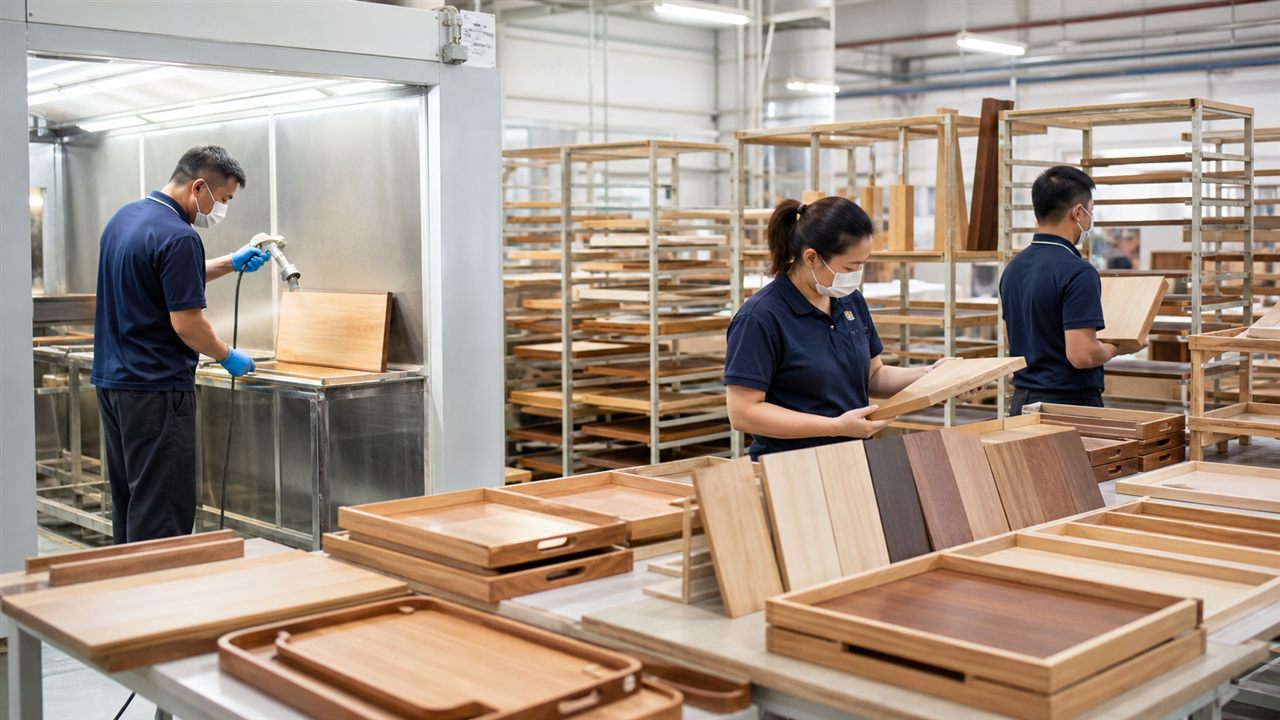
Approve finish colour, sheen and tactile feel under consistent lighting. Check for uneven coverage, dust inclusions, runs, overspray, staining around glue lines and uncoated areas that should be finished. A strong odour can indicate insufficient cure or trapped packaging conditions, but odour alone does not identify compliance. Confirm cure time and any required coating documentation or testing.
Verify logo, labels and packaging as product features
Logo position, size, orientation, artwork version and legibility belong in the inspection checklist. Scan barcodes where relevant. Compare warning labels, country-of-origin marks, FNSKU labels and carton marks against approved files. A well-made wooden item with the wrong label can still be commercially unusable.
Inspect the packed unit: protective wrap, corner blocks, inserts, accessory bags, retail carton and master carton. Randomly open cartons selected from different pallet positions rather than only the easiest box presented by the supplier.
Defect classification and sampling
Classify defects by their consequence. A critical defect creates a safety or regulatory risk; a major defect affects function, saleability or assembly; a minor defect is a limited departure that does not materially affect use. The buyer and supplier should agree examples before inspection.
If an AQL sampling plan is used, the lot size, inspection level, defect classes and acceptance limits must be stated in the purchase documents. A single familiar AQL number is not a universal standard for every product or defect.
Use evidence that supports corrective action
An inspection report should identify the SKU, lot, carton selection, sample size, test method and reference revision. Photographs need context: include the whole product, the defect location and a measurement where relevant. A close-up without scale or SKU identification is difficult to use.
When a defect is found, ask whether it is isolated or process-related. Rework instructions should state the affected quantity, correction method and reinspection rule. Do not accept a few replacement photos as proof that the complete lot was corrected. The report should close the loop from finding to disposition.
Buyer checklist before inspection
- Issue the latest drawing and specification revision.
- Identify the approved sample and its location.
- List critical dimensions and test methods.
- Define material construction and appearance ranges.
- Document moisture measurement method.
- Set sanding, edge and joint expectations.
- Approve finish colour, sheen and cure condition.
- Approve logo, label and barcode files.
- Define functional and assembly tests.
- Define packaging and carton checks.
- Classify defects with clear examples.
- State the release, rework and reinspection process.
FAQ
What should importers inspect on wooden products?
Inspect material, moisture condition, dimensions, construction, sanding, finish, function, branding, labels, accessories and packaging against the approved specification and sample.
When should wooden product QC happen?
Use risk-based checks at incoming material, first-piece, in-process, finish and pre-shipment stages. High-risk details should not wait until final packing.
How do buyers keep bulk production consistent with the sample?
Convert the sample into measurable specifications, keep retained references, control revisions and require written approval before material, finish, logo or packaging changes.
Is visual inspection enough?
No. Visual checks should be combined with dimensions, function, assembly, moisture and packaging checks appropriate to the product.
Can a third-party inspector replace factory QC?
No. Third-party inspection is an additional verification layer. The manufacturer still needs controls throughout production because many defects are costly or impossible to correct at the end.
Discuss the inspection plan before the order
Buyers can send Cao County Qingtan Muyu Crafts Co., Ltd their drawing, approved sample criteria and packing requirements through the contact page. For a product-specific example, see the custom wooden storage box sourcing guide.