What Should You Ask a Wooden Products Manufacturer Before Placing an Order?
Seventeen practical questions that help importers verify a wooden products manufacturer and turn a quotation into a controlled order.
Before placing an order, ask a wooden products manufacturer questions that reveal who will make the goods, whether the proposed material and process fit the design, how the sample becomes the bulk-production standard, and how changes, inspection, packaging and shipment will be controlled. Useful answers are specific, documented and tied to your product—not general claims about quality.
Quick answer
Ask about the legal entity, production location, similar manufacturing processes, material construction, MOQ basis, sampling, critical tolerances, moisture and finish controls, logo approval, outsourced work, packaging, inspection, change control, lead time and shipment documents. Verify important answers through documents, samples, live production evidence or inspection.
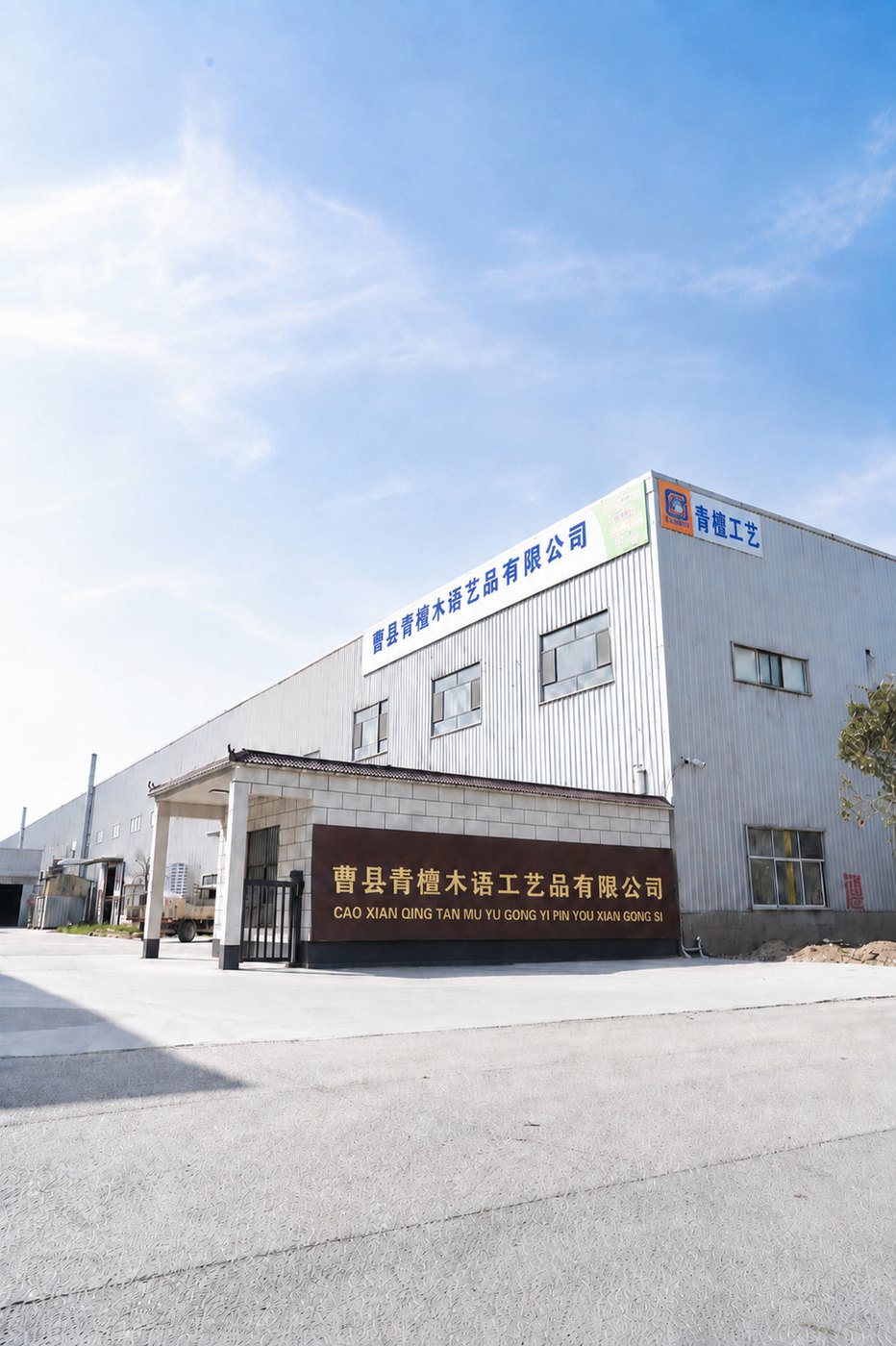
Cao County Qingtan Muyu Crafts Co., Ltd is the export brand of Cao County Qingtan Muyu Crafts Co., Ltd Buyers can use the company’s factory page as context, then ask product-specific questions before requesting a final quotation.
1. Which legal entity will contract, invoice and receive payment?
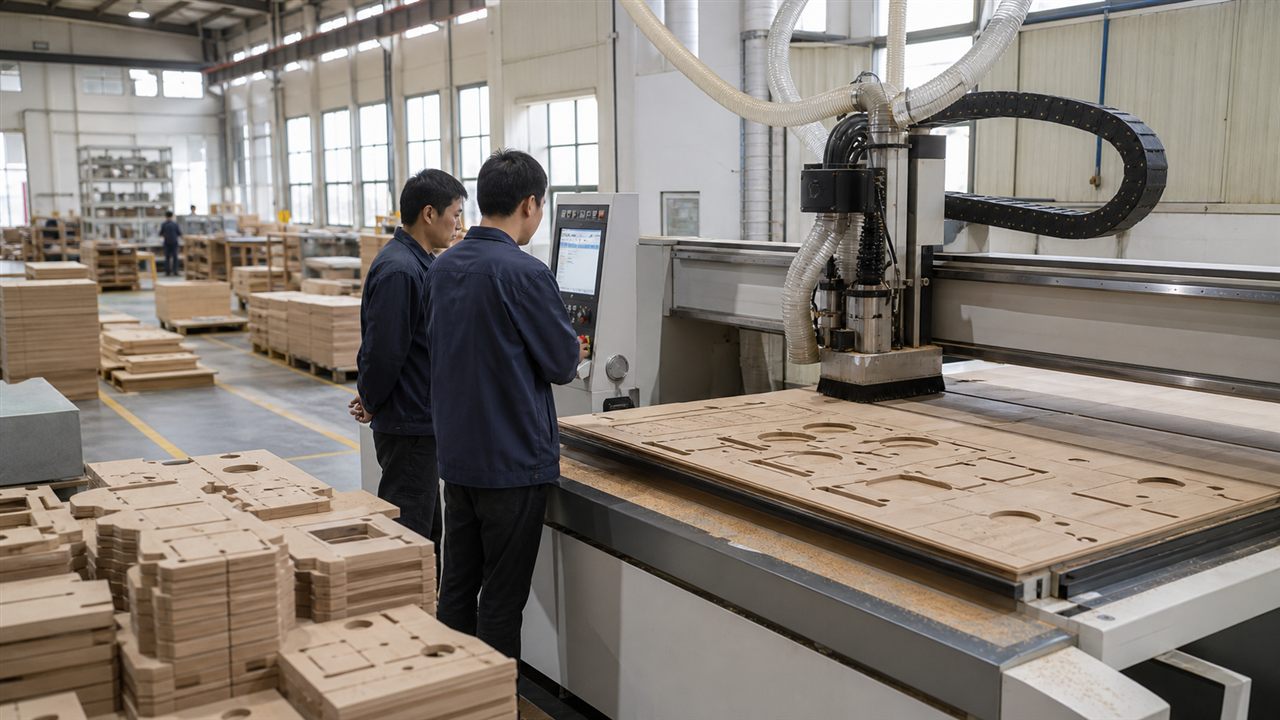
Request the full registered company name and business licence. Compare it with the quotation, purchase contract and payment beneficiary. Differences can have legitimate explanations, but they should be disclosed early and documented. Also ask where the order will physically be produced.
2. Are you the manufacturer for this product?
A supplier may manufacture the wooden body while outsourcing metal parts, printing, coatings or packaging. Outsourcing is normal in many supply chains. The important question is who selects, approves and inspects each supplier and who is responsible when a subcontracted component fails.
3. Which similar processes do you perform regularly?
Ask for evidence related to your construction: CNC routing, turning, drilling fixtures, sanding, veneering, spray finishing, laser engraving, assembly or flat-pack packing. Similar process experience is more useful than a photograph of an unrelated finished product.
4. What material construction are you quoting?
Require species, solid or engineered construction, thickness, visible faces and mixed materials. Ask what substitutions might be proposed and confirm that none will be made without written approval. For natural wood, discuss grain, knots, sapwood and colour variation.
5. What makes up the MOQ?
MOQ can be driven by raw-material purchasing, machine setup, coating batches, printing, packaging or SKU complexity. Understanding the constraint helps buyers combine variants intelligently. Qingtan Muyu publishes a typical range of 50–100 pieces per design, but every project requires specific confirmation.
6. What must be confirmed before sampling?
Ask which files and decisions are missing: dimensioned drawings, colour reference, logo artwork, hardware, packaging or destination requirements. Confirm what the sample will include and which elements may still be provisional. The site states typical sampling of 5–10 days after specifications and artwork are aligned; this is a reference, not a universal commitment.
7. How will the approved sample control bulk production?
The answer should mention retained samples, specification revisions, first-piece checks and written approval for changes. “We will make it the same” is not enough. Define which dimensions and appearance ranges are measurable and which sample is authoritative.
8. Which dimensions and tolerances are critical?
Ask the manufacturer to identify dimensions affected by tools, joints, hardware and assembly. Agree where measurements are taken and which gauges or fixtures are used. Tight tolerances should focus on fit and function rather than being copied across every noncritical dimension.
9. How do you control moisture and wood movement?
Ask how materials are conditioned and stored, which meter and setting are used, where readings are taken and how out-of-range material is handled. The method must suit the species, construction and destination. Also ask how products are protected after finishing and before packing.
10. How are sanding and finish approved?
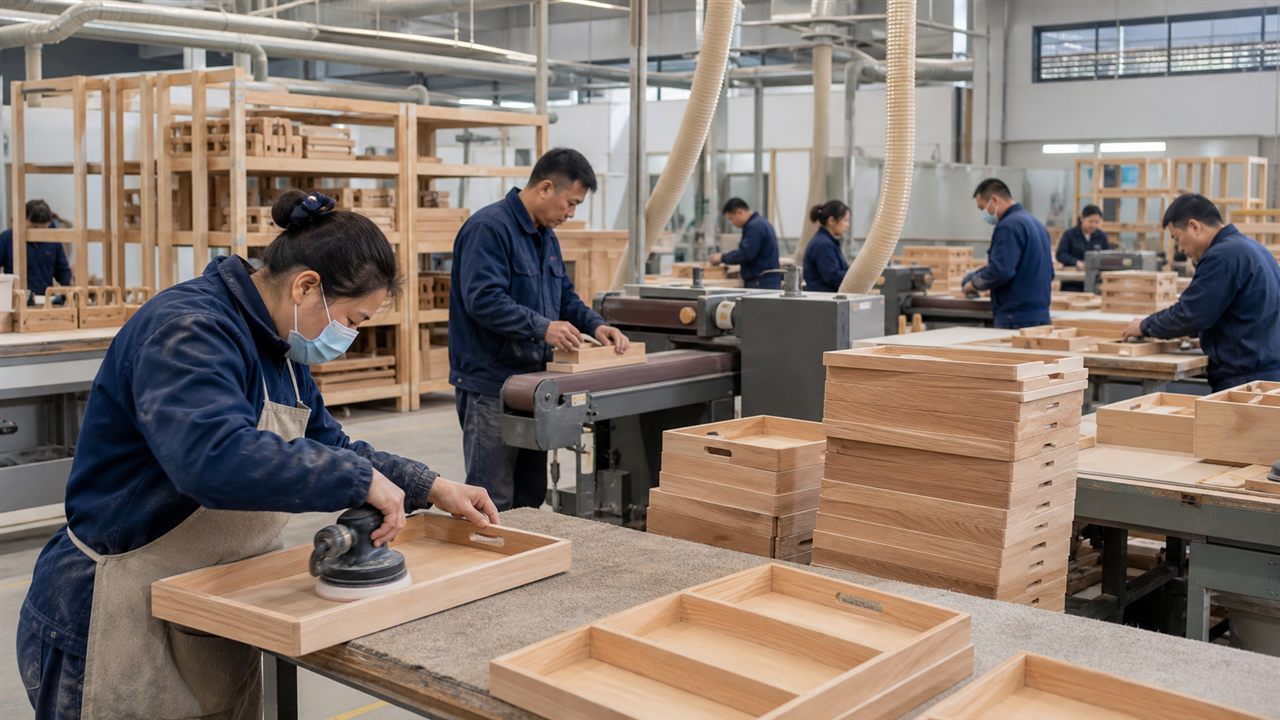
Define user-touch edges, grit or surface expectations where relevant, colour, sheen, coverage, surface feel and cure condition. Approve finish on the actual material. If documentation or finished-product tests apply, request evidence tied to the proposed coating system.
11. How will the logo be tested?
Confirm artwork format, dimensions, position, orientation and method. Ask for a test on production-representative material and finish. For laser engraving, natural grain can affect tone, so the acceptable range should be defined before bulk production.
12. What is checked during production?
Look for a sequence: incoming material, first piece, in-process assembly or sanding, finish approval and final packed-goods inspection. Ask who records results and what happens when a check fails. General phrases such as “strict QC” should lead to more specific questions.
13. Can the buyer arrange third-party inspection?
A manufacturer should be prepared to provide reasonable access to ready goods at the actual production or storage location. Agree inspection timing, notice, reference documents and handling of failed results before the purchase order.
14. How will the product be packed?
Request a pack-out drawing or photographs showing wrap, inserts, corners, accessories, unit carton and master carton. Confirm carton dimensions, gross weight, quantity, labels and palletization. Ask what testing is recommended for the sales channel.
15. What could change the lead time?
Ask for the sequence from specification confirmation through material purchasing, production, curing, inspection and shipment readiness. Identify long-lead materials, seasonal capacity, custom packaging and required approvals. A realistic schedule includes buyer response time.
16. How are changes documented?
Require one approved revision of the drawing, specification, artwork and packaging files. State that substitutions and process changes require written approval. Ask who on each side can approve changes.
17. Which shipping terms and documents are included?
Confirm the Incoterm and named place, carton and packing-list information, invoice, origin documentation and any product-specific documents. Do not treat a vague “door-to-door” quotation as a complete allocation of duties, taxes, customs and delivery risks.
How to evaluate the answers
| Strong signal | Weak signal |
|---|---|
| Answer names the material, method, record and responsible person | “No problem” without detail |
| Supplier identifies limits and asks product-specific questions | Every option is immediately promised |
| Quotation matches drawings and sample scope | Important features remain absent from the quote |
| Changes require a controlled revision | New instructions remain scattered across chats |
| Inspection is welcomed and prepared for | Access is delayed until after shipment pressure develops |
Buyer checklist before placing the order
- Verify legal, contracting and payment entities.
- Confirm the real production location.
- Review relevant processes and outsourcing.
- Lock material construction and appearance.
- Approve product, logo and packaging samples.
- Mark critical dimensions and tests.
- Confirm moisture, finish and cure controls.
- Reference controlled files in the purchase order.
- Define inspection and failed-inspection handling.
- Confirm Incoterm, documents and schedule assumptions.
FAQ
How do I verify a wooden products manufacturer in China?
Check the legal entity, payment information, production site, relevant equipment and processes, sample quality, QC records and willingness to support independent inspection.
What should I ask before paying for a sample?
Confirm what the sample includes, material and finish, dimensions, logo, packaging scope, timing, revision policy and which costs may apply to further changes.
What should be written into the purchase order?
Reference the latest drawing, material schedule, approved sample, artwork, packaging, quantity, price, Incoterm, schedule, inspection and written change-control rule.
How can I detect a vague supplier answer?
Ask for the method, evidence, responsible party and record. A credible answer normally explains limits and required inputs rather than promising every outcome immediately.
Should importers ask about packaging before ordering?
Yes. Packaging affects quotation, product design, freight, damage rate, labels and sales-channel compliance. It should be sampled and approved before bulk production is complete.
Send a structured RFQ
Use the RFQ checklist to organize these questions, then send the project details through the Cao County Qingtan Muyu Crafts Co., Ltd contact page. The goal is a quotation that can become a controlled order, not a quick price based on an incomplete photograph.