How to Develop a Custom Wooden Product from Sample to Bulk Order
A practical B2B guide to developing a custom wooden product from approval sample to controlled bulk production and export packing.
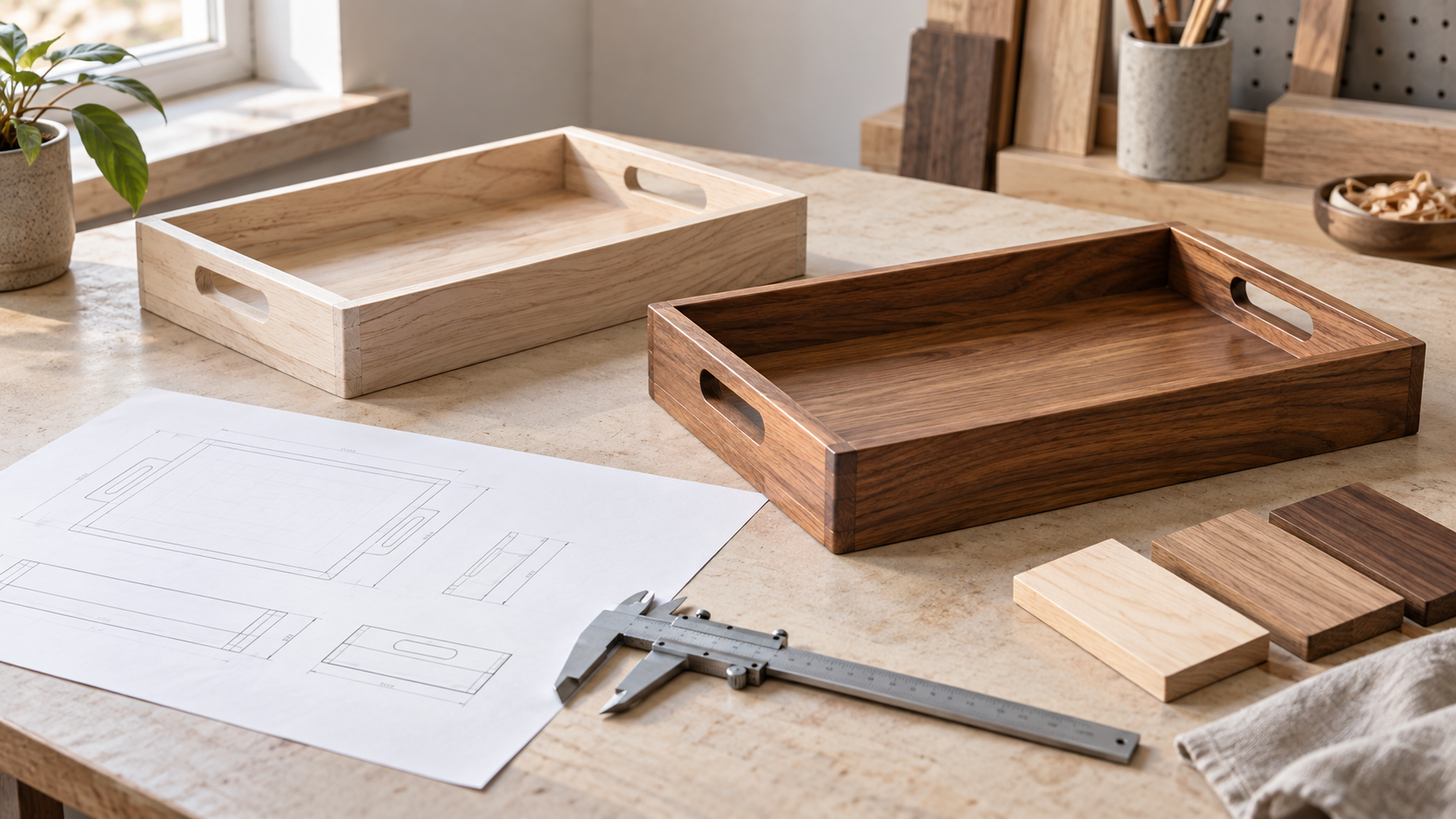
A custom wooden product becomes ready for a bulk order only when the approved sample is converted into a clear, repeatable production record. A good-looking prototype is useful, but it is not enough on its own. The buyer and manufacturer need to agree on the material, dimensions, construction, finish, acceptable natural variation, logo treatment and pack-out before the first production pieces begin.
Quick Answer
To develop a custom wooden product from sample to bulk order, start with a usable product brief, make a physical sample, record every approved detail and release bulk work only against that record. The practical sequence is: brief, feasibility review, prototype, sample correction, approved sample and specification, pre-production check, in-process control, final inspection and packaging release. Treat the approved sample as evidence of a specification, not as the specification itself.
For importers, retailers and private-label teams, that distinction prevents a familiar problem: bulk items broadly resemble the sample, while the edge, wood tone, handle fit or finish has changed. Those are not details to negotiate after cartons are closed.
What “custom wooden product development” actually covers
Custom wooden product development turns an idea, reference item or drawing into something a workshop can reproduce. It may involve a storage box, serving tray, decorative shelf, pet accessory, furniture part or branded gift item. The key questions are what the item must do, which wood and construction suit it, how the surface should feel, where a logo goes and what must stay consistent from sample to shipment.
Cao County Qingtan Muyu Crafts Co., Ltd, also known as Cao County Qingtan Muyu Crafts Co., Ltd, approaches a custom project as a sequence of decisions that have to survive production. A reference photo can explain a style. It cannot by itself define a joint, an unseen underside, a required clearance, grain direction, a finish feel or a carton arrangement. The earlier these points are resolved, the more meaningful the sample becomes.
Start with a brief that can be built
A buyer does not need a perfect engineering package to begin a conversation. But a brief should separate fixed requirements from preferences. Send the intended use, target market, reference images or physical sample, approximate outside dimensions, expected material family, finish direction, logo method, packaging idea and any product-specific restrictions. If the product must fit another item, include that item’s dimensions or a physical counterpart where practical.
Then ask the manufacturer to identify what remains open. For a wooden organiser, that may include wall thickness, base construction and whether dividers are fixed. For a small stool, it may include load-bearing joinery and hardware. For a gift box, it may include hinge position, interior clearance and how the lid aligns after finishing. This is not unnecessary paperwork; it exposes decisions a photo cannot make.
Give the supplier a controlled reference
Use one named drawing or revision folder rather than sending a trail of conflicting chat images. Mark the “latest” reference clearly. If a dimension is critical, label it as critical. If a surface variation is acceptable, say so in writing. This lets the supplier ask the right feasibility questions before material is cut.
Choose material and construction for the real use
Wood is not a uniform sheet material. Grain, color and density can vary even within the same species, so natural character must match the buyer’s visual standard. A light clear finish may make tonal variation more visible; a dark stain can change how grain reads. A wide solid-wood panel also needs a construction approach that recognizes seasonal movement.
The material discussion should also include where the product will live. Is it decorative, handled often, exposed to kitchen humidity, intended for food contact, or packed in a set? The answer influences species selection, edge treatment, glue-up, finishing and packaging. Buyers can use the site’s wood-materials guide for custom products as a starting point, then tie the choice back to the actual item.
Make a sample that answers production questions
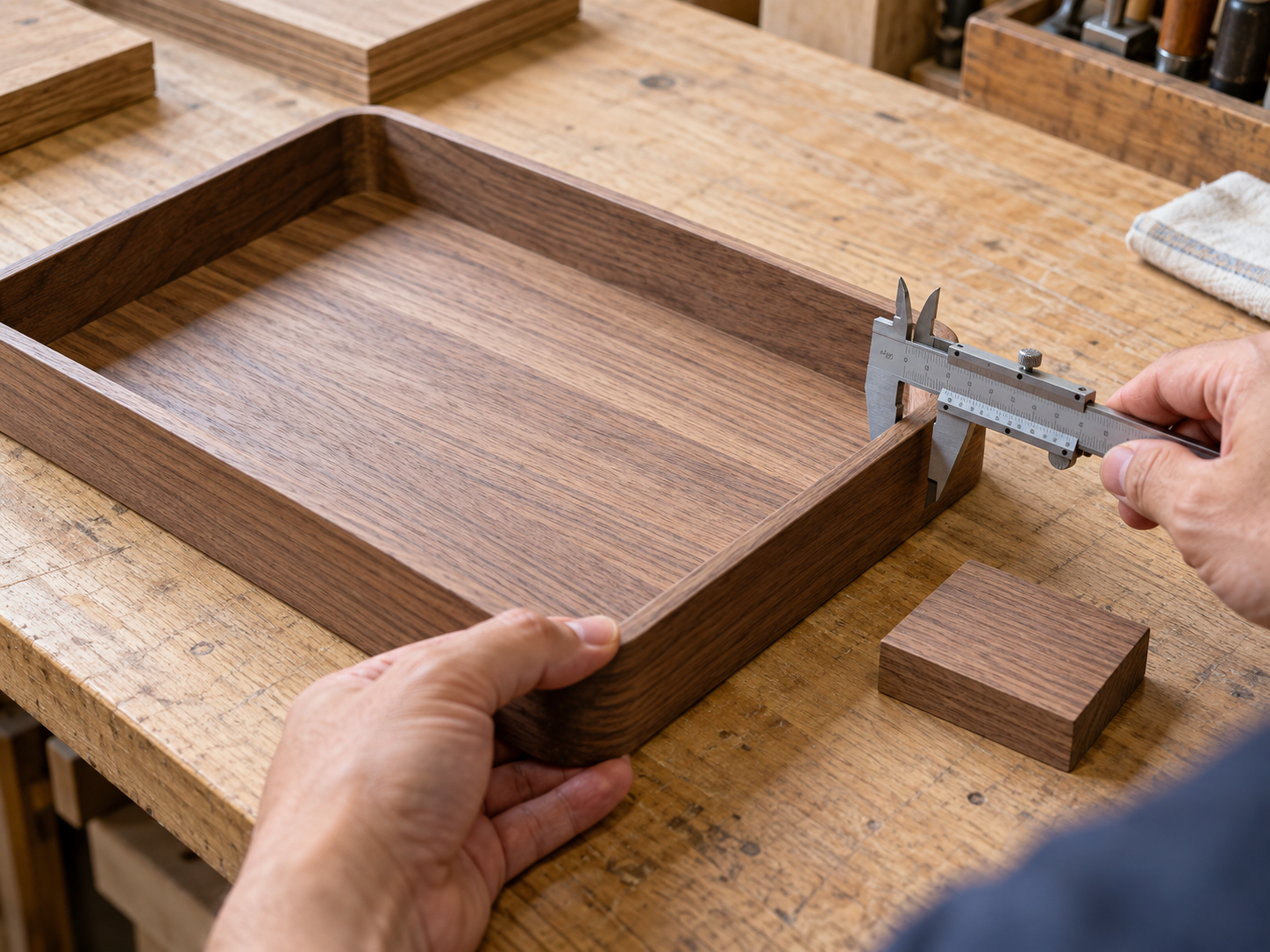
A first prototype tests proportions and function. An approval sample should go further: it should show the intended material, construction, surface treatment, logo position and relevant packing approach as closely as practical. If a detail cannot be represented, document it and arrange a focused follow-up check.
Inspect the sample under ordinary light as well as product photography light. Look at both faces, corners, bottoms and joined areas. Open and close moving parts repeatedly. Put the intended contents into the product when fit matters. Compare a logo against the supplied artwork. For a natural material, discuss what is normal variation and what should be rejected. A single attractive face should not conceal an unfinished underside or an uncomfortable edge.
Turn comments into decisions
“Make it nicer” is difficult to reproduce. “Round the top edge to the approved sample feel, keep the inside base flush, use the approved medium-brown finish and place the mark centred on the underside” is actionable. Every requested change should lead to one of three outcomes: a revised sample, a revised drawing or a written acceptance note. Once a new version is approved, retire the old reference so it cannot quietly return to the line.
Build the bulk-production record before production starts
The most useful output of sampling is a compact production record. It does not need to be complicated, but it should capture the details that define the approved item. Pair photos of the accepted sample with the product specification. Include:
- product name, revision and expected use;
- outside and functional dimensions, plus any stated tolerance requirements;
- wood species or approved material description, construction and visible grain expectations;
- edge profile, sanding expectation, finish name or sample reference and areas that must remain smooth;
- logo file, location, orientation, size and method;
- hardware, inserts, accessories and assembly sequence where relevant;
- individual packaging, protective components, carton arrangement and shipping marks supplied by the buyer.
It should also state the difference between a critical defect and allowable natural character. The manufacturer has a release target, and the buyer has something tangible to inspect against. Our custom wooden product RFQ checklist can help teams structure the information before confirming an order.
Why the pre-production check matters
Before a factory proceeds through the full order, compare the first production output to the approved sample and record. This catches changes introduced by batch material, machining setup, assembly fixtures or finishing sequence. Check whether the product is comfortable in hand, parts meet cleanly and the agreed surface appearance is being achieved.
Do not use a digital mock-up as a substitute for a physical check when color, tactile feel, wood grain or fit are central. Digital files are helpful for layout and logo placement. They cannot fully show how a coating sits on a particular grain pattern, how an edge feels after sanding or how a packed set resists rubbing.
Control the details while the order is being made
Woodworking has stages: material selection and conditioning, cutting or CNC work, shaping, sanding, assembly, surface treatment, logo application and packing. Controls should follow the risk. Earlier checks matter for dimensions that would be difficult to correct after assembly; surface and logo checks matter before items are packed.
For a buyer, a useful production conversation is specific. Ask how the reference sample will be kept available, how the approved logo is controlled, which features are checked before finishing, and how mixed components will remain correctly paired. For broader inspection points, see what importers should check for wooden product quality. The goal is not to prescribe a factory’s every movement. It is to make sure the agreed product is being compared against an agreed standard.
Approve packaging as part of the product
Packaging is not an afterthought for wood. A clean finished surface can mark if pieces rub in transit; protruding corners and handles may need different protection than flat boards. If the product contains separate pieces, confirm how the set is identified and kept together. If the buyer requires an insert, label or retail box, check it with the actual product rather than approving it in isolation.
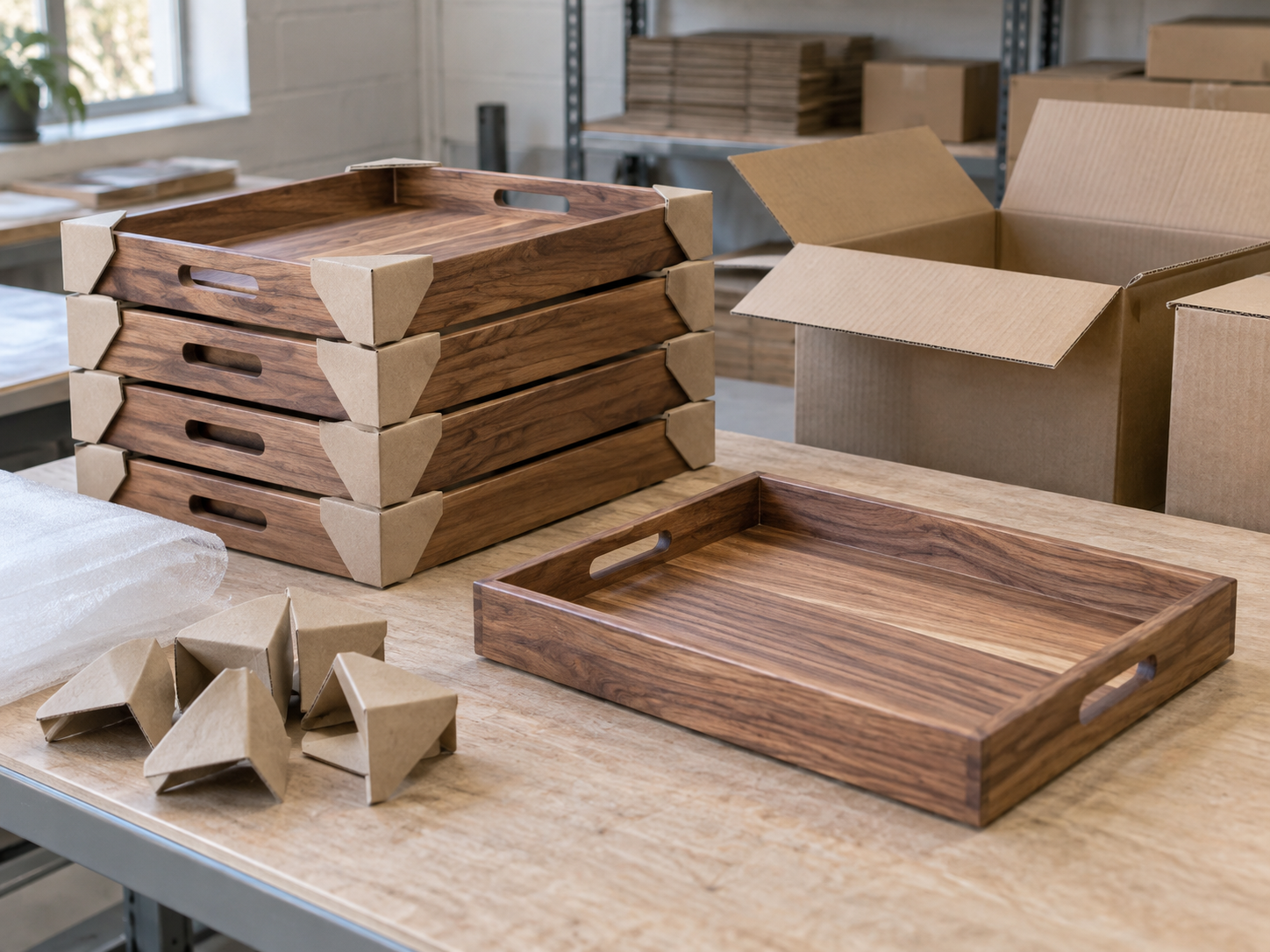
The wooden product packaging guide for importers explains the questions to resolve before shipment. For a custom project, add the approved pack-out to the product record and retain a reference image of the completed arrangement.
Buyer checklist: release only when these points are clear
- One current product revision is identified and older references are closed.
- The approved sample is linked to the intended material, construction and finish.
- Critical dimensions, fit requirements and logo placement are written down.
- Natural wood variation that is acceptable has been discussed; unacceptable defects are named.
- The reference sample and specification are available for the production comparison.
- All hardware, inserts and set components have an approved version.
- The packaging protects the actual finished product and keeps sets correctly matched.
- The final inspection point and required shipping information are understood before the goods are sealed.
FAQ
How do I develop a custom wooden product from a sample?
Send the reference sample or clear product brief, have the manufacturer assess material and construction, approve a physical sample, and convert the accepted details into a controlled specification before authorizing bulk production.
What should I approve on a wooden product sample?
Approve the relevant material, dimensions, construction, edge feel, sanding, finish, logo, fit, hardware and packaging presentation. Also define which natural grain and color variations are acceptable.
How can I make sure a bulk order matches the approved sample?
Link the sample to a written production record, compare first production output against it, and use that same record for in-process and final checks. A sample without documented requirements leaves too much open to interpretation.
Can a photo be used instead of a physical wooden sample?
A photo is helpful for communicating style, but it cannot reliably define tactile finish, wood grain, dimensional fit, construction or packing protection. Use a physical approval sample where those details matter.
What information should be locked before a custom wooden bulk order?
Lock the current product revision, material, dimensions, construction, finish, logo files and placement, hardware, approved sample reference, packaging arrangement and inspection criteria before the bulk release.
Bring the sample and the bulk order together
The handoff from development to production is where many avoidable issues begin. A carefully approved sample is valuable only when its decisions are carried forward in a form that production and inspection can use. If you are developing a wooden storage item, décor piece, furniture component, pet product or branded gift, send Cao County Qingtan Muyu Crafts Co., Ltd your product brief or reference item. We can help turn the questions around material, construction, finish, branding and packing into a practical development route for your team.