Wooden Cat Tree Manufacturer: A Sourcing Guide for Private Label Brands
Private-label pet brands are moving upmarket, and the wooden cat tree is where furniture looks meet real engineering. Unlike a carpeted panel tower, a wooden cat tree is a load-bearing structure: base, platforms, connectors, scratching surface, and a carton that has to survive freight. Supplier selection decides returns, reviews, and repeat orders. This guide walks […]
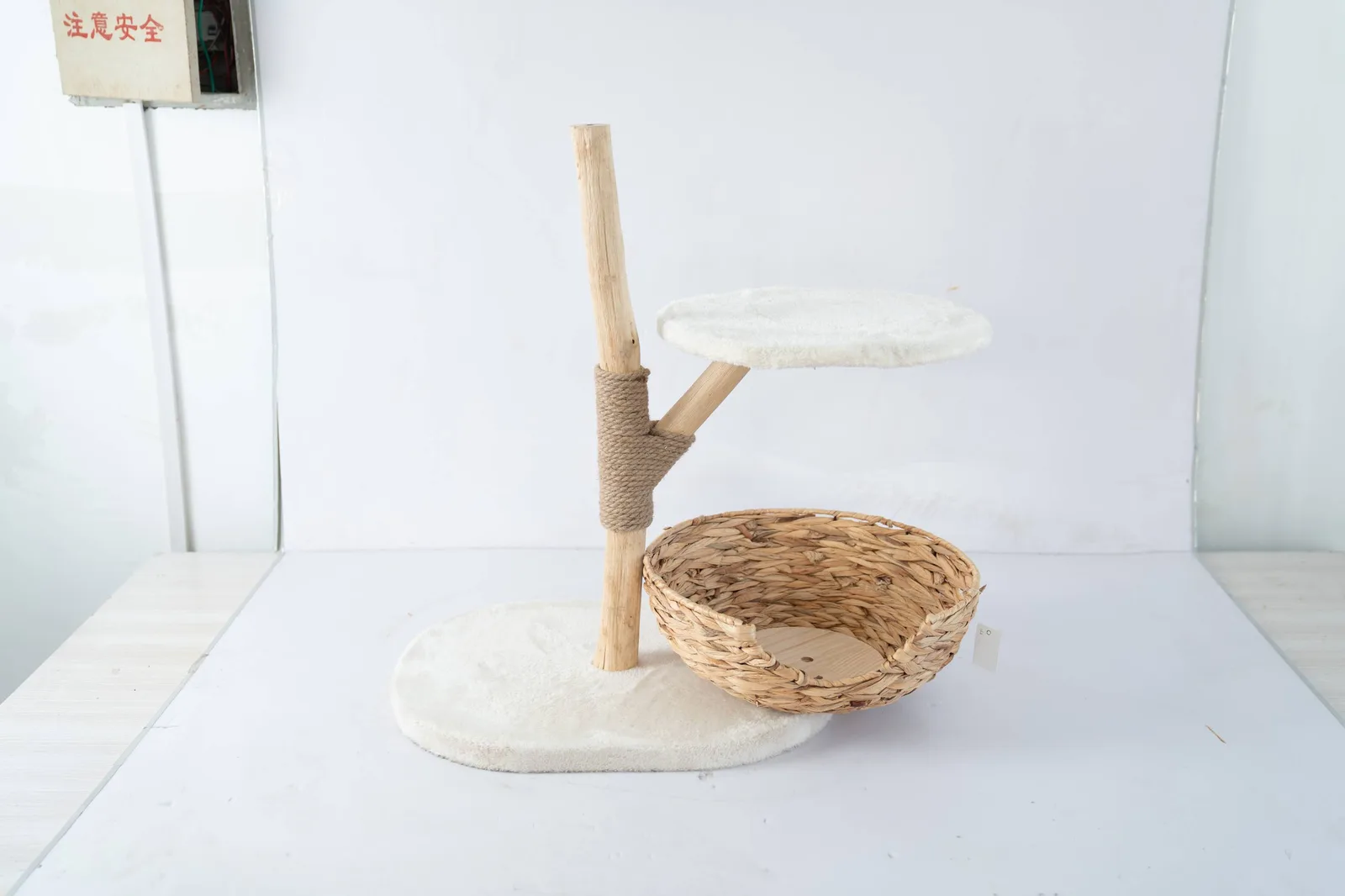
Private-label pet brands are moving upmarket, and the wooden cat tree is where furniture looks meet real engineering. Unlike a carpeted panel tower, a wooden cat tree is a load-bearing structure: base, platforms, connectors, scratching surface, and a carton that has to survive freight. Supplier selection decides returns, reviews, and repeat orders. This guide walks private-label buyers through what to specify with a wooden cat tree manufacturer — stability, platform size, connectors, scratching material, assembly, and packaging — so the product matches the listing. For the wider category, our private-label wooden pet products guide covers the full range.
Why a wooden cat tree is a different sourcing problem
Most cat trees are engineered board wrapped in carpet, and their failure modes are well documented: the board moves with moisture, carpet traps debris, and the piece reads as a pet accessory rather than furniture. Solid wood resists that moisture movement, takes a repairable finish, and photographs like furniture a brand can put its name on. The trade-off is structure decisions — species, section thickness, joinery, base geometry — that decide whether the tree wobbles after a few months. For a private-label brand the frame is where margin and reviews are won or lost, because stability and assembly failures are the returns that hurt most. Our wood materials guide breaks down species, and the moisture discipline that prevents cracking and warping in other wooden goods applies to a tall tree.
Structural stability starts at the base
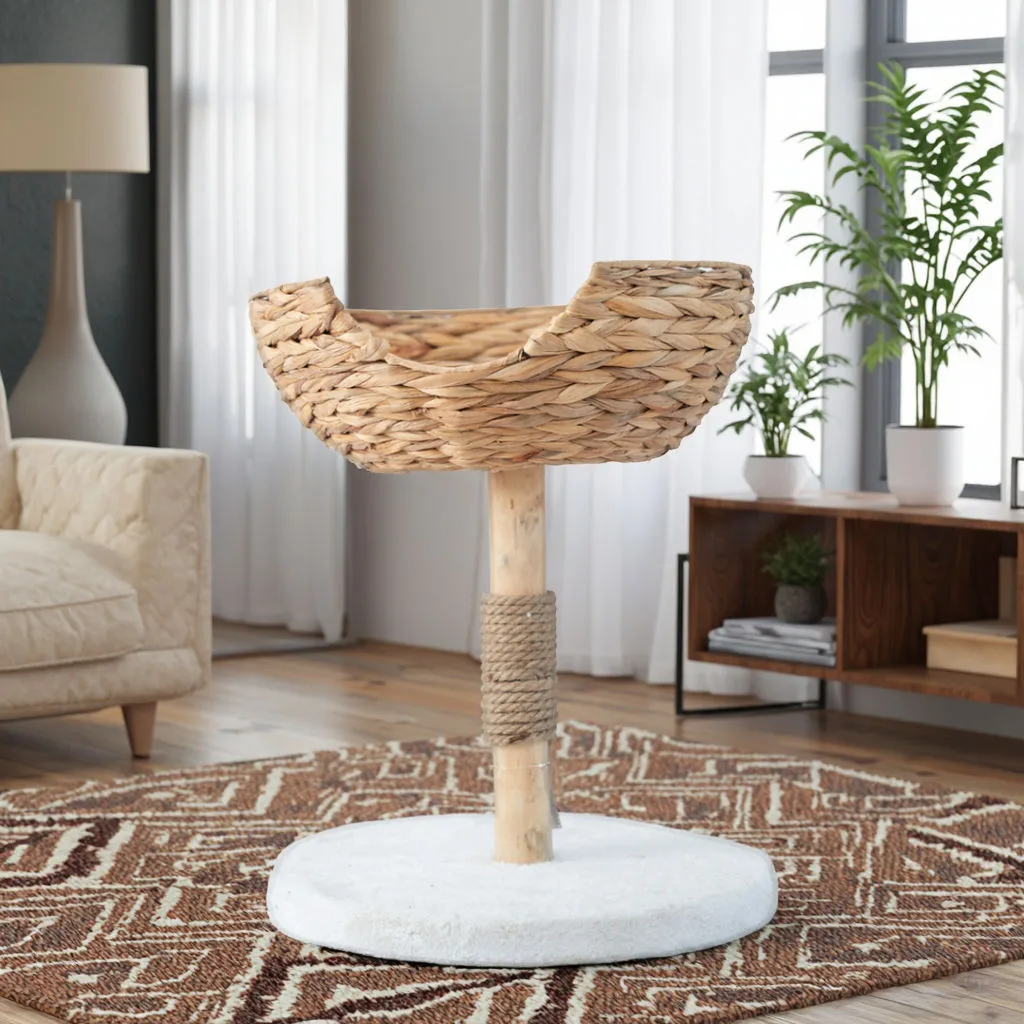
Wobble is the number-one complaint in owner discussions, and it traces to one ratio above all: base width relative to height. A tall tree on a narrow footprint will sway however thick the posts are, because the lever arm works against you. Specify the tallest SKU first, then work backward — a wider or weighted base, a lower center of gravity, or an added center leg costs less than refunds and a damaged review score. Have the manufacturer validate each SKU at your target animal weight on the floor it will sit on (carpet versus hard floor), and supply an anti-tip strap or wall-anchor option; even a solid-feeling tree can tip if a large cat hits the top perch at the wrong angle. A natural-wood climbing tree with a broad plinth is the shape to start from, and moisture control keeps joints tight over time.
Example Conversation
Buyer: We want a tall, slim tree for small apartments. Will it wobble?
Supplier: Height is fine if we widen or weight the base and keep the center of gravity low. We validate each SKU at your target weight, on carpet and hard floor, and include an anti-tip strap. If the silhouette forces a narrow footprint, we will say so before tooling.
Buyer: Can we state a real stability claim?
Supplier: Yes — per SKU, with the test condition documented, so box and listing agree.
Why this matters: Stability is decided at the base, not the top. Fixing the footprint on paper is cheaper than after the first container.
Platform dimensions and spacing for your market
“Cat size” is relative. A platform for a 4 kg domestic cat is wrong for a 9 kg Maine Coon, and multi-cat homes add a second problem: two cats competing for one top perch. Size to the animals you actually sell to, then set three things on the drawing — platform area big enough to stretch out, vertical spacing an older or less agile cat can climb, and at least two resting zones at different heights. A common owner-guide reference is roughly 30–40 cm between levels; treat it as a starting point, not a spec to copy. Post diameter matters too: thicker posts let a large cat get a full grip. Ask for a dimension drawing before sampling, because changing size after tooling costs far more. The same logic applies to a wooden cat castle or a hanging cat hammock.
Connectors and hardware: the hidden failure point
A wooden cat tree lives or dies at its joints. Screws into end grain loosen with repeated jumping; plastic cam connectors crack; hole positions that drift between sample and bulk leave panels misaligned and the structure racking. Ask what holds each joint: metal threaded inserts or bolted corner blocks outlast wood screws, and metal brackets beat plastic on a load-bearing perch. Then ask how hole position is controlled across a run — a caliper check of sample versus production parts catches drift before it becomes returns. Our importer QC checklist turns that into a repeatable check. For flat-pack, hidden joinery versus exposed hardware is a trade-off to resolve at design review, not on the line.
Example Conversation
Buyer: Our samples were solid but the first bulk order racks. What changed?
Supplier: Usually hole-position drift or screws into end grain. We use threaded metal inserts at structural joints and caliper-check positions sample versus bulk, so the tenth unit assembles like the first.
Buyer: And if a customer over-tightens a screw?
Supplier: Metal inserts take repeated assembly without stripping; we mark torque values on the hardware pouch for the two or three joints that matter.
Why this matters: Connectors are invisible in the listing photo and the first thing to fail in a living room. Specifying them up front prevents the “wobbly after a month” review.
Scratching materials: sisal, jute, and post diameter
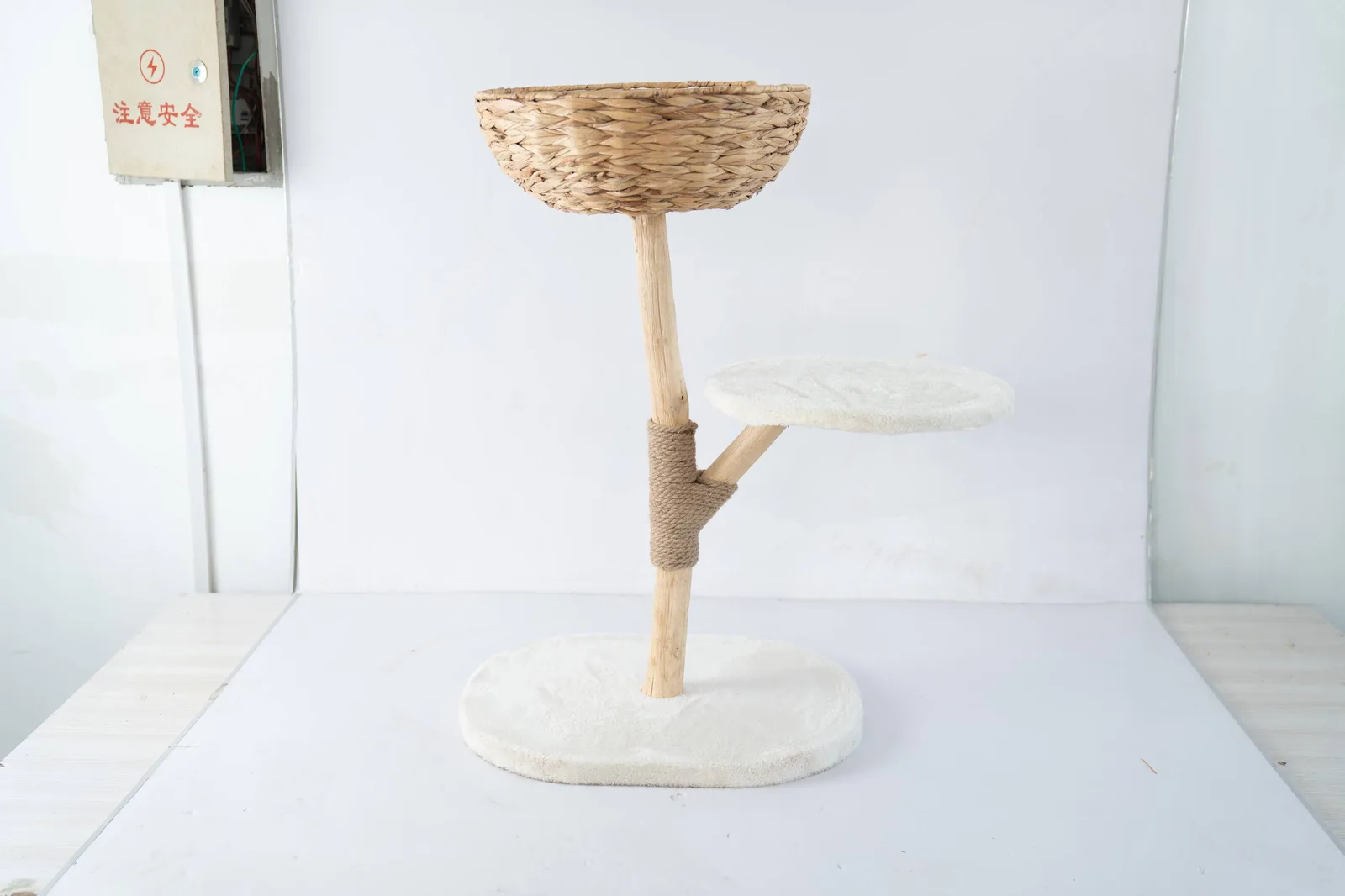
The scratching surface drives both cat satisfaction and product life. Sisal rope is the reference material: cats like the texture, it wears slowly, and it re-wraps when frayed, turning a worn post from a return into a maintenance item. Jute is softer and wears faster; carpet traps debris and is hardest to clean. Specify sisal on the main posts, confirm a pet-safe adhesive and locked wrap ends so the rope cannot unravel into a swallowing hazard, and check post diameter against your largest target cat — thin posts flex under a full-body scratch. A replaceable post gives you a re-order line. The same thinking applies to a woven cat bed or the wooden cat sofa in your range.
Example Conversation
Buyer: We see “rope unraveled after two weeks” reviews, and the posts feel thin for big cats.
Supplier: We spec sisal with a pet-safe adhesive, lock both wrap ends, and offer a thicker post for large breeds. The factory wrap stays tight in transit.
Buyer: Can owners replace a worn post?
Supplier: Yes — re-wrappable or replaceable posts keep the tree in use and add an accessory SKU.
Why this matters: Sisal specification is the difference between a maintenance note and a one-star review, and post diameter decides whether large cats use the tree at all.
Assembly instructions that prevent returns
An owner who stalls on step three will return the tree however good the wood is. Assembly is a product feature. Specify a multi-language pictorial sheet, a numbered hardware sequence — bag 1 for step 1, not one pouch of mixed fasteners — torque values on structural joints, a “check before you start” panel marking each board’s show face, and a QR code linking to a short assembly video. Labeled parts consistently cut assembly complaints; heavy multi-level units are a two-person job, so say so on the carton. None of this needs new tooling, and it costs far less than assembly-related returns. Put every item into your brief with our custom wood product RFQ checklist.
Transport packaging and private-label readiness
For a private-label brand the carton is part of the product. Flat-pack cuts freight and warehouse volume, but it is not universal: factory-wrapped curved sisal columns never re-wrap as tightly at home, floor-to-ceiling tension rods are easier to calibrate assembled, premium SKUs may sell on unboxing, and hidden joinery forces exposed hardware. Decide format at design review, SKU by SKU. For flat-pack, specify double-wall cartons for heavier boards, drop-tested mail-order protection, corner and edge protection, a part-identification sheet, and your artwork, hangtag, and barcode on the box; neutral packaging matters if you sell through retailers. Ask how batches stay consistent so the second order matches the first. Our packaging guide covers transit protection, and our bulk logo QC guide covers brand-mark consistency across reorders.
Example Conversation
Buyer: We are a private-label brand; we need our logo and a retail-ready box.
Supplier: We print your carton artwork and hangtag, add the barcode and a multi-language assembly sheet, and ship flat-pack with drop-tested protection. Neutral packaging is available too.
Buyer: And consistency across reorders?
Supplier: Standardized materials, controlled hole positions, and a pre-shipment check keep each batch uniform, so the second container looks like the first.
Why this matters: Packaging and batch consistency let a small brand scale without “looks different from the photo” complaints.
From sample to scaled production
De-risk the launch before a full run. Approve a physical sample against your drawing — footprint and stability, platform dimensions, joint detail, sisal wrap and post diameter, assembly from the actual sheet, and a drop test on the packed carton — then lock the spec. Our guide to approving wooden product samples makes that repeatable. Bring a complete brief — target market and animal sizes, height and footprint, rated load, connector class, sisal specification, assembly languages, packaging format, branding — and a wooden cat tree manufacturer can move you from drawing to shelf with fewer surprises. See our guide to sourcing custom wooden pet furniture for the supplier-qualification steps around it.
FAQ
What makes a wooden cat tree stable?
Base width relative to height is the best predictor. Specify a wide or weighted base, a low center of gravity, and an anti-tip strap or wall anchor, and have the manufacturer validate each SKU at your target animal weight on the floor types you sell into. A taller silhouette needs a bigger footprint, not thicker posts alone.
What platform dimensions work for large cats?
Size to the animals you sell to: platforms big enough to stretch out, roughly 30–40 cm between levels as a starting reference, and at least two resting zones at different heights for multi-cat homes. Post diameter should allow a full grip. Ask for a dimension drawing before sampling.
Which connectors hold up best in flat-pack cat trees?
Metal threaded inserts or bolted corner blocks outlast screws into end grain, and metal brackets beat plastic connectors. Ask how hole positions are controlled and caliper-check sample versus bulk. Mark torque values on structural joints so owners do not strip them.
Is sisal or carpet better for scratching posts?
Sisal rope is the reference: durable, re-wrappable, and preferred by cats. Jute is softer and wears faster; carpet traps debris and is hardest to clean. Confirm a pet-safe adhesive, locked wrap ends, and a post diameter sized for your largest cat.
Should a wooden cat tree ship flat-pack or assembled?
Flat-pack cuts freight and warehouse volume for most towers, but factory-wrapped curved sisal columns, tension rods, premium unboxing SKUs, and hidden-joinery designs can justify assembled shipping. Decide per SKU, and specify double-wall cartons, drop-tested protection, labeled hardware bags, and pictorial instructions either way.
A wooden cat tree is a load-bearing furniture product, not a pet accessory, and the manufacturer you choose decides whether it delights or gets returned. Specify the base, platform size, connectors, sisal, assembly, and packaging up front, validate with samples, and you launch a SKU your listing can stand behind. Talk to our team about OEM and private-label options via our contact page.