How to Choose a Wooden Tray Manufacturer in China
A buyer-focused framework for evaluating wooden tray materials, construction, finishes, logo control, samples, bulk QC and export packaging in China.
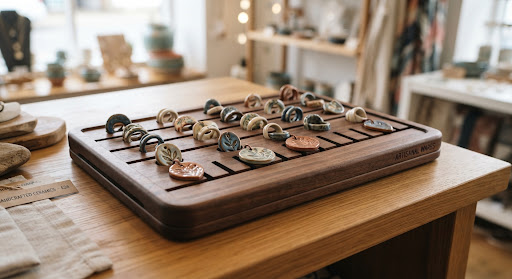
A suitable wooden tray manufacturer in China should be able to translate the tray’s intended use into measurable material, construction, finish, branding and packaging controls. Buyers should evaluate more than a catalogue photo or sample appearance. The important question is whether the supplier can repeat the approved flatness, joints, handles, surface quality, logo and pack-out across the bulk order.
Quick answer
Choose a wooden tray manufacturer by sending the same dimensioned brief to several qualified suppliers and comparing their answers about material construction, moisture control, machining, joint design, finishing, logo testing, samples, bulk inspection and export packaging. Ask for a physical sample made from the proposed material and finish. Approve it together with controlled drawings and acceptance criteria, then verify first production pieces and packed goods before shipment.
Cao County Qingtan Muyu Crafts Co., Ltd, works as a custom wooden products factory for overseas importers, wholesalers, brand owners and retail buyers. The company’s broader wooden homeware range shows relevant experience in wood selection, CNC machining, sanding, assembly, finishing, branding and export packing.
Define the tray before comparing factories
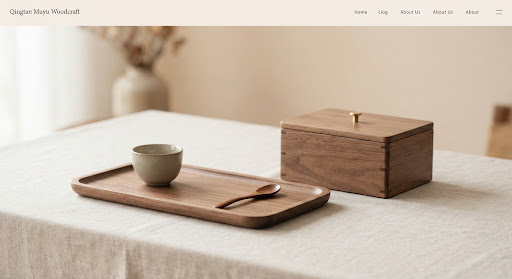
“Wooden tray” can mean a serving tray, retail display tray, vanity tray, desk organizer, hotel amenity tray, gift-set insert or handled carry tray. These products may look similar but face different stresses. A decorative tray may mainly control appearance. A serving tray needs comfortable handling and resistance to ordinary spills. A retail fixture may prioritize repeatable compartment dimensions. A hotel tray may need frequent wiping and a finish selected for the intended cleaning routine.
Your RFQ should state the intended contents, environment, cleaning method, sales channel and whether food will contact the wood directly, indirectly through tableware, or not at all. Do not let “food safe” remain an undefined marketing phrase. Identify the destination market and the documentation or testing your compliance adviser requires for the actual coating and intended contact condition.
Verify that the supplier fits the process
A manufacturer need not keep every process in-house, but it should explain what it controls. Ask who conditions the wood, prepares samples, completes machining, applies coatings or printing, and approves changes. For subcontracted work, request the same material and quality records as for internal steps.
Review evidence relevant to the proposed tray: production-representative samples, drawings, fixtures, material and finish references, inspection records and pack-outs. Factory identity, contracting entity, payment entity and production location should be consistent or clearly explained. The site’s manufacturer question checklist helps structure that review.
Compare material construction, not only species
| Construction | Potential advantages | Approval questions |
|---|---|---|
| Solid-wood board | Natural grain and substantial appearance | Species, grade, grain orientation, moisture control, panel movement |
| Laminated or edge-glued panel | Efficient wider surfaces and planned grain layout | Strip selection, glue-line appearance, panel balance, permitted repairs |
| Plywood with exposed or covered edge | Panel stability and repeatable CNC work | Face veneer, core quality, edge treatment, adhesive requirement |
| Bamboo panel | Linear grain and distinctive retail appearance | Panel construction, colour variation, edge finish, coating compatibility |
| Mixed construction | Different materials assigned to base, rim or handles | Every component named, substitutions controlled, finishes matched |
Request the construction in writing. Two quotes described as “walnut tray” may refer to solid walnut, walnut veneer, a stained alternative species or a panel with walnut-coloured finish. Those are not equivalent. The wood material selection guide explains how appearance, weight, machining and market requirements affect the decision.
Examine the engineering details
Tray performance depends on details that disappear in a front photo. Mark internal and external dimensions separately, including base, rim, corners, handles and usable area. For stacking or nesting, provide the orientation and contact points. For fitted products, use actual component dimensions.
Ask how the base joins the rim and how the handles transfer load. Possible routes include routed solid stock, assembled rails, mitred or finger joints, a panel captured in grooves, or a combination of adhesive and mechanical fastening. The best route depends on design and use; the supplier should explain why the proposed construction is suitable and how it will be checked.
Flatness deserves its own acceptance method. Agree where the tray is placed, how rocking is assessed and whether the check occurs before or after conditioning and finishing. For wide solid components, ask how grain direction, panel balance and coating on both faces are handled. These questions are more useful than asking the supplier to promise that wood will never move.
Review the manufacturing route
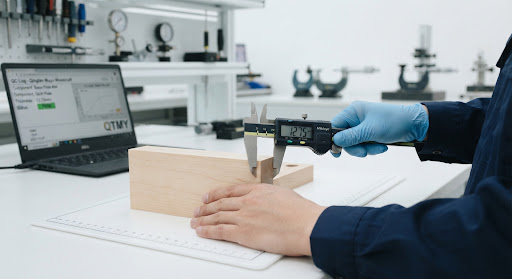
A custom wooden tray may pass through incoming-material inspection, cutting, panel preparation, CNC routing, drilling, edge profiling, joint machining, sanding, dry assembly, gluing, finishing, logo application, inspection and packing. A simple routed tray and an assembled handled tray will not use the same sequence.
Ask where first-piece checks occur. CNC recess depth, corner radii and handle openings can be measured before finishing. Joint closure and base fit should be checked during assembly. Sanding must cover the recess, inside corners and hand-contact edges, not only the visible top face. Coating colour, sheen, coverage, cure and odour should be assessed on the actual material. Logo position and tone should be checked after the finish process defined for production.
Specify finish around use and cleaning
The finish brief should state colour, sheen, surface feel, cleaning and contact conditions. Oil, wax, clear coating, stain and paint create different appearance, maintenance and protection. A natural material is not automatically suitable for every food-contact requirement, and a hard coating is not automatically appropriate for cutting.
Ask for the exact coating system proposed, supplier documentation available for that system, recommended cure condition and any testing tied to the destination and intended use. Approve both appearance and function. A colour chip alone cannot show whether the tray feels rough after grain raising, develops visible cup rings, retains odour or becomes difficult to clean.
Control OEM branding and packaging
OEM options may include dimensions, rim profile, compartments, handles, feet, hardware, species, stain, paint, laser engraving, printing, labels, sleeves, inserts and cartons. Every choice becomes an approval point. For a logo, control the artwork revision, method, size, position, orientation and acceptable appearance over natural grain. The laser engraving quality guide covers artwork and bulk consistency in more detail.
Packaging must prevent abrasion, corner impact and movement without pressure marks. Separate nested trays so rims cannot rub. Restrain accessories that could damage the surface. Confirm labels, barcodes, inserts, carton marks and orientation on the final sample.
Use samples to approve production inputs
Ask for a custom sample before committing to bulk production. The sample should use the proposed wood or panel, joint method, finish, logo and packaging wherever practical. Record anything provisional. A generic stock tray can show general workmanship, but it cannot approve the material, colour, dimensions or logo for a different design.
Qingtan Muyu publishes a typical MOQ reference of 50–100 pieces per design and typical sampling of 5–10 days after specifications and artwork are aligned. These figures are planning references only. Final requirements depend on material purchasing, machining setup, coating batch, logo process, packaging and SKU mix. Ask each supplier to explain what drives its MOQ and whether the quoted minimum applies per design, colour or logo version.
Inspect the bulk order against the approved tray
A practical tray inspection covers:
- correct design revision, material construction and finish;
- external size, usable internal area, rim and recess dimensions;
- flatness and stability on the agreed reference surface;
- joint closure, glue residue, cracks, splits and panel defects;
- handle position, smoothness and functional carrying check;
- sanding in recesses, corners, underside and all hand-contact edges;
- colour range, coating coverage, cure, surface feel and odour;
- logo artwork, position, orientation, clarity and tone range;
- nesting or stacking fit where applicable;
- individual packaging, accessories, labels and master-carton contents.
Agree defect examples and reporting before inspection. Natural grain variation should not be confused with an open glue joint or incorrect material. If a check fails, the procedure should identify affected quantities, containment, rework or replacement, reinspection and approval authority. Use the importer’s wooden product QC guide to build the inspection sheet.
Plan export packaging before the tray is finished
Request a packed sample, not only an unpacked product. Confirm surface wrap, separators, corner protection, internal restraint, individual carton, master carton, quantity, gross weight and labels. Packaging for palletized wholesale may be unsuitable for individual parcel delivery, so state the distribution route. Any drop, vibration or compression test should be agreed for the real packed configuration rather than discussed after damage occurs.
The packaging guide for importers provides a structured review of abrasion, impact, moisture exposure, labels and carton information.
Wooden tray supplier checklist
- Define serving, display, organization or gift-set use.
- State direct, indirect or no food-contact condition.
- Send drawings with internal, external, handle and fit dimensions.
- Name the complete material construction and permitted variation.
- Ask who controls material, machining, finishing, logo and packaging.
- Approve a production-representative tray and packed sample.
- Record colour, sheen, surface feel, cleaning and coating requirements.
- Define flatness, stability, handle and stacking checks.
- Lock artwork and packaging revisions before bulk production.
- Arrange first-piece, in-process and pre-shipment verification as appropriate.
FAQ
How do I verify a wooden tray manufacturer in China?
Confirm the legal and production entities, inspect process evidence relevant to trays, review a production-representative sample, ask what is completed in-house or subcontracted, and assess how the supplier controls changes, inspection and failed results.
Which wood is best for custom wooden trays?
There is no universal best species. Choose from function, appearance, weight, construction, moisture movement, machining, finish compatibility, availability and destination requirements. Require the exact solid, panel or mixed construction in the quotation.
What should be approved before wooden tray mass production?
Approve the drawing, material construction, physical sample, colour and finish reference, logo artwork and test, cleaning guidance, labels, packaging and inspection criteria under one controlled revision.
How can importers reduce tray warping and cracking risk?
Discuss material conditioning, grain direction, panel balance, joint design, coating of relevant faces, storage and destination climate. Define a measurable flatness and defect check instead of relying on a general promise.
Can a wooden tray factory provide private-label packaging?
Many OEM projects can include labels, sleeves, inserts, retail cartons and mail-order protection. Availability and MOQ depend on the packaging structure and print process, so include the complete pack-out in sampling and quotation.
Send a tray RFQ that can be manufactured
Cao County Qingtan Muyu Crafts Co., Ltd can review tray drawings, reference samples and private-label requirements as part of a custom wooden homeware program. Include intended use, dimensions, material construction, finish, logo, packaging, order quantity and destination. The RFQ checklist helps organize those inputs, and the contact page is available for project review.