
Wooden Cat Sofa Manufacturer: OEM Solutions for Pet Brands
Pet brands are adding miniature “human-style” furniture to their catalogs, and the wooden cat sofa is one of the fastest-moving pieces. Unlike an all-foam bed, a wooden-frame cat sofa is a real furniture product: it has a structure, load limits, a finish, and a cushion system that has to survive washing. That makes supplier selection […]
Pet brands are adding miniature “human-style” furniture to their catalogs, and the wooden cat sofa is one of the fastest-moving pieces. Unlike an all-foam bed, a wooden-frame cat sofa is a real furniture product: it has a structure, load limits, a finish, and a cushion system that has to survive washing. That makes supplier selection the deciding factor in returns, reviews, and repeat orders. This guide walks pet brands through what to specify when you work with a wooden cat sofa manufacturer — frame, size, load, cushion, finish, and branded packaging — so the product you launch matches the listing.
Why a wooden frame changes the category
An all-foam cat couch is soft and cheap to ship, but it flattens, slides, and reads as a pet bed rather than furniture. A wooden frame gives the piece a stable silhouette that photographs like miniature human furniture — the look buyers in the trend actually want. The trade-off is that wood introduces structure decisions: species, joinery, leg design, and finish all affect whether the sofa wobbles after a few months. For a brand, the frame is where margin and returns are won or lost, because structural complaints — wobble, cracked joints, snapped legs — are the returns that hurt most. Our wood materials guide breaks down species and trade-offs.
Example Conversation
Buyer: We want a cat sofa that looks like a miniature mid-century lounge. What frame should we specify?
Supplier: For a piece this size, a solid wood frame with corner blocks and screwed joinery holds up far better than thin engineered board. We can do rubberwood or birch; both give a clean grain and take finish well.
Buyer: Will that survive repeat jumping and a curious dog?
Supplier: Yes, if the legs are part of the frame rather than push-in, and the seat rails are continuous. We prototype and drop-test the corner before tooling.
Why this matters: Frame choice is the single biggest driver of return rates. Specifying real joinery up front prevents the wobble and joint-loosening complaints that dominate negative reviews of pet furniture.
Frame structure and joinery that survive real homes
Wobble is the most common structural complaint, and it usually traces to three things: legs that are glued rather than joined to the frame, screw holes that drift between sample and bulk, and a base too small for the seat load. A wooden cat sofa manufacturer should show you the joint detail, not just a render. Look for mortise-and-tenon or screwed corner blocks at the seat corners, continuous rails rather than butt joints, and legs that are part of the frame or bolted with metal inserts. Ask how they control screw-hole position across a run — a caliper check on sample versus bulk is a cheap way to catch drift before it becomes a returns problem. The same moisture discipline that prevents cracking and warping in other wooden goods applies here too.
Sizing and dimensions for your target market
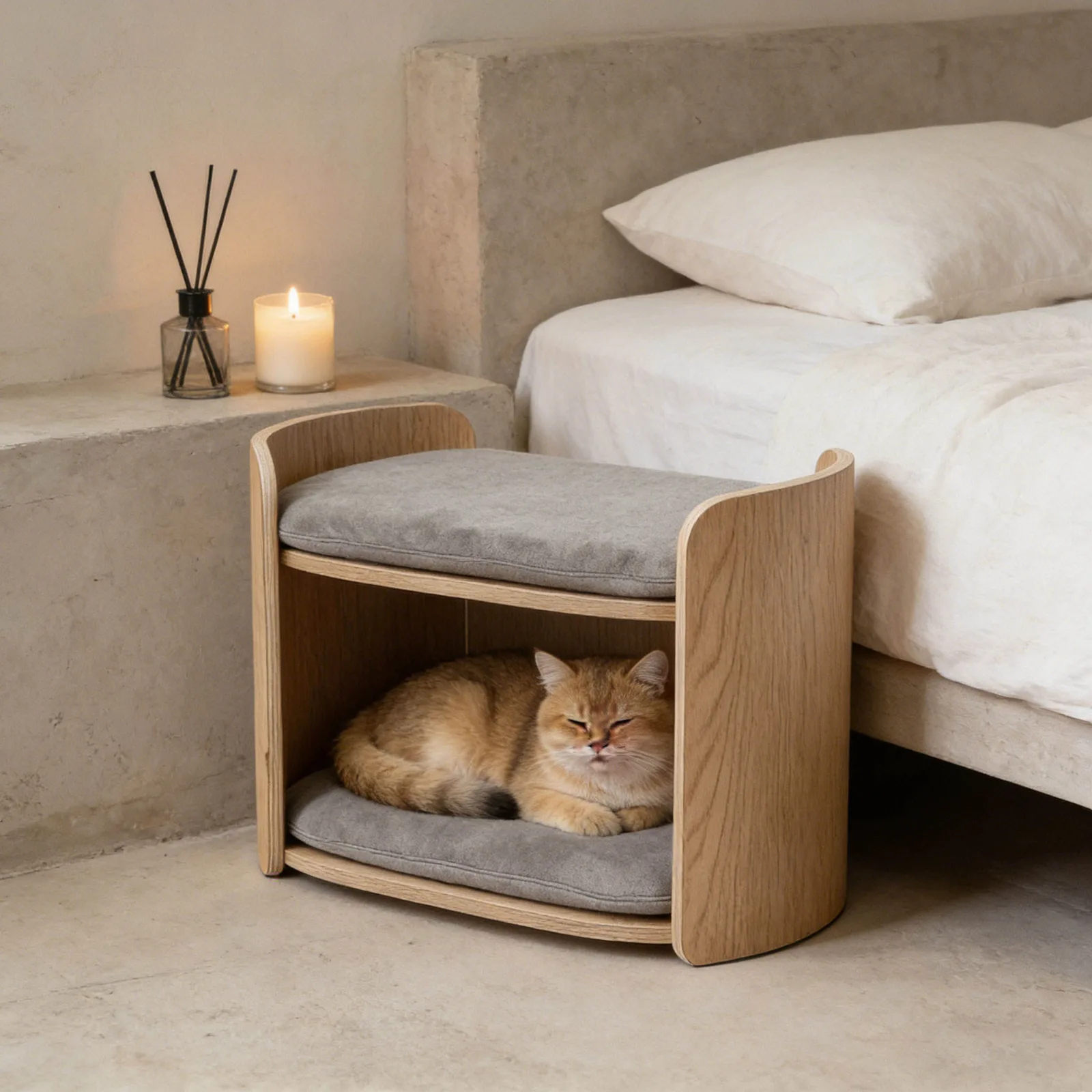
“Cat size” is deceptively relative. A sofa sized for a 4 kg domestic cat is wrong for a 9 kg Maine Coon or a small dog that shares the couch. Measure the animal stretched out, then add lounge room: most brands land the internal cushion length between roughly 45 and 65 cm, with seat height around 20–30 cm so the cat can step up but still feel enclosed. Seat depth drives the “does my cat actually use it” question more than overall width. Hand the manufacturer your target breed weights and region norms, and ask for a dimension drawing before sampling — changing size after tooling costs far more than changing it on paper. The same sizing logic works for related pieces such as a hanging wooden cat hammock or a modern wooden cat castle.
Load-bearing design without overbuilding
Load rating is not a number you invent; it comes from frame species, section thickness, leg count, and base width. A slender tapered-leg look is attractive but concentrates load at four small points, so the manufacturer should validate the design against your target weight, not a generic claim. Tell them the maximum animal weight you intend to support and the surface it will sit on (carpet versus hard floor). They can widen the base, thicken the rails, or add a center leg to hit the target without ballooning cost. The goal is a rated design, documented per SKU, so your listing states a real limit. This is the same engineering discipline behind sturdier pieces like a handwoven elevated cat cave bed.
Example Conversation
Buyer: North American cats run larger, and some customers put small dogs on these. What do we size to?
Supplier: We set cushion length near 60 cm and seat height about 25 cm, wider base for stability, and rate the frame for the heaviest animal in your brief plus margin — not a generic number.
Buyer: Can the listing state a real weight limit?
Supplier: Yes, we validate per SKU and print it on the carton so the box and the listing agree.
Why this matters: Sizing from your market’s real animals, with a validated load rating, prevents both “too small” refunds and “legs snapped” returns.
Washable, replaceable cushions
The cushion is where daily use shows. The consensus across pet-owner reviews is blunt: never ship a cat sofa whose cover is “spot clean only.” A fully removable, machine-washable cover is the feature that prevents the refund after the first hairball or accident. Two things to specify: the cover should zip off completely, and the fill should hold shape — high-density foam or a chopped-foam blend outlasts loose polyester fiber, which flattens. Also plan for odor: compressed foam and some fabrics carry a factory smell on unboxing that washes or airs out, so set expectations in the care card. A replaceable cover also extends the product’s life and gives you a re-order line. The same washable-cushion thinking applies to a broader pet supplies range.
Surface treatment and finish safety
Finish does two jobs: protect the wood and set the look. For a piece cats lie on for 12–16 hours a day, the finish also has to be low-odor and low-emission. Wood wax oil gives a natural, repairable surface and is easy to touch up, while a water-based lacquer gives a more uniform modern sheen. Either way, ask for the emission class of any coating and composite panel. Solid wood for all structural parts is the safe default; if a panel is engineered wood, it should be non-structural and meet the emission standard your market requires (for example CARB P2 for composite wood in the US). A faint factory smell on unboxing is normal with some foams and finishes and typically airs out — set that expectation in the care card. Our notes on controlling wood moisture cover why finish and MC control go together.
Example Conversation
Buyer: We keep seeing “spot clean only” complaints. And some foam smells on arrival.
Supplier: We spec a fully removable, machine-washable cover and a fill that holds shape — high-density or chopped-foam blend, not loose polyester. For finish we use wood wax oil or a low-VOC lacquer; the initial odor airs out.
Buyer: Will the wood finish be safe indoors around cats?
Supplier: On structural parts we use solid wood with a certified low-emission finish; any composite panel is non-structural and meets the relevant emission standard for your market.
Why this matters: A washable cover kills the most common refund trigger, and a documented low-emission finish answers the indoor-safety question buyers now ask.
Brand packaging and private-label readiness
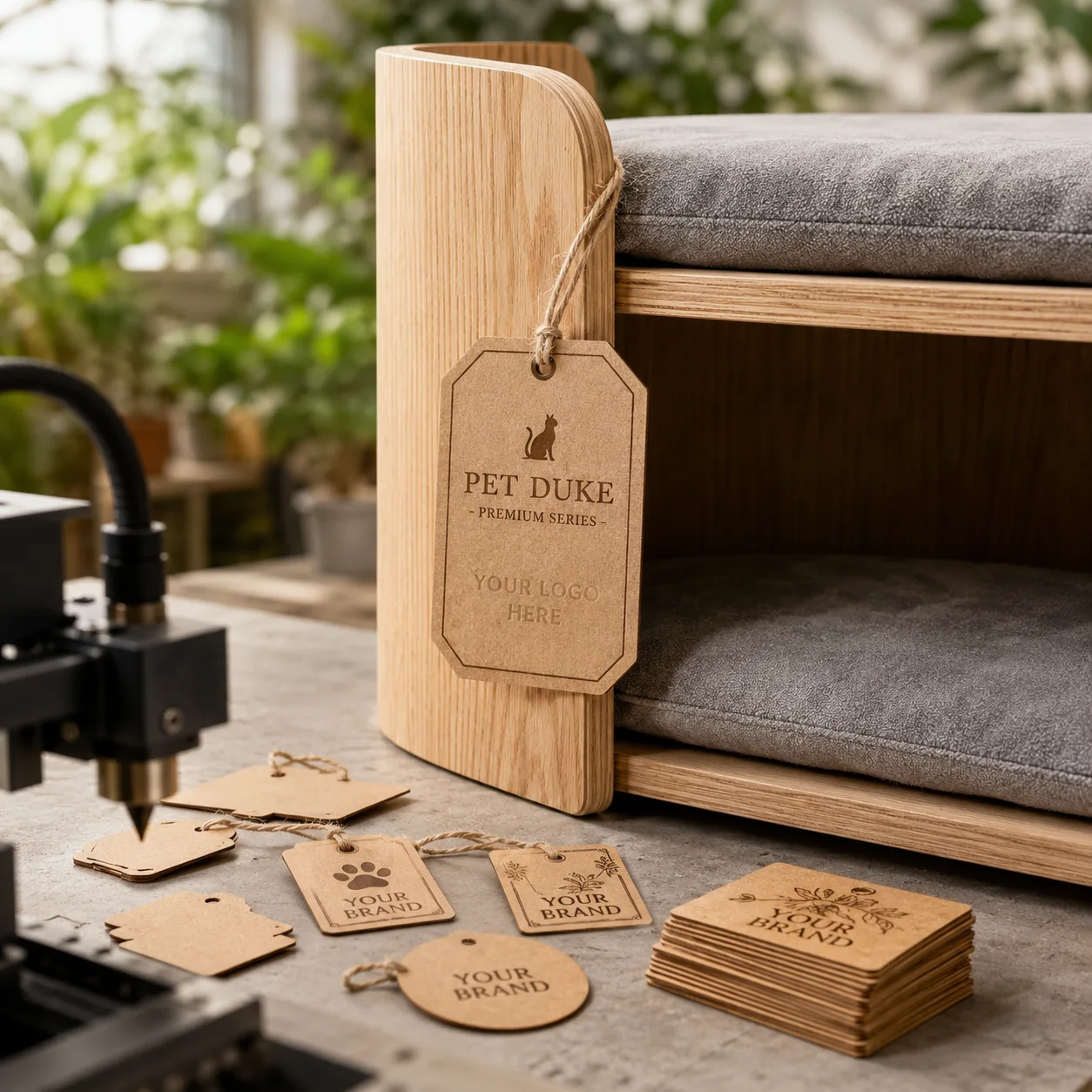
For a pet brand, the carton is part of the product. Specify flat-pack construction to cut freight and warehouse volume, an assembly line drawing so end-users don’t misbuild and crack the frame, and a care card that tells owners how to wash the cover and what initial odor to expect. Private-label options should include your logo on the carton and a swing tag, plus neutral packaging if you sell through retailers. Most importantly, ask how the manufacturer keeps batches consistent: standardized materials and a pre-shipment check mean the second order matches the first, which is what protects your rating as you reorder. Our custom wood product RFQ checklist lists the questions to put in your brief, and our bulk logo QC guide covers brand-mark consistency.
Example Conversation
Buyer: We’re a private-label brand; we need our logo and a retail-ready box.
Supplier: We can print your logo on the carton and the cushion tag, ship flat-pack with an assembly line drawing, and include a care card. Neutral packaging is available too.
Buyer: And consistency across reorders?
Supplier: Standardized materials and a pre-shipment check keep each batch uniform, so the second order looks like the first.
Why this matters: Private-label readiness and batch consistency are what let a small brand scale without the “looks different from the photo” complaints.
From sample to scaled production
De-risk the launch by validating before a full run. Approve a physical sample against your drawing — joint detail, dimensions, load feel, cover refit, and finish odor — and lock the spec. Our guide to approving wooden product samples before mass production and our importer quality-control checklist turn that step into a repeatable process, and our packaging guide covers protecting the piece in transit. Bring a complete brief — target market, animal sizes, rated load, cushion spec, finish class, branding — and a manufacturer can move you from drawing to shelf with fewer surprises.
FAQ
What wood should a wooden cat sofa frame use?
Solid wood such as rubberwood, birch, or pine gives the best strength-to-weight for the frame; engineered board is fine only for non-structural panels with the right emission certification. Ask the manufacturer to show the joint detail, not just a render.
How do I choose the right dimensions for my market?
Size from the animals you actually sell to — measure stretched length and add lounge room, typically 45–65 cm cushion length and 20–30 cm seat height — and ask for a dimension drawing before sampling. Changing size on paper is far cheaper than changing it after tooling.
What load can a wooden cat sofa safely hold?
It depends on frame species, rail thickness, leg section, and base width. Give the manufacturer your target animal weight and have them validate and document a rated limit per SKU rather than quoting a generic number that the listing cannot stand behind.
Should the cushion cover be washable?
Yes — a fully removable, machine-washable cover is the feature that prevents the most common refund after spills or accidents. Pair it with a fill that holds shape, such as high-density or chopped-foam, instead of loose polyester fiber.
How should the finish be specified for indoor pet use?
Use a low-odor, low-emission finish such as wood wax oil or a water-based lacquer, keep structural parts in solid wood, and confirm the emission class of any coating or composite panel for your market. A faint initial odor from foam or finish is normal and typically airs out.
A wooden cat sofa is a furniture product, not a pet bed, and the manufacturer you choose decides whether it delights or gets returned. Specify the frame, size, load rating, cushion, finish, and packaging up front, validate with samples, and you launch a SKU your listing can stand behind. Talk to our team about OEM and private-label options for your cat furniture line via our contact page.