Custom Wooden Christmas Plates: An OEM Sourcing Guide for Retailers
A custom wooden Christmas plate looks simple and is not. Behind one round face sit four decisions that are hard to reverse: whether the plate touches food, how the motif is applied, which wood holds the detail, and when the order must sail to reach a shelf before Black Friday. Short answer: settle food-contact status, […]
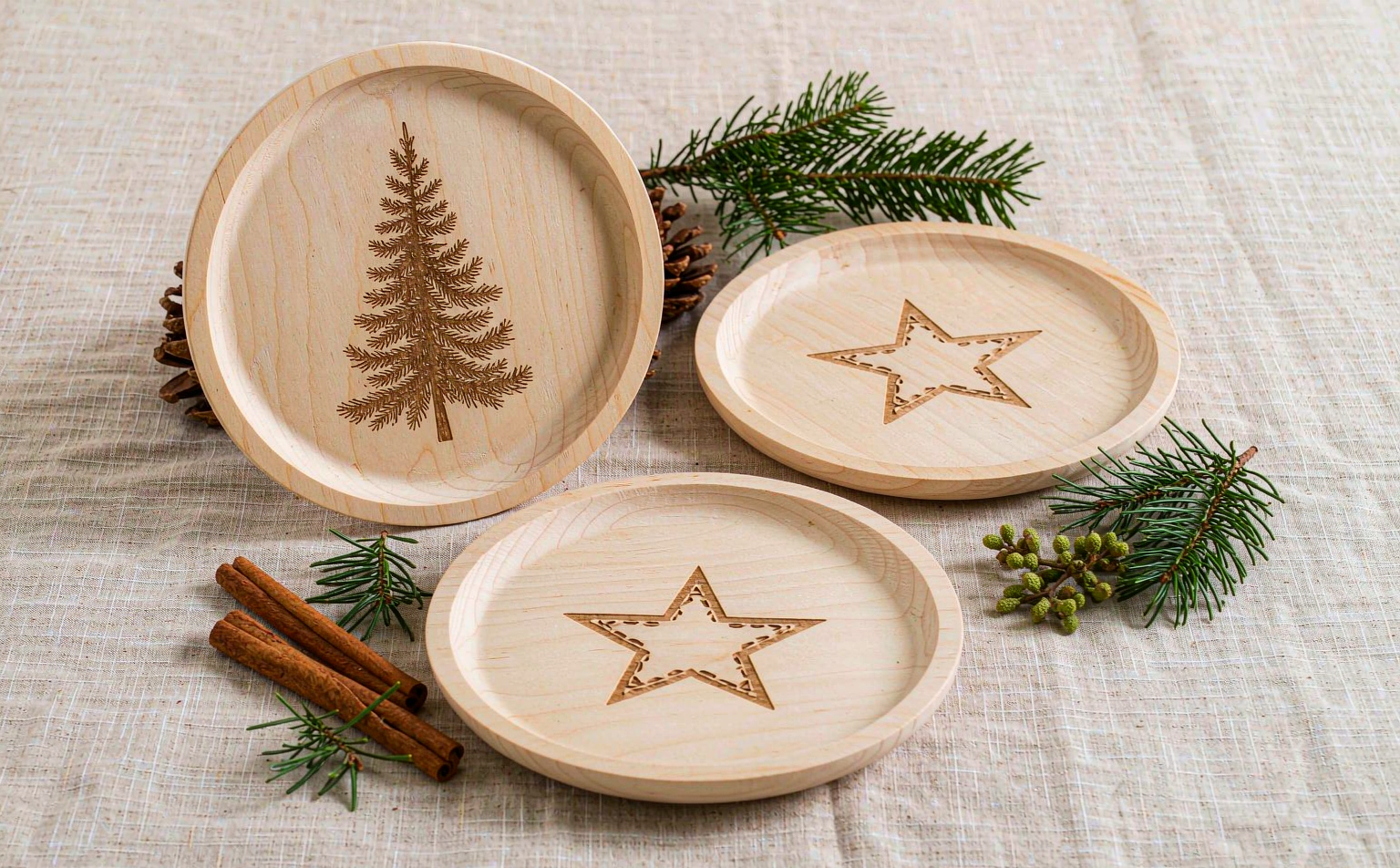
A custom wooden Christmas plate looks simple and is not. Behind one round face sit four decisions that are hard to reverse: whether the plate touches food, how the motif is applied, which wood holds the detail, and when the order must sail to reach a shelf before Black Friday.
Short answer: settle food-contact status, decoration method, wood grade and the sailing date before anything else.
Decorative or Food-Contact: the Decision That Sets Everything Else
Two plates can look identical and be different products. One is decorative, hung on a wall or holding wrapped candy; the other serves cookies. The difference is not the wood but the finish and the paperwork behind it.
A decorative plate can use a wide range of coatings, including solvent-based lacquers chosen for colour depth. A food-contact plate needs a finish the buyer can defend: an oil, a wax, or a coating supplied with a written declaration of compliance. US buyers ask the finish supplier for food-contact documentation; EU buyers work within Framework Regulation (EC) No 1935/2004. None of it can be arranged at the end, because changing the finish changes colour and sheen too.
Example Conversation
Buyer: “The sample looks great. Can we market it as a serving plate?”
Supplier: “That changes the finish. This one has a decorative lacquer. For food contact we would use a curing oil or a coating with a declaration, and the colour comes out warmer. We can run a second sample to compare before you commit.”
Two sample plates cost little; discovering the mismatch after packaging is printed costs a SKU.
How the Motif Is Applied
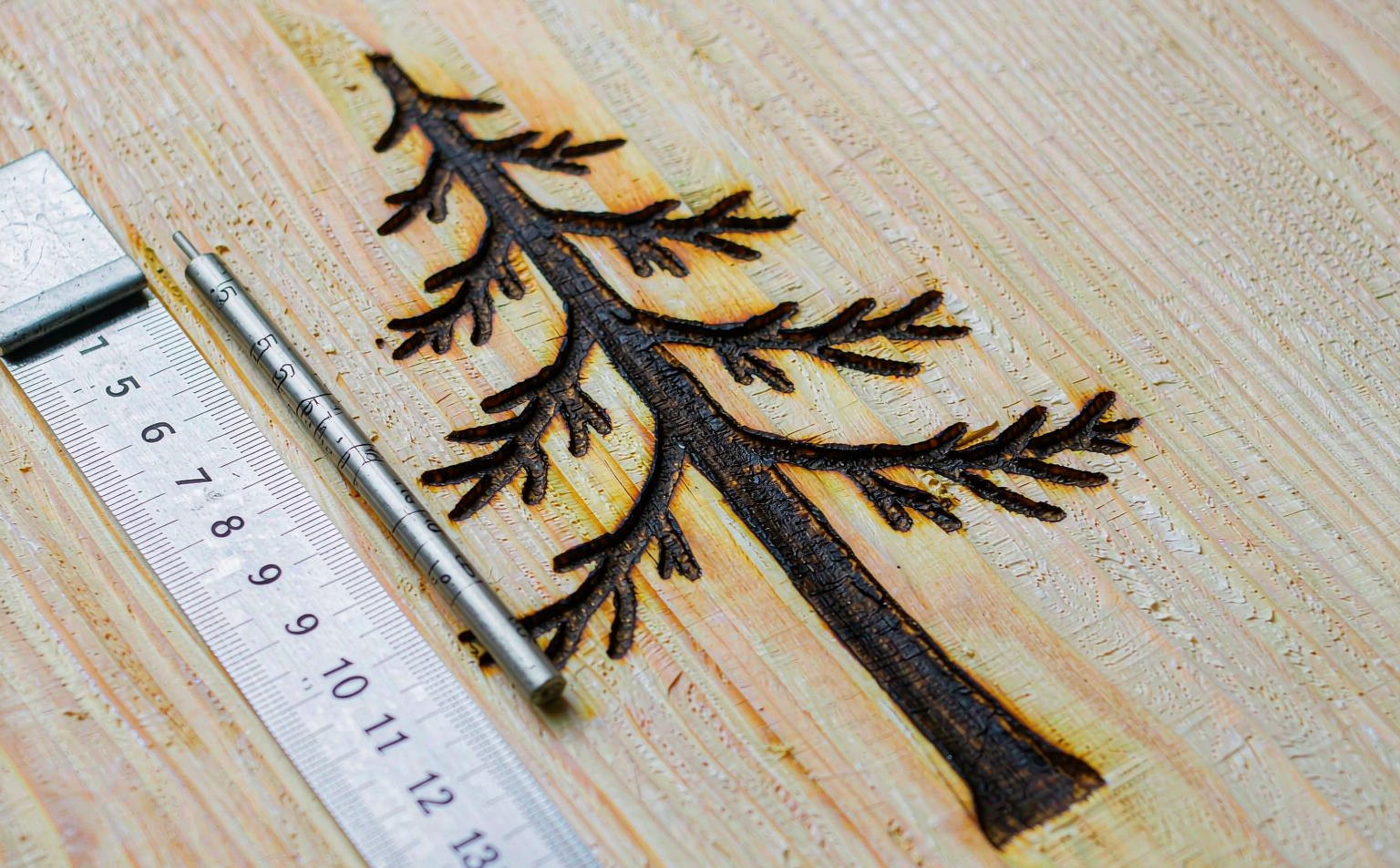
Laser engraving burns the design into the surface, so the motif is tone-on-tone: darker where the beam passes, no added colour. It cannot peel; its weakness is contrast. Engraving darkness follows grain density, so the same file reads boldly on a tight-grained blank and faint on a porous one, and a plate engraved before final sanding can show a scorch halo. Consistency depends on fixing the species and grade of blank, the power and speed, and the sanding sequence. See custom laser engraved wooden products.
Printing — UV or screen — adds colour, which matters when the design depends on red or gold. It needs a primer on some woods, an ink that bonds to the finish rather than raw wood, and a rub check on the bulk lot. On a food-contact plate, ink and top coat both enter the compliance conversation. Carved relief gives real shadow but costs the most and depends on sanding: fine internal corners are where torn grain appears.
Example Conversation
Buyer: “The approved sample has a deep brown tree. The bulk lot looks lighter and the lines are thinner.”
Supplier: “The sample was engraved on a denser blank and sanded after engraving. On the bulk lot we engraved before the final sanding pass, which took depth out. We will re-run with the approved power setting, sand first, then photograph five random plates against your signed sample.”
The cause is process order, not sabotage: sanding after engraving removes material and lightens the burn. The fix is verifiable only because a signed sample was retained, which is where logo quality control on bulk orders begins.
Wood Choice Drives Price and Cracking Risk
Plates are turned or CNC-profiled from a glued panel or solid blank. Rubberwood, beech, birch, acacia, pine and bamboo all appear here, trading cost against grain character — covered in this guide to choosing wood materials for custom products.
Christmas plates are made in spring and summer humidity, then sold in heated stores in December, when indoor air is at its driest. Wood that leaves the factory wet shrinks on the shelf, and on a thin disc that appears as a cupped face or a split rim — the two defects a retailer cannot hide. Interior products are commonly kiln-dried to roughly 8–12% moisture content. What matters is that the figure is agreed in writing and read on packed pieces before shipment. See these notes on controlling wood moisture and on why wooden products crack or warp.
Build the Calendar Backwards from the Shelf Date
If you are reading this in late October, the Christmas stock you are looking at is already on water, and anything commissioned now is a programme for next season.
Start from the date stock must be sellable, not from Christmas Day. Most retailers want displays up before the first week of November, and marketplace sellers need stock in the fulfilment centre earlier. Subtract inland delivery, clearance, ocean transit, inspection, production, sample approval and design time; what remains is when the design must be settled, usually late winter.
Two Chinese holidays sit inside that window. National Day in early October closes factories for about a week and triggers a booking surge, so cargo not ready to sail before late September can lose weeks. Chinese New Year is harder: it falls on 6 February in 2027, factories close for up to three weeks, and the weeks before it belong to other buyers.
Example Conversation
Buyer: “We need 6,000 plates in our warehouse by mid-October. Can you confirm?”
Supplier: “Production takes about five weeks after sample approval, and the sea leg five to six weeks plus clearance. To land mid-October we would sail by early September, so production finishes in August. Approved by April, that works; approved in June, air freight is the only way to hold the date.”
Ask for the latest ship date in writing, not the earliest possible completion. See this custom wood product RFQ checklist.
Approve the Sample Like It Is the Only One You Will Get
Seasonal products have no reorder window: by the time a defect shows at retail, the rest is January markdown. The sample is the main control a buyer has, so approve it as a specification rather than admiring it as a prototype: diameter and thickness, rim profile, engraving position and scale against the rim, finish sheen, the colour of the back face, moisture reading, and the individual packing.
Photograph the approved sample on a dated sheet, keep one at the factory and one at your office, and record accepted deviations — “slight grain variation accepted” prevents an argument later. See approving samples before mass production.
Inspection Points That Actually Matter
Rock each sampled plate on a flat surface, because a plate that wobbles is a return. Measure diameter across the lot, not on one piece. Check engraving registration: a motif two millimetres off centre is obvious on a round face. Run a cloth over the face to catch raised grain, and check the rim for splits and sanding burn.
Fix the sampling plan and the accept/reject rule before production, and inspect before the balance leaves. The importer quality control checklist shows how to structure the stages.
Packaging Is Where a Good Plate Becomes a Sellable One
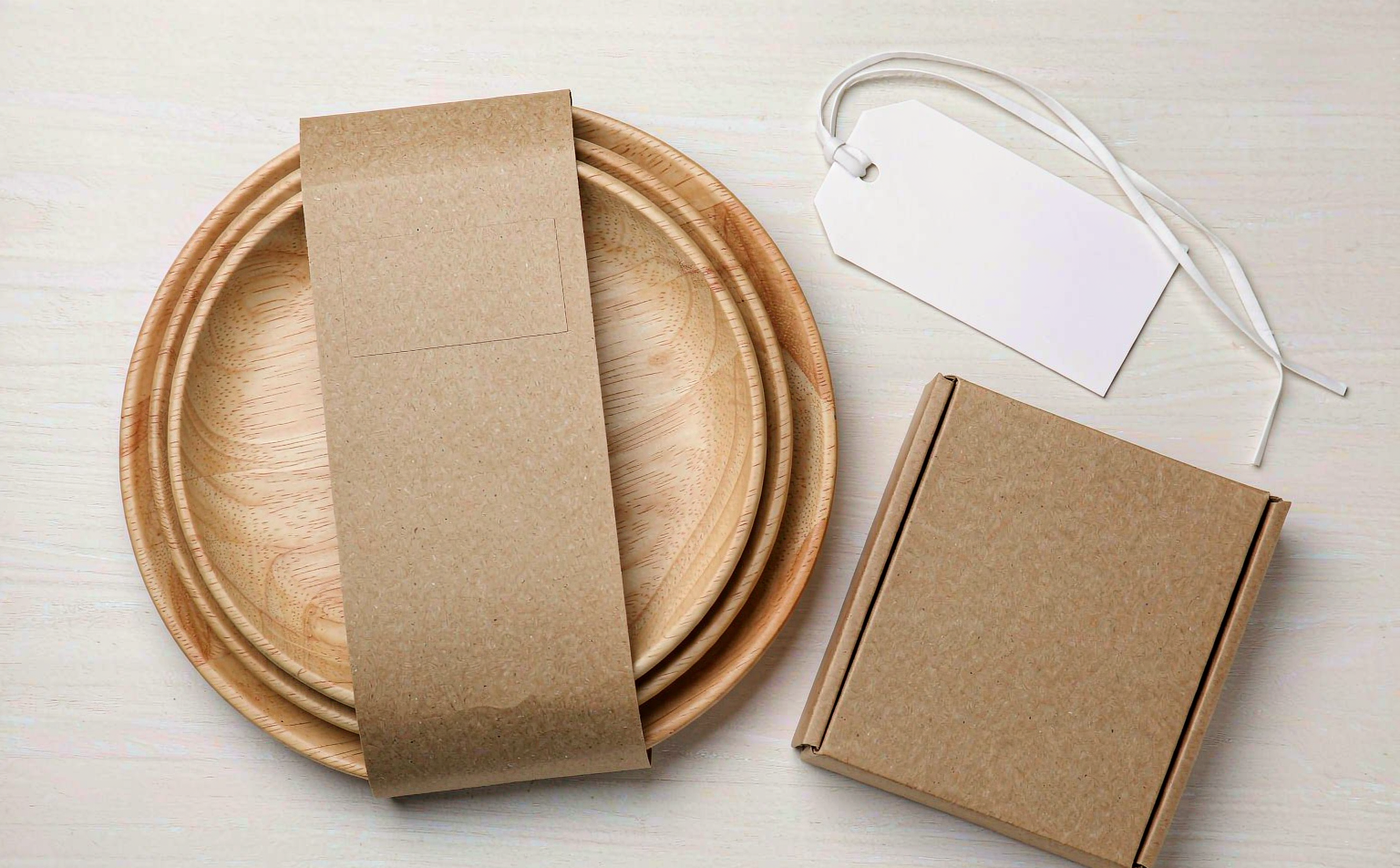
Plates nest well, which makes them cheap to ship and easy to chip at the rim. Three layers do different jobs: a sleeve or gift box for presentation, a kraft interleaf against face-to-face abrasion, and a master carton sized so the stack cannot shift.
Two details get decided too late. A barcode must survive on a curved, textured surface, and a hangtag is often more reliable than a label. Cube comes second — gift boxes, not plates, drive freight volume, so ask for master carton dimensions before the design freezes, and confirm the pack survives a drop test if it ships to e-commerce fulfilment. More in the guide to wooden product packaging for importers.
MOQ, Cost and the Leftover Problem
Seasonal plate MOQs are usually quoted per design or per size, and the figure moves with the decoration method: a laser file has almost no setup cost per motif, while printing needs plates or screens and pushes the minimum up. That makes a multi-motif collection in one size, one wood and one finish the cheapest way to look like a range.
Then there is the leftover problem. A plate engraved with a year or a family name cannot carry over, so those variants belong in small quantities and should be treated as a test. Undated motifs carry over, which is why a core range is usually undated with one or two dated novelties on top.
Example Conversation
Buyer: “We want four motifs, but 1,000 per motif is too much for a first season. Can we mix?”
Supplier: “The MOQ is really about the blank run and the finishing setup. If all four use the same 25 cm blank, wood and finish, we can quote 1,000 total and split it across motifs in mixed cartons. We cannot split it across four diameters or two finishes — that becomes four runs.”
One specification with several motifs is the practical way to test a collection. A coordinated set also lets you add adjacent pieces later, such as a wooden tabletop Christmas tree or a wooden house Christmas candle holder — display pieces, not the disposable wooden plates sold into foodservice.
FAQ
What is the typical MOQ for custom wooden Christmas plates?
It is quoted per design or per size, and depends more on the blank and decoration method than on the plate. Engraved motifs share a blank and can be mixed in one run; printing needs setup per artwork. Ask whether the figure applies per motif or per total order.
Are wooden Christmas plates food safe?
Only if the finish and documentation say so. Decorative lacquer makes a decorative object; a food-contact plate uses an oil, wax or coating supplied with a declaration of compliance. Ask for the finish specification before approving the sample.
How long does production take?
It depends on quantity, decoration method and the factory’s order book, so one number misleads. Ask for the sequence instead: when the sample must be approved, when production finishes, when inspection happens, and the latest sailing date.
Can we add our logo, a year or a family name?
Yes, and engraving is the most durable method. The catch is carry-over: dated variants cannot be sold in a later season, so they belong in small quantities on top of an undated core.
What separates a decorative plate from a serving plate?
The finish, the paperwork and the label wording. One is designed for display and often lacquered; the other is finished for food contact with documentation. The wood and motif can be identical, which is why the distinction belongs in writing before production.
To scope a seasonal plate programme, send an inquiry to woodhomeware.com with diameter, wood preference, motif files, finish, packing format, quantity and the date stock must be sellable. Cao County Qingtan Muyu Crafts Co., Ltd, also known as Cao County Qingtan Muyu Crafts Co., Ltd, produces wooden homeware, storage, décor and seasonal pieces for importers, wholesalers and private-label brands.