Wooden Pet Feeding Station Manufacturer: Custom Sizes and Branding
A B2B guide to custom wooden pet feeding stations: bowl fit, stand height, cleanable finish, private-label branding, samples, QC and packing.
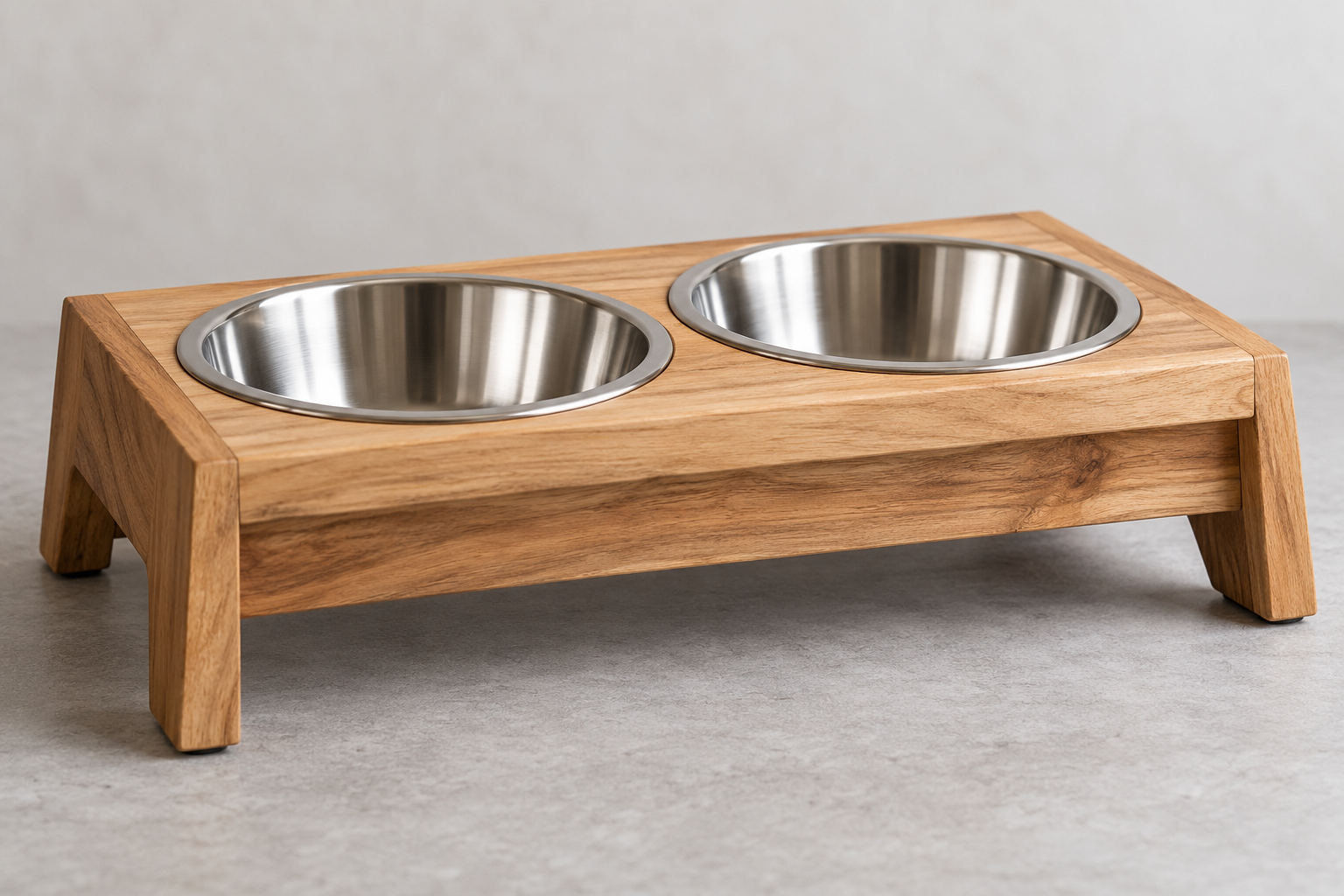
A wooden pet feeding station is a small piece of furniture that holds one or more removable bowls at a defined height. For a retailer, the useful specification is the complete set: wooden stand, actual bowls, bowl openings, feet or base, finish, logo, instructions and carton. A drawing of the stand alone will not tell you whether a replacement bowl fits or whether spilled water can be wiped from the top.
If you are sourcing a custom range, settle those details before the sample is approved. Cao County Qingtan Muyu Crafts Co., Ltd works on OEM wooden pet products for wholesale and private-label buyers; the decisions below are the ones to put into a feeding-station brief and check again on the bulk order.
Quick answer for purchasing teams
Send the manufacturer the intended animal, number and type of bowls, target assembled height, outside footprint, bowl rim and cut-out dimensions, frame material, finish, cleaning expectations, brand artwork and packaging format. Ask whether bowls are included in the quote and whether the same bowl specification can be supplied for reorders. Approve a complete sample with the real bowls installed, then use it to check the first production pieces and packed units.
The stand should hold bowls securely while allowing easy removal and cleaning around the openings.
Choose the format before asking for a price
A single-bowl riser, a paired food-and-water stand and an adjustable-height station are different products. A compact cat feeder may be shallow and low. A dog station for a particular retail range may use larger bowls and a wider base. An adjustable design adds slots, hardware and assembly checks. Each variation affects machining, bowl sourcing, packaging and the customer’s experience.
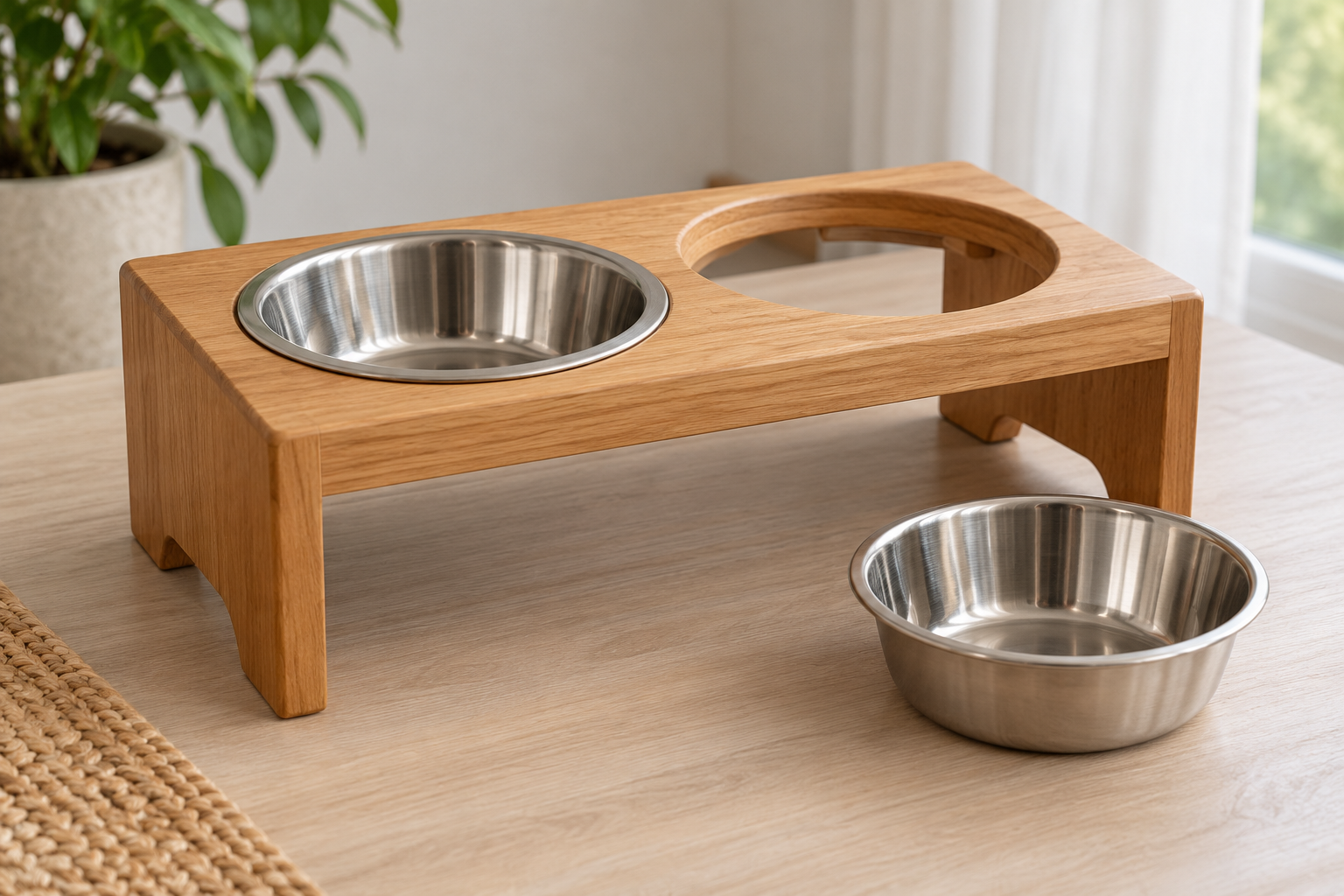
Do not describe the range only as “small, medium and large.” Give every SKU its own drawing and bowl reference. State whether the bowls sit flush, slightly proud of the top or inside a recessed seat. A rim that drops too far into the opening can be hard to grasp; an opening that is too loose allows the bowl to rattle or tip. Confirm the product on a physical sample rather than inferring fit from a catalogue image.
Specify bowl fit as a pair of dimensions
For each bowl, record the outer rim diameter and the opening that supports it. Also check bowl depth, underside clearance and the distance between bowl centres. The latter matters when two animals may eat nearby or when a dog needs room around the muzzle. The correct spacing is a product decision for the target user; there is no single number that suits every pet and bowl shape.
Ask what the bowls are made from, who supplies them, and how replacement bowls will be matched. A nominal bowl capacity alone is not enough. Two bowls described with the same capacity can have different rim profiles and may not sit the same way in a wooden top. Keep an approved bowl with the approved stand and identify both in the purchase order.
Test bowl removal on the intended floor surface. Check that the rim does not scrape the finish. If bowls will be sold separately, settle the replacement SKU and fit reference before launch.
Set height and footprint for the target pet
Do not claim that a raised feeder improves digestion or treats a health condition without suitable evidence for that claim. Specify height as a practical product dimension. For each SKU, record floor-to-rim height, overall stand height and the space under the bowl. Review the proposed dimensions against the animal size and use case the retailer is targeting, then approve a sample with bowls in place.
Footprint deserves the same attention. A tall stand on narrow legs may look tidy in a photograph but move when an eager pet pushes a bowl. Test the complete sample on hard flooring and on any other surface relevant to the listing. Check rocking, sliding and whether a customer can put the station near a wall without the rear bowl becoming awkward to remove. Non-slip feet can be considered, but their attachment and replacement need their own checks.
Material and finish must tolerate ordinary spills
Wooden stands are repeatedly exposed to splashes and wiping. The material choice therefore affects more than appearance. Solid wood, plywood and other panels each have different visible edges, joining methods and finishing needs. Ask the supplier to identify the construction by component, including the top around the cut-outs, legs, cross-members and any concealed reinforcement. Our wood-material guide gives a broader comparison method.
Inspect the finished sample at the bowl openings, joint lines, edges and underside. These are easy places to overlook when the stand is viewed from above. The coating specification should state what is applied to the wood and how the manufacturer expects the owner to clean it. Avoid describing a wooden frame as waterproof unless that performance is tested and supported. A wipe-clean surface and prompt drying are clearer customer instructions than a vague “water resistant” promise.
Where bowls contact food or water, ask for the bowl material and destination-market documents appropriate to the actual item. Do not transfer a material statement about a steel bowl to the wooden frame, or assume the frame’s finish has a food-contact status it was never intended to have.
Design cleaning into the sample
Owners clean bowls frequently. Check access around each rim, cut-out smoothness and whether food or moisture can collect in a blind groove. Exposed fasteners and rough underside edges also make cleaning harder.
Public discussions about feeding stations often mention spills and bowls that are pushed around. That is useful buyer research, but each design still needs its own functional sample check. If the retailer wants a spill-catching lip or removable mat, define its dimensions and how it is cleaned. Extra features should earn their place through a usable sample, not an unchecked promise on the product page.
Put branding where it survives use
A logo on the front rail may be visible in retail photography without occupying a frequently wiped top surface. A mark beside a bowl opening may be covered by the bowl or gradually affected by cleaning. Review laser engraving, printing, a fixed label or another method on the actual finish. Confirm the artwork version, size, position, contrast and whether natural wood variation changes legibility.
Private-label work also includes the carton, care card and replacement-bowl reference. A buyer who stocks several sizes should ensure the correct bowls, feet and instruction sheet go into each SKU’s pack. The private-label wooden pet products guide explains how to control a coordinated range; the sample-approval guide covers the final reference before the production run.
Sample, MOQ and production handoff
Ask for a complete sample, not a finished wood stand paired with a temporary bowl. The sample should carry the intended material, cut-outs, finish, feet, logo and packaging. During approval, remove and replace each bowl, wipe the top, check the stand on a flat surface and assemble it if the retail version ships in parts. Record any change before bulk production starts.
MOQ and sampling arrangements depend on the stand design, bowl sourcing, finish, artwork and pack format. A quotation should identify what is included in the unit and whether a new size or bowl type changes the minimum. Do not infer a custom-program MOQ from a different pet product on a website. When the design is approved, give the production and inspection teams the same dated drawing, bowl reference and packed sample.
Pack the wood and bowls as separate contact surfaces
Metal bowls can scratch a finished wooden top when both move inside a carton. Agree how the bowls are nested or separated, how the wood is protected at corners, and where loose feet or hardware are placed. A retail box may need one arrangement; a parcel shipment may need more restraint. Open a packed sample after normal handling and confirm that nothing has rubbed or escaped its compartment.
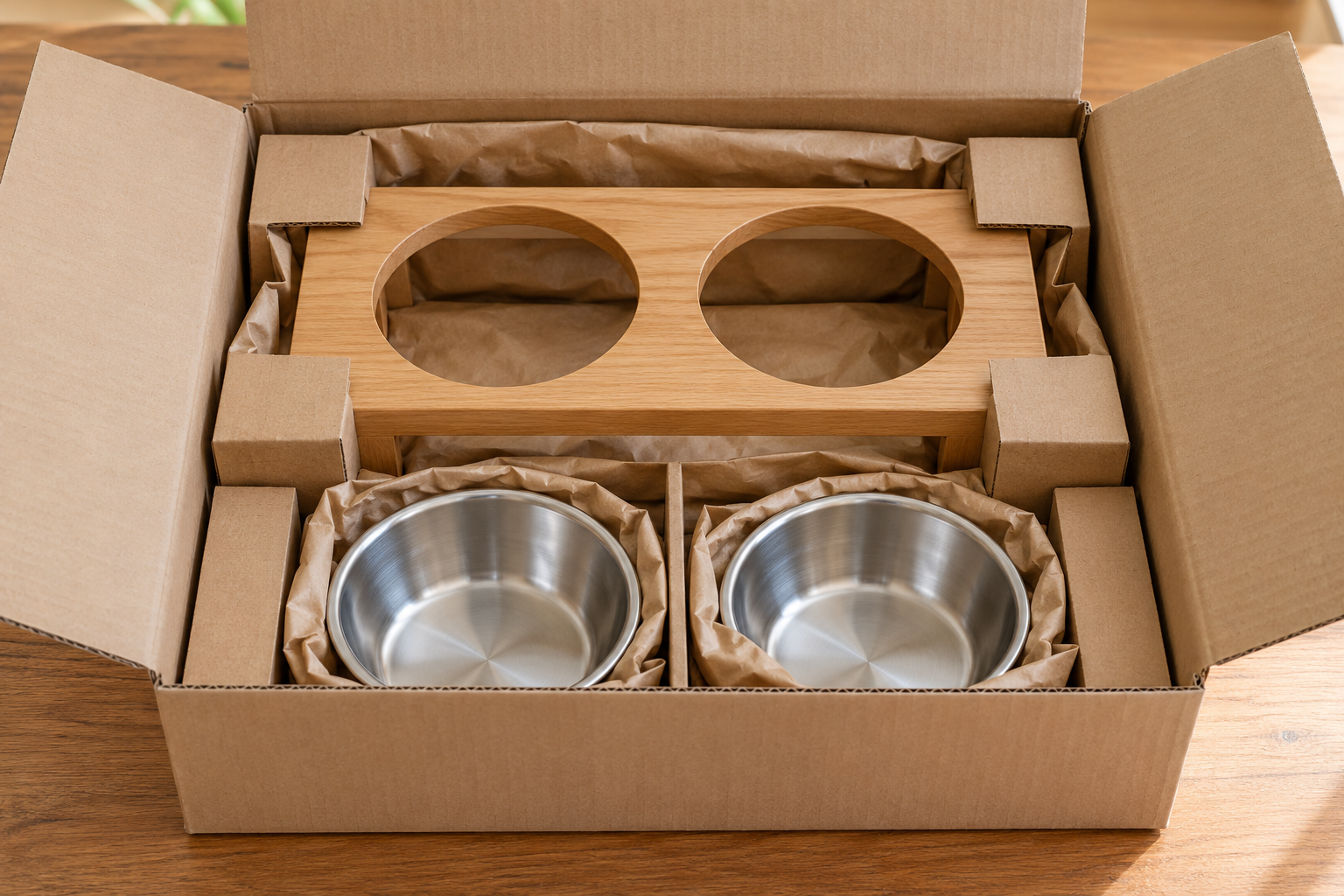
Confirm carton contents and labeling per SKU. If the stand is flat packed, assemble one unit from the production carton using only the included parts and instructions. The wooden product packaging guide covers the wider export questions, and the quality-control checklist helps turn the approved sample into a shipment inspection.
Buyer checklist for a custom feeding-station order
- Define the target pet, sales channel and SKU range.
- State stand height, footprint, bowl spacing and opening dimensions.
- Identify the exact bowls and whether replacement bowls will be available.
- Confirm frame materials, joinery, feet, finish and cleaning instructions.
- Test bowl removal, stability and any customer assembly on the sample.
- Approve logo position, care card, carton artwork and component count.
- Review the packed sample and inspect bulk units against the same reference.
FAQ
What can a wooden pet feeding station manufacturer customize?
Depending on the design, a buyer can review stand height, footprint, bowl count and openings, frame material, finish, feet, logo, instructions and packaging. Each version should be confirmed with the actual bowl used for that SKU.
How should a buyer choose feeding-station height?
Define floor-to-bowl-rim height for the target animal and product range, then check the complete sample in use. Avoid a universal height or health claim; give customers accurate dimensions so they can choose for their own pet.
Can retailers supply their own bowls?
Yes, if the manufacturer confirms the bowl rim profile and the wooden opening against the buyer’s supplied bowl or technical drawing. Keep an approved bowl with the production reference and plan how replacement bowls will match.
How do buyers keep a wooden feeder easy to clean?
Check that bowls lift out easily, cut-out edges are smooth, the top and underside have accessible surfaces, and the finish and care instructions reflect ordinary spills and wiping. Test those actions on the finished sample.
What should be inspected before shipping a bulk order?
Compare bulk stands with the approved sample for dimensions, bowl fit, stability, edge and finish quality, logo, complete components and separated packing. Open a packed unit and assemble it if the retail version ships flat.
Send a brief that can be sampled
Cao County Qingtan Muyu Crafts Co., Ltd, also known as Cao County Qingtan Muyu Crafts Co., Ltd, develops custom wooden homeware and pet furniture for wholesale buyers. To discuss a wooden feeding station, send woodhomeware.com your target pet and market, drawing or reference image, preferred wood and bowls, dimensions, branding, expected quantity by SKU and packaging needs. The team can review a feasible OEM or private-label specification through the contact page.