
Wooden Home Décor Manufacturer: What Buyers Should Know Before Sourcing
A practical guide to evaluating a wooden home décor manufacturer, covering materials, finish control, samples, QC, private label and export packaging.
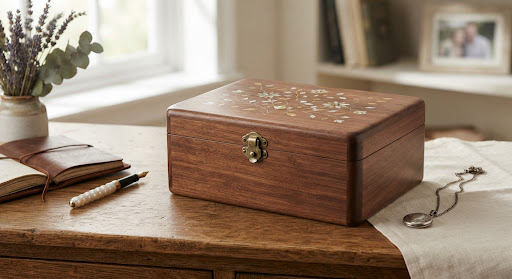
A capable wooden home décor manufacturer should do more than reproduce a reference photo. The supplier must understand how wood species, construction, sanding, colour, hardware, decorative details and retail packaging work together in repeat production. Before sourcing, buyers should define the product in measurable terms, approve a physical sample and agree how the bulk order will be checked.
Quick answer
To evaluate a wooden home décor manufacturer, check whether the factory has experience with your exact construction and finish—not just a broad catalogue of wooden items. Send a specification covering dimensions, material, moisture condition, colour reference, surface sheen, hardware, logo, packaging and acceptable natural variation. Approve a pre-production sample, keep it as the reference standard, and inspect random units from the finished order before shipment.
What counts as wooden home décor?
Wooden home décor includes decorative boxes, photo frames, wall panels, candleholders, tabletop ornaments, small shelves, carved objects and pieces that combine wood with glass, metal, ceramic, fabric or acrylic. Their production risks differ considerably.
A solid-wood ornament may depend on grain selection and stable moisture. A painted MDF wall piece depends more on edge sealing, flatness and colour control. A box with a metal latch adds fitting and alignment requirements. A frame with glass adds breakage risk and a different packaging design. Buyers therefore need to assess the manufacturing route for the particular product family, not simply ask whether a supplier “makes wooden décor.”
Importers, wholesalers, retail chains and e-commerce brands usually need more than a single attractive sample. Private-label programs may combine several SKUs, barcode versions and retail packs. A supplier that performs well on one natural-wood item may not be the right fit for a painted collection with hinges, glass and printed gift boxes.
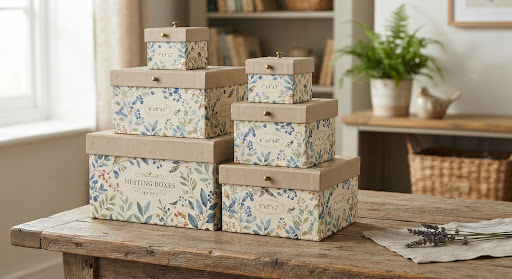
Start by checking the factory’s real product scope
Catalogue breadth is not in-house capability. Ask which operations the supplier completes itself and which are outsourced. Questions include:
- Which materials are routinely cut, turned, routed or carved?
- Where are sanding, painting, printing and metal fitting completed?
- Who inspects outsourced glass, ceramic, fabric or hardware components?
- Can the supplier show production-stage records for similar construction?
Outsourcing a specialist component is not automatically a problem. What matters is whether one party owns the final specification, incoming inspection, assembly quality and delivery result.
Choose materials according to use and finish
Material selection should begin with the product’s structure, target appearance and sales channel. Solid wood offers natural grain and can suit carved or exposed-edge designs, but buyers must accept controlled variation between pieces. Plywood can provide better dimensional stability for panels and boxes. MDF gives a smooth, uniform surface for opaque paint or printed decoration, but exposed edges need careful sealing and the product should be protected from moisture.
| Material | Useful for | Points to specify |
|---|---|---|
| Solid wood | Ornaments, frames, turned parts, carved details | Species, grade, grain expectations, knots, colour range and moisture condition |
| Plywood | Boxes, panels, trays and lightweight structures | Face veneer, core quality, visible edge treatment and flatness |
| MDF | Painted décor, printed panels and shaped profiles | Density, thickness, edge sealing, coating system and indoor-use limitations |
| Mixed materials | Frames, candleholders, display pieces and gift items | Component material, attachment method, corrosion resistance and replacement policy |
Do not specify only “pine,” “walnut colour” or “eco-friendly paint.” A useful specification identifies the wood or panel type, visible surfaces, target finish, approved colour reference and any requirements that apply in the destination market. Our guide to wood materials for custom products explains the trade-offs.
Match the manufacturing process to the design
Most decorative products pass through cutting or CNC machining, sanding, assembly, finishing, hardware fitting and packing. A weakness early in the sequence usually remains visible at the end. Poor sanding around a carved recess often becomes clearer after stain is applied.
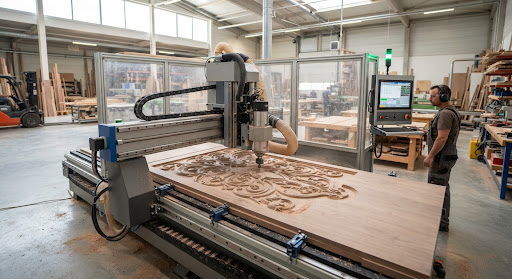
For carved designs, confirm the digital file and areas that need hand finishing. For boxes and frames, inspect corner joints and hardware alignment. Check that assembled ornaments sit level, painted edges are sealed and the coating is cured before wrapping.
Define natural variation before it becomes a dispute
Wood grain, tone and stain absorption will vary. The commercial task is to distinguish acceptable natural variation from a process defect. An approved sample set can show the lightest and darkest acceptable appearance.
Colour should also be judged under agreed lighting, because warm showroom light and cool warehouse light can make the same finish look different. For a coordinated collection, compare all SKUs together rather than approving each item in isolation. Record whether the target is a transparent stain, a washed effect, an opaque paint or a printed surface. Also state the required sheen and whether slight grain show-through is intentional.
Approve the product and packaging as one sample
A display sample without production packaging is only half a sample. The final approval should cover the product, logo, labels, individual pack, protective materials and master-carton arrangement. Otherwise, a correct item can still arrive scratched, loose in its box or packed with the wrong barcode.
Before approval, compare the sample against objective details:
- overall and component dimensions;
- material and visible grain direction;
- colour, sheen and touch;
- edge smoothness and recessed sanding;
- joint, lid, frame or hardware fit;
- logo position, size and contrast;
- retail label and barcode data;
- protective wrapping, inner support and carton marks.
Keep the signed-off sample as the production reference and attach the same revision number to the drawing, artwork and packaging file. If any material or component changes later, the supplier should obtain written approval rather than treating it as an equivalent substitution. This is one of the simplest ways to reduce the common “good sample, different bulk” problem.
Understand what drives MOQ
Minimum order quantity is rarely determined by the wooden body alone. Paint mixing, printed packaging, custom hardware, glass, logo setup and SKU variants can each create their own minimum.
Ask for the MOQ by SKU, colour and packaging version. If the total is too high, reduce unnecessary variation before asking the factory to compromise on production control. Buyers can often retain a family look by sharing one wood finish, common hardware and a standard carton structure across the range.
Set bulk quality checks before production starts
Terms such as “good workmanship” are difficult to inspect. Convert them into visible checkpoints and agreed defect limits. A wooden décor inspection commonly covers:
- wrong material, dimensions or construction;
- warping, cracks, open joints and unstable bases;
- sharp edges, sanding scratches, excessive filler or uneven coating;
- colour outside the approved range or uncured odour;
- misaligned hardware or incorrect logo, label and barcode;
- scratches, insufficient inner protection or weak master cartons.
Inspection should use random finished units, not only pieces selected for photography. Compare them with the approved sample and current specification. For a new design or a complex multi-SKU order, checking during production can reveal colour or assembly problems before the entire batch is completed. The wooden product quality-control checklist provides a fuller pre-shipment framework.
Design export packaging around the failure mode
Decorative products often fail at protruding corners, attached ornaments, glass panels or metal fittings. Simply adding more loose paper may not stop movement after repeated handling. The pack should restrain the product, separate hard surfaces and protect vulnerable points.
For a wood-and-glass frame, that may mean a surface film, corner protectors and a fitted inner box. For a carved ornament, it may require shaped support that does not rub the finished surface. Nested items need separators so coated faces do not scrape each other. Mixed ceramic-and-wood products should support the fragile component independently instead of allowing its weight to load the wooden frame.
Review the packed unit, carton dimensions, gross weight and stacking arrangement before mass packing. Agree appropriate handling or package tests for the actual route and sales channel. Parcel delivery creates different shocks from palletized wholesale distribution. More detail is available in our importer’s guide to wooden product packaging.
Buyer checklist before placing an order
- Confirm product fit. Ask for evidence of similar materials, construction and finishes.
- Issue a measurable specification. Include drawings, materials, colour, sheen, hardware, logo and packaging.
- Map outsourced components. Identify who supplies and inspects glass, metal, ceramic, fabric or printed parts.
- Approve a complete sample. Sign off the product and its production-intent packaging together.
- Define acceptable variation. Set a visual range for grain and colour instead of relying on adjectives.
- Clarify MOQ by variant. Check each SKU, colour, logo and packaging language.
- Write the inspection checklist early. Do it before production, not when the goods are already packed.
- Control changes. Require written approval for material, finish, hardware or packaging substitutions.
- Plan pre-shipment verification. Check random finished units and packed cartons against the approved reference.
Frequently asked questions
How do I verify a wooden home décor manufacturer in China?
Verify the company identity and business details, then assess production capability for your exact product. Ask for process information, similar production-stage images, sample records and a clear explanation of outsourced components. A factory visit or independent audit can add confidence, but a physical sample and a written bulk-control plan are still necessary.
What should I send in a wooden décor RFQ?
Send a drawing or dimensioned reference, expected quantity by SKU, material preference, finish and colour reference, logo artwork, packaging requirement, target market and required delivery window. Flag glass, ceramic, metal or other mixed components. Our custom wood product RFQ checklist helps organize these details.
How can buyers control colour consistency?
Use physical colour references or an approved sample range, identify the coating system and required sheen, judge samples under consistent lighting, and compare coordinated SKUs together. Natural wood should have a defined acceptable range rather than an unrealistic demand for identical grain.
Should the sample include private-label packaging?
Yes. The production-intent sample should include the logo, label, barcode, inner protection and retail pack whenever these elements are part of the order. Packaging errors can make a correct product unsellable or cause damage before it reaches the buyer.
What should be checked before shipment?
Check quantity, assortment, dimensions, construction, finish, hardware, logo, labels and packaging on random finished units. Compare them with the approved sample and specification. Open packed cartons as part of the inspection rather than examining only unpacked display pieces.
A practical sourcing conversation starts with the product
Cao County Qingtan Muyu Crafts Co., Ltd, operated by Cao County Qingtan Muyu Crafts Co., Ltd, supports OEM, ODM and private-label wooden products for overseas buyers. If you are developing a wooden home décor range, send the drawings or reference images, expected quantities, finish direction and packaging channel through our contact page. We can review the construction and identify the questions that should be resolved before sampling.