
How to Approve Wooden Product Samples Before Mass Production
A B2B buyer guide to approving wooden product samples with material, function, finish, logo, packaging and change-control checks.
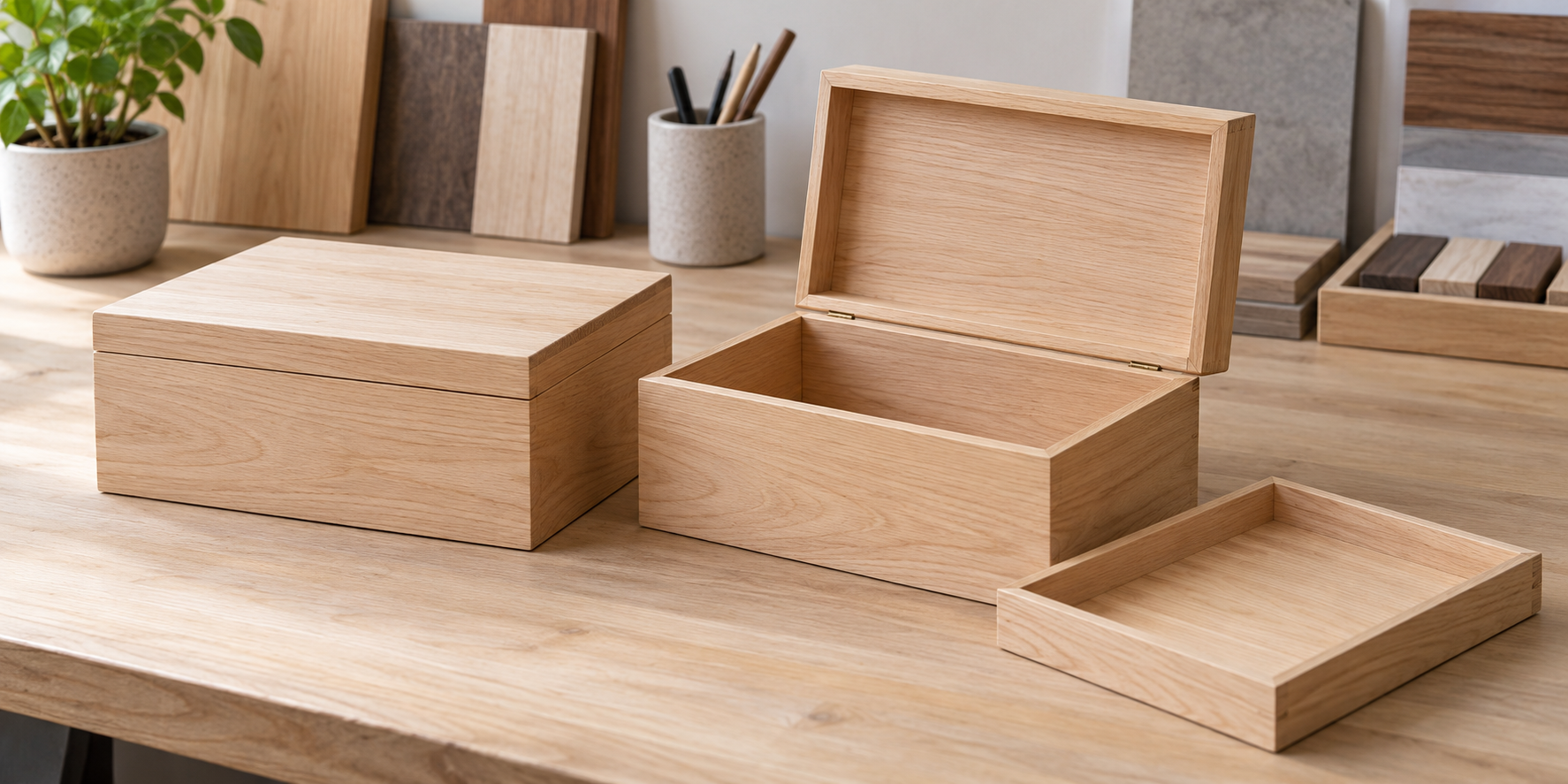
Approving a wooden product sample should mean more than replying “looks good.” Before mass production starts, buyer and factory need one shared answer: what, exactly, is the bulk order expected to match? For a wooden box, tray, organiser, décor piece, pet product, or small furniture component, that includes material, construction, function, finish, logo, packaging, and acceptable natural variation.
A sample can be attractive and still be a weak production reference. It may have been made with a different process, it may not show the final pack-out, or its key dimensions may never have been recorded. The useful approval is the one that turns a physical sample into a version-controlled production instruction.
Quick answer: approve a sample against a written reference pack
Before approving, identify the product version and check the same things that will be checked in bulk: product identity, material, dimensions, functional fit, surface condition, logo, hardware where relevant, and packed presentation. Record the approved condition in words and photographs, state any allowed variation, and tell the factory what must be re-approved if it changes. Keep the approved sample available as a reference for the production and inspection teams.
“Sample approval,” “quality control,” “pre-production sample,” and “first article inspection” are common search phrases around this decision. For a buyer of wooden products, the practical principle is straightforward: do not approve a beautiful one-off without confirming how its critical details will be repeated.
Know which sample you are approving
Buyers use the word sample for several different objects. A material swatch helps choose a species or colour; a development sample tests an idea; a pre-production sample should represent the agreed product before the full run; and a packed sample shows the export presentation. They answer different questions.
Ask the factory to state which version you are receiving and what is different, if anything, from planned bulk production. If a hand-made development piece uses a temporary component, a different finish route, or non-final packaging, write that down. Do not silently treat it as the benchmark for an order that will be made another way.
Start with the product identity and use
Give the sample a product name or SKU that connects it to the quotation, drawing, artwork, and purchase order. A family of similar boxes can easily be confused once lid depth, inner fit, engraving, insert, or finish changes. The approval record should identify the exact version, not just say “wooden gift box approved.”
Then test the product as it will be used. Open and close the lid. Place a tray on the surface it is designed for. Check that a divider seats correctly. Assemble any knock-down component. For a pet item, check the intended access or fit point. Functional notes are more useful than a general statement such as “good quality.” If a feature needs a particular clearance, feel, or alignment, say so in the acceptance reference.
Review the wood as a material, not as a perfectly uniform sheet
Natural wood varies in grain, colour, knots, mineral streaks, and end-grain appearance. The reference pack should distinguish an accepted natural characteristic from a feature that is unacceptable for this product or sales channel.
Discuss the named material, visible faces, component thickness where it matters, edge treatment, joint style, and any veneers, engineered panels, or mixed materials. The wood-material selection guide can help turn a broad material preference into sourcing questions.
Measure what affects fit, assembly, and display
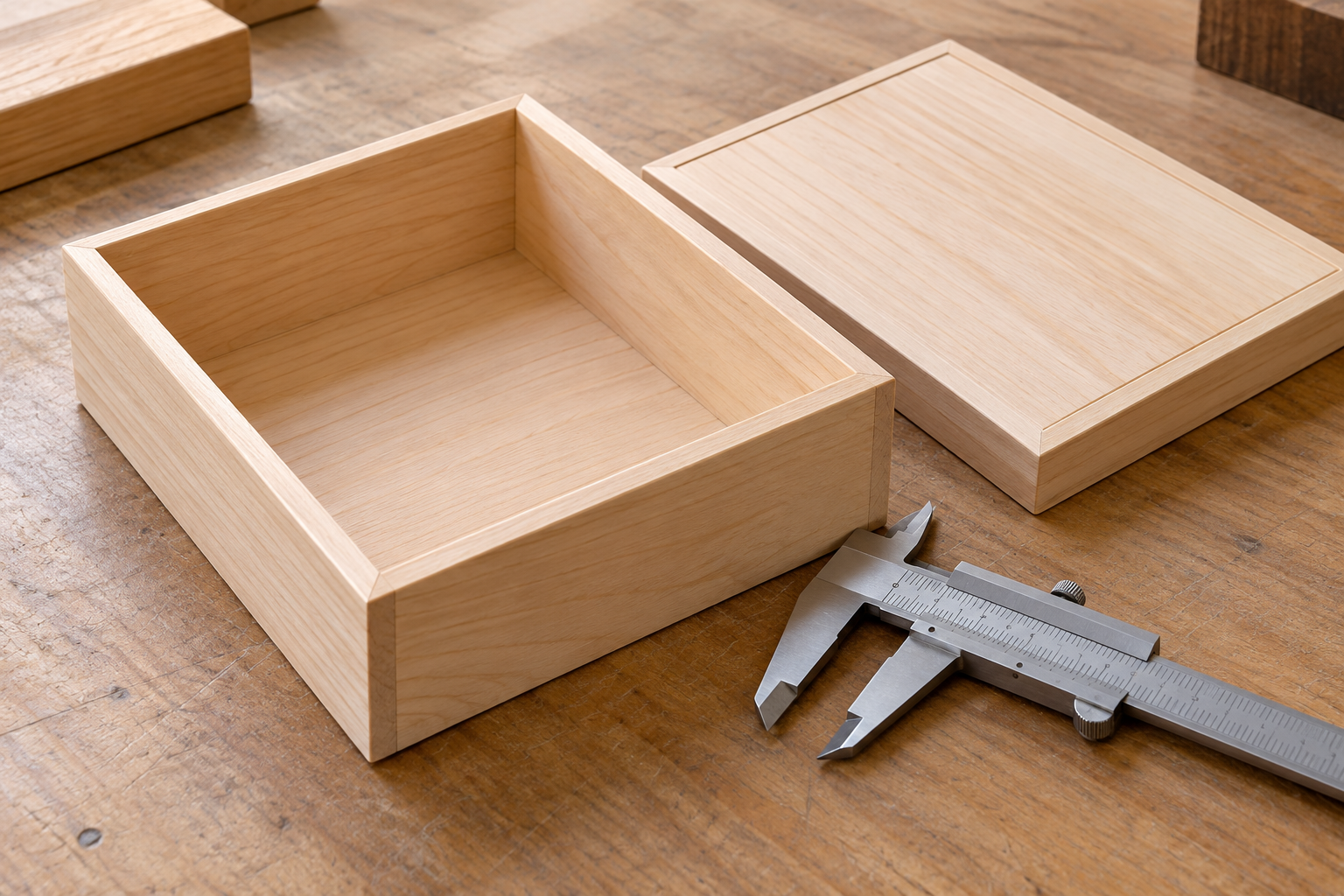
Not every dimension is equally important. Buyers should mark the dimensions that control a function: internal usable space, lid engagement, handle opening, wall thickness, distance between mounting points, or the overall footprint that must fit a retail shelf or insert. A drawing can list these dimensions; the sample-approval record should show which ones are critical to acceptance.
Do not invent a universal tolerance for every wooden product. The appropriate range depends on the product, material, construction, finish, and use. Instead, agree the measurement points, the reference dimension, and the action if a production piece does not meet the agreed condition. That gives a factory and a third-party inspector something concrete to check.
Check finish, logo, and touch points in the same review
A finish should be reviewed on the actual material and product geometry, not only from a colour chip. Look at the visible faces, edges, corners, routed areas, and interiors that the customer will touch or see. Record the intended sheen and colour direction in plain language and images. If natural variation is expected, show an acceptable range rather than approving a single unusually uniform piece and expecting every unit to look identical.
For a laser-marked, printed, or engraved logo, confirm the artwork version, placement, orientation, size relationship, contrast, and how the mark reads on the chosen wood. A logo is not approved just because its spelling is correct. If the design is customised, link the sample record to the artwork file and retain a clear photograph of the approved mark. See the OEM laser-engraving guide for the additional questions to resolve before bulk production.
Approve the construction, not only the appearance
Turn the sample over. Look at the inside, joints, fasteners, feet, hinges, and any part that cannot be judged from a front-facing product image. Construction decisions affect function, appearance, and how the product may respond in use. Ask the factory to flag changes needed for production feasibility instead of making an unannounced substitution later.
For a fitted solid-wood component, wide panel, or close-tolerance part, include a function check in the reference. It makes construction expectations visible before production is released. The importer guide to cracking and warping explains why a post-arrival issue needs evidence rather than a generic explanation.
Do not leave packaging until after the product is approved
A finished product can look right on a bench and arrive in an unacceptable presentation. If packaging is part of the retail offer or needed to protect a sensitive form, approve it as part of the same decision. Review the inner wrap, separators, corner protection, inserts, retail box, master-carton arrangement, and the amount of movement inside the pack where relevant.
A packed sample is especially useful for an engraved surface, protruding handle, close-fitting lid, fragile mixed-material detail, or multi-piece set. Confirm the actual pack-out before shipment rather than assuming the product sample proves the protection plan. The wooden product packaging guide lists details for the packing specification.

Freeze the approved reference without creating a paperwork trap
The goal is a usable reference, not a complicated folder nobody opens. A practical pack can contain the SKU and revision, dated sample photographs, dimensional notes, material and finish description, logo reference, functional checks, packing notes, and approved deviations. State who approved it and where the physical reference is held.
Create a change rule. If the factory needs to change a material source, construction, hardware, finish route, logo method, retail pack, or a critical dimension, it should notify the buyer before bulk use. Silence should not count as approval.
Carry the approval into mass production
Sample approval is the beginning of repeatability, not the end of quality control. Share the approved pack with the production contact, quality team, and any inspection provider—not only the salesperson. Ask how the first production pieces will be compared with it, which checks happen during production, and what happens if a variance is found.
Representative Buyer Scenario: a retailer approves a wooden organiser with a clean finish and a lid that closes smoothly. Before bulk release, the buyer freezes the exact SKU, material description, lid function, logo position, photo reference, and packed presentation. During production, a change to the lid construction is proposed. The factory pauses for written review rather than treating the original approval as permission for any similar lid. This is an example, not a real customer case; its purpose is to show that approval must be connected to change control.
For the broader handoff from a custom idea to a repeatable order, read how to develop a custom wooden product from sample to bulk order. For the final check before shipment, link the approved reference to the wooden product quality-control checklist.
Buyer checklist: approve before mass production
- Identify the exact SKU, revision, and purpose of the sample.
- Compare the sample with the quotation, drawing, artwork, and requested use.
- Check material, visible wood character, construction, edges, surface, and touch points.
- Test the product function and record fit-sensitive dimensions or conditions.
- Confirm finish direction, logo artwork, position, and appearance on the real substrate.
- Review hardware, components, and any production-feasibility changes.
- Approve a packed sample when packaging affects presentation or protection.
- Store dated photos and notes with the physical approved reference.
- State what changes must come back for written approval before bulk use.
FAQ
What should be included in a wooden product sample approval?
Include the exact product version, material and visible character, key dimensions and function, construction, finish, logo, hardware where relevant, packaging, photographs, approved deviations, and the change-control rule for bulk production.
Is a photograph enough to approve a wooden product sample?
Photographs are useful records, but they do not reliably show feel, fit, construction, edge treatment, finish texture, or packaged protection. Use them with a physical sample and written acceptance notes whenever the product requires those checks.
What is the difference between a development sample and a pre-production sample?
A development sample helps refine the concept. A pre-production sample should represent the agreed product before the full run. Ask the factory to disclose any material, process, component, or packing difference between the sample you receive and the planned bulk method.
Should packaging be approved before mass production?
Yes, when it affects retail presentation, component separation, product protection, carton fit, or shipment readiness. A product-only sample does not automatically prove that the final pack-out is acceptable.
What changes require a new wooden product sample approval?
Changes to material, construction, critical dimensions, finish route, logo method or placement, hardware, and packaging should be reviewed against the approved reference. Agree the project-specific rule in advance instead of assuming that a similar-looking replacement is acceptable.
Make the approval useful to the people making the bulk order
Cao County Qingtan Muyu Crafts Co., Ltd, also known as Cao County Qingtan Muyu Crafts Co., Ltd, supports custom wooden homeware, OEM, and private-label projects for importers and brands. To discuss a sample before mass production, send an inquiry to woodhomeware.com with the product drawing or photos, material preference, dimensions, finish, logo, packaging, quantity, destination market, and the details that cannot change after approval.