Custom Laser Engraved Wooden Products: OEM Guide for Buyers
An OEM guide to custom laser engraved wooden products, covering artwork, sampling, personalization, packaging and bulk release.
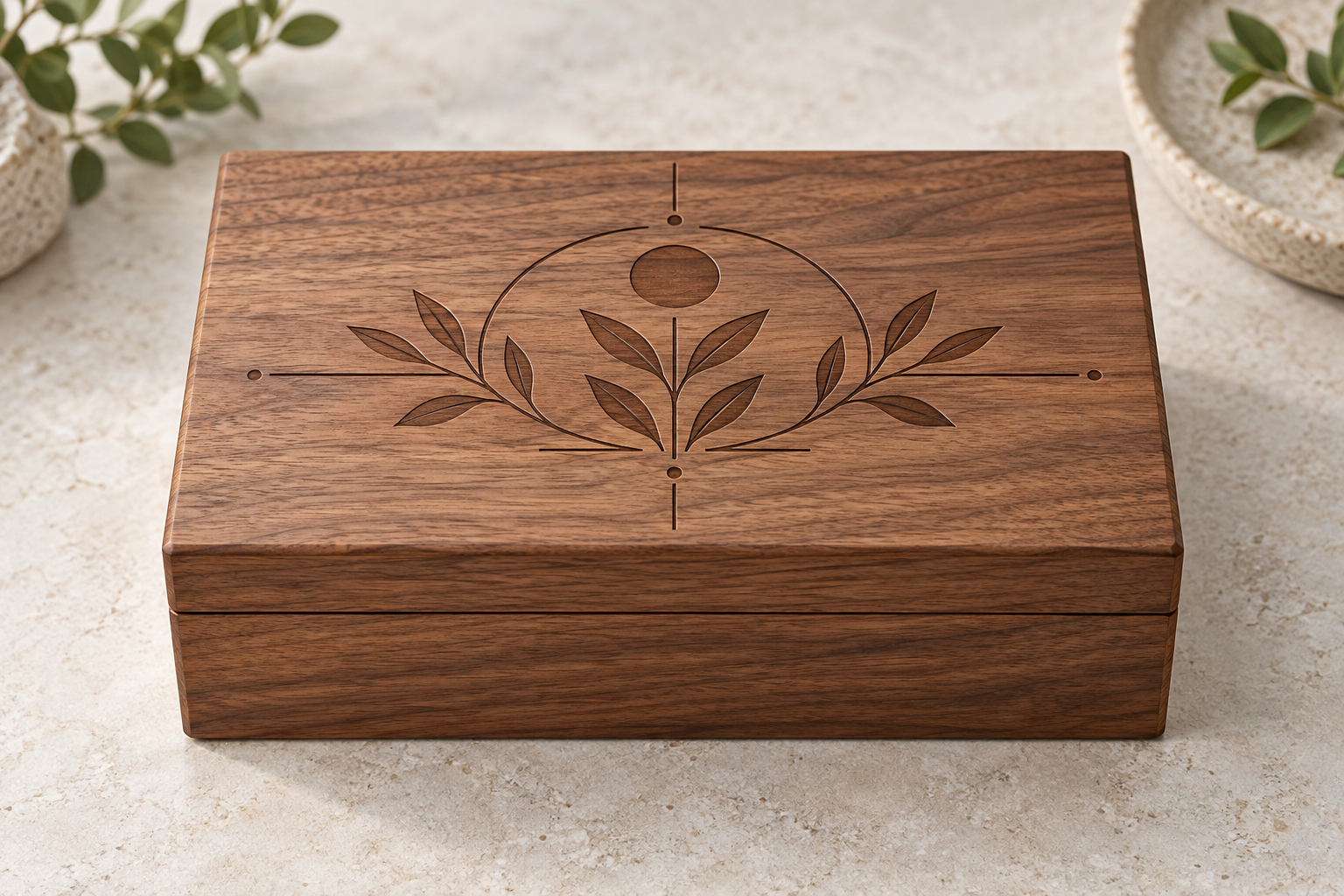
Custom laser engraved wooden products become difficult when the artwork is treated as an afterthought. A logo, illustration or name is not simply placed onto a finished item: the result is affected by the product shape, available engraving area, wood grain, surface condition, finishing sequence and the way each individual item is packed. For OEM buyers, the safest route is to approve the product and engraving system together.
Quick answer
Begin with the exact product, the intended engraving content and the selling format. Give the supplier a controlled artwork package, identify the material and finish direction, and approve an engraved sample that represents the final product. If a program includes individual names or variable designs, define the data handoff and proofing process before bulk production. Release production only after the approved product, engraving version and packaging are documented together.
What makes a wooden product “custom laser engraved”?
Custom laser engraving can add a brand mark, line illustration, pattern, message, serial reference or personalized field to products such as boxes, coasters, trays, frames, ornaments, display pieces and wooden homeware. The customization may be one fixed design for every unit, or it may change by order, market or recipient.
Those two models need different controls. A fixed logo program needs a final artwork version and location. A personalization program also needs a controlled data source, a rule for handling names or variable fields, a proofing step and a method to keep each engraved item with its correct packaging. The buyer should settle this process before asking the factory to start a run.
1. Choose the base product before finalizing the artwork
Start with the unbranded item. Define its dimensions, material direction, visible faces, edge treatment, opening or closure if applicable, intended use and packaging format. Then map the engraving area onto that product. A detailed design that looks clear on a flat sample plaque may not suit a small curved surface, a narrow frame edge or a lid with dramatic grain movement.
Include a reference showing the engraving position, orientation and safe margin from product edges, joints, hardware or openings. If the item has several faces, state which face receives the design and whether the reverse needs a mark, care label or variable field. These details allow suppliers to quote the same scope instead of interpreting a product photo differently.
The custom wooden product RFQ checklist can help turn an early concept into a request that covers both product construction and personalization requirements.
2. Send an artwork package a factory can review
A polished presentation image is useful for explaining the brand direction, but it is not enough for production. Send the artwork source file, a clear visual reference, the intended physical size, placement drawing and version name. Identify which elements must remain crisp, which areas may be simplified and whether the design is intended as a fine line, filled area or a broader pattern.
Keep one approved version as the source of truth. If the buyer changes the logo, adjusts letter spacing, moves the mark or adds a border after sampling, assign a new version and have the supplier confirm the update. This sounds administrative, but it prevents an old attachment from being used when a project has moved through design, purchasing and packaging teams.
| Artwork item | What the buyer should provide | Why it matters |
|---|---|---|
| Source artwork | The final production file and a human-readable visual reference | The factory needs both the source and the intended visual result. |
| Placement | Face, orientation, target size and edge clearance | A design can look wrong even when the engraving itself is clean. |
| Version control | A revision name or date for every approved change | Bulk production must use one traceable artwork version. |
| Variable content | A field list, spelling rules and proofing owner | Personalized units need a controlled handoff, not manual guesswork. |
| Packaging relationship | Which card, sleeve or box belongs with each engraved variation | Personalized products can be correct but packed to the wrong recipient. |
3. Match the design to the wood and finish
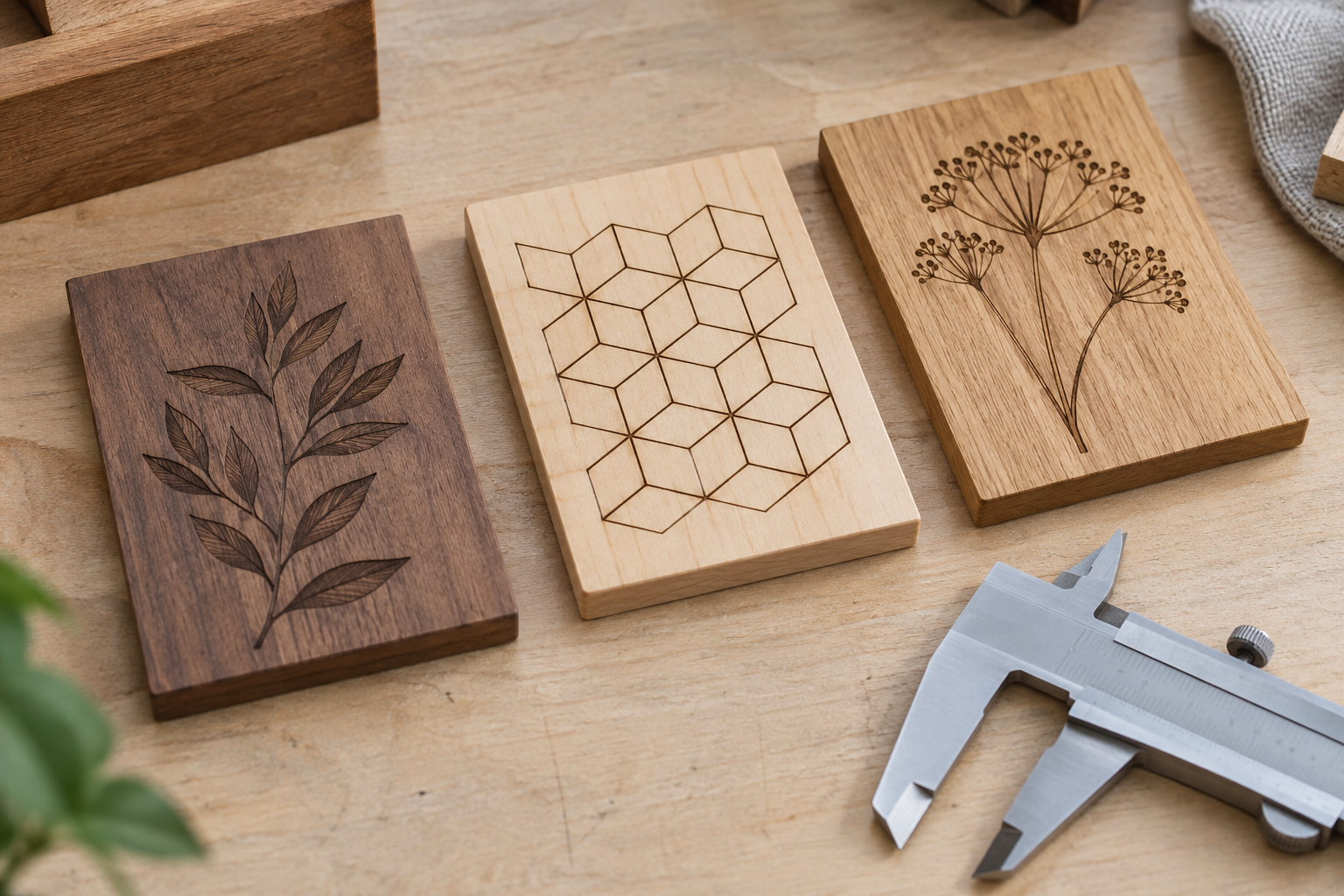
Natural wood does not behave like a perfectly uniform printing substrate. Grain direction, color variation, density and the finish of the visible face can influence how an engraving appears. A buyer should not demand a vague “dark and even” result without first approving what that means on the actual material and product surface.
Discuss the material direction with the supplier before setting the artwork expectation. Ask how the selected wood will affect fine lines, large filled areas and contrast. If the product uses different wood pieces or a varied grain pattern, determine whether the brand accepts visible tonal variation in the engraving. The relevant choice may be a simpler mark, a different location, a different finish appearance or an accepted visual range documented on the sample.
For the base material discussion, use the wood materials guide for custom products. It helps buyers identify what needs approval before a decorative treatment is added.
4. Approve an engraved sample, not a digital proof alone
A digital proof can confirm layout and spelling. It cannot confirm the relationship between the design, the wood, the finished product and the final packing. Request a sample that uses the proposed material direction, product shape, finish sequence, artwork version and logo location. Review it under ordinary viewing conditions as a customer or retail buyer would.
Check the design’s position, orientation, legibility, edge clearance and overall balance. Then check the product itself: wood appearance, sanding, corners, lid fit or assembly where relevant, and whether the engraving has affected the visual surface in a way the brand accepts. If the product is intended for food contact or has a special finish, include that in the material and compliance review rather than assuming engraving resolves the underlying product requirement.
Our earlier guide on controlling logo quality in bulk covers detailed inspection points. This OEM guide focuses on getting the product, design file, personalization workflow and approval path right before bulk inspection begins.
5. Plan personalization before the order is opened
Personalized engraving adds an information-control problem. Decide who provides names, codes or messages; which file format is used; who checks spelling; how late changes are handled; and who gives the final release. If there are many variable units, agree how the supplier will match each engraving entry to its product and packaging without exposing information that is not needed for production.
Run a small representative data test before bulk work. It should test typical lengths, special characters permitted by the buyer’s brief, placement logic and the packaging match. Do not rely on an informal spreadsheet passed between multiple people without a final version owner. A simple controlled file and sign-off process is often more valuable than an elaborate design presentation.
6. Build a single production-release record
Before bulk production, collect the records that define the approved order: product drawing or reference, material and finish notes, final artwork version, approved engraved sample images, personalization rules if any, packaging layout, label copy and inspection points. This record gives the supplier and buyer one decision source when the program moves from sampling to production.
During bulk review, compare selected units with that record. Look at product condition, engraving placement and appearance, version use, spelling where relevant, component completeness and the link between the engraved product and its package. The broader wooden product quality-control checklist can support this inspection, while the buyer keeps the artwork-specific approval record with it.
7. Protect the engraved face in packaging
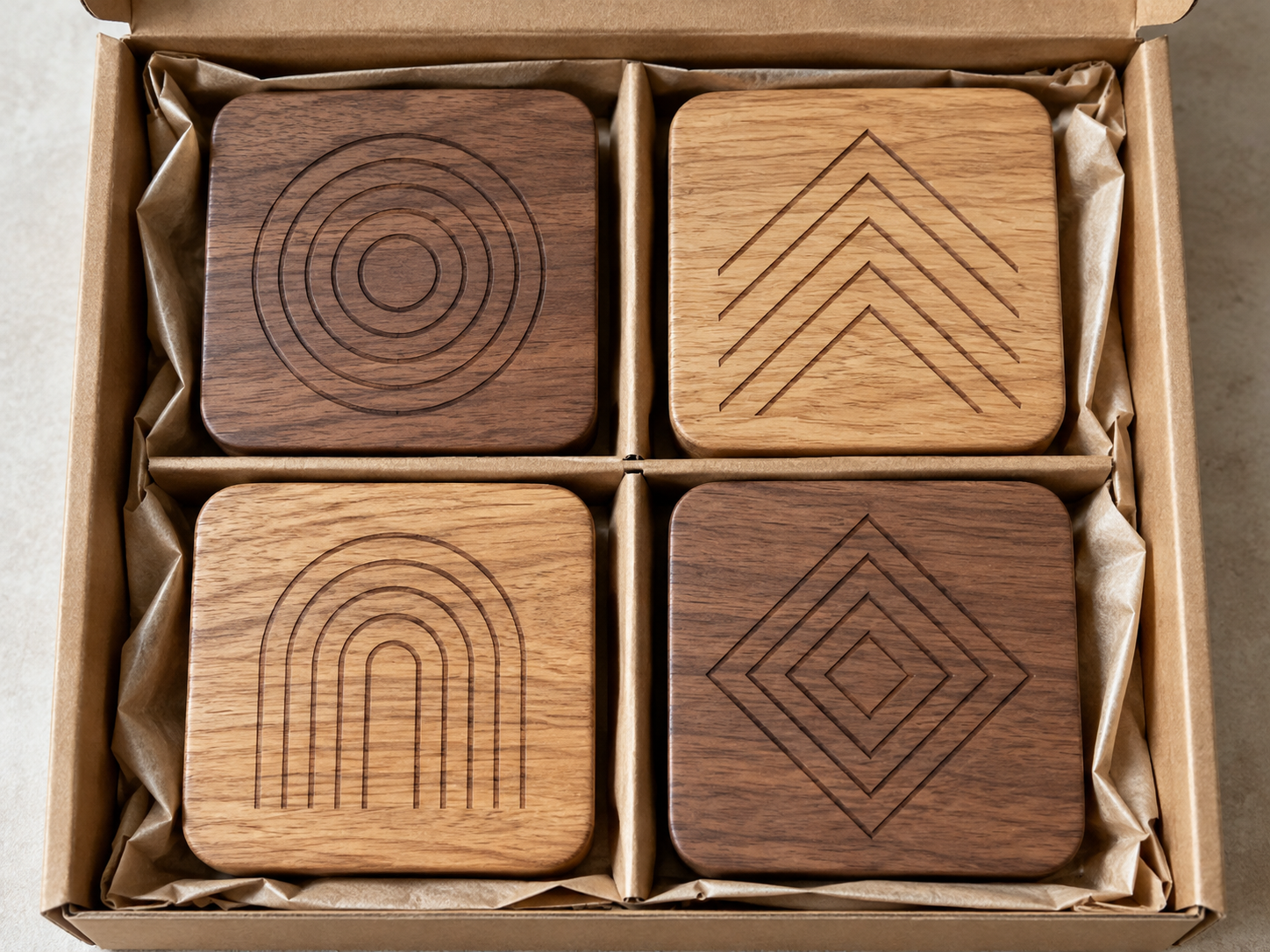
Engraving is part of the visible product surface, so packaging should be checked for rubbing, abrasion and mix-ups. A coaster set, box or ornament may need separators, sleeves or a fitted insert. A personalized gift product may also need a matching card, label or order reference. The packaging approval should show not only the outside carton but also how the item rests inside it.
Open a packed sample unit before release. Check that the product is correctly identified, the engraved face is protected, the right variation is paired with the right insert, and outer-carton information reflects the agreed program. See the wooden product packaging guide for the wider export review.
Buyer checklist: OEM laser engraved wooden products
- Define the base product, engraved face, selling format and packaging goal.
- Send a production-ready artwork package with placement and version information.
- Review the wood and finish direction against the intended engraving appearance.
- Approve an engraved physical sample, not only a digital mock-up.
- For personalized orders, assign one data source and one proofing owner.
- Lock the product, artwork, packaging and inspection record before bulk release.
- Check selected bulk units against the approved visual and product reference.
- Open packed units to confirm face protection and correct variation matching.
FAQ
How do I order custom laser engraved wooden products from an OEM supplier?
Define the base product and engraving area, send controlled artwork and placement details, approve an engraved sample on the proposed material, then lock the product, artwork and packaging records before bulk production.
What files should a buyer send for laser engraved wooden products?
Send the final source artwork, a visual reference, target size, placement information, orientation and a revision name. The supplier should confirm that the design suits the proposed product surface before sampling.
Why can the same laser engraving look different on wood?
Natural wood varies in grain, color, density and surface condition. Buyers should use physical sample approval to define an acceptable visual result rather than relying only on a digital proof.
How should personalized laser engraved products be controlled?
Use one controlled data file, assign a proofing owner, test representative entries before bulk work and define how each engraved variation will be matched to its correct packaging.
How should laser engraved wooden products be packed for export?
Use packaging that protects the visible engraved face from rubbing, keeps set components or personalized variations correctly paired, and carries the approved insert and outer-carton information.
Discuss an OEM engraving brief
Cao County Qingtan Muyu Crafts Co., Ltd can review an OEM project for engraved wooden boxes, coasters, homeware, gifts or related custom products. Send the base product, artwork direction, personalization needs and packaging goal so the key approvals can be identified before sampling. Contact our team to start a focused project discussion.