Wooden Cutting Board Manufacturer: What Importers Should Check
A buyer guide to specifying, sampling and inspecting custom wooden cutting boards, from construction and finish to export packaging.
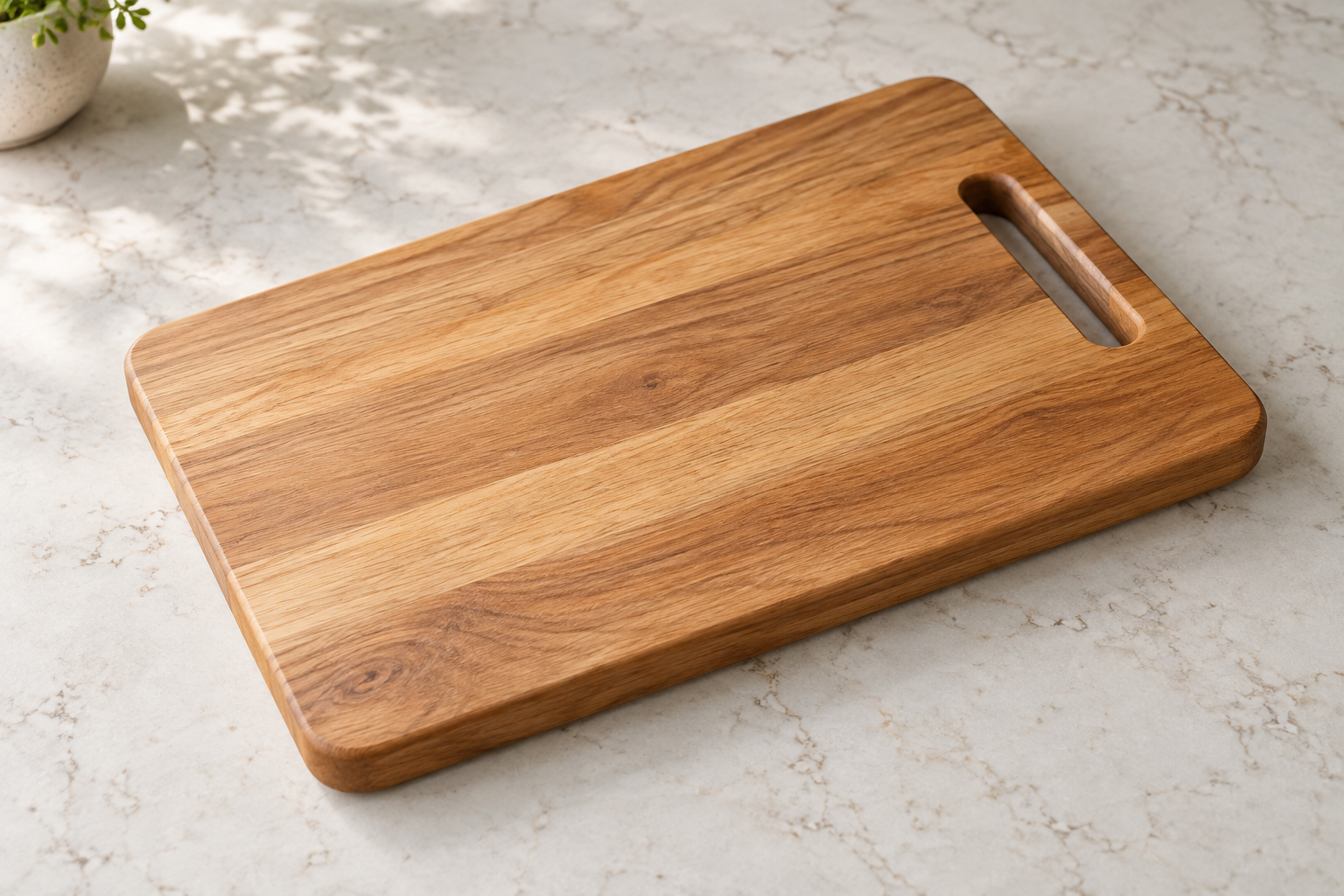
A wooden cutting board can look finished in a product photo and still be a difficult import if the buyer has not defined the construction, food-contact finish, flatness expectation and packed condition. Importers should assess a cutting board as a working surface, not only as a kitchen accessory. The questions below help turn a visual idea into a specification that a manufacturer can quote, sample and inspect.
Quick answer
Choose a wooden cutting board manufacturer by first defining how the board will be used and sold, then checking the proposed wood, construction, glue and finish against that brief. Approve a sample with a written inspection list, including flatness, edges, joints, surface feel, logo and packaging. Before shipment, inspect the boards and the final cartons against the approved sample and specification.
Why cutting boards need a different buying checklist
A serving tray can be judged mainly by appearance and load use. A cutting board is also cut, washed, dried and stored by an end user. That makes the board’s surface, edge treatment, construction and care instructions part of the commercial product. A shallow scratch may be expected in use; an open joint, splintering edge or unstable board is a different matter.
The buyer does not need to prescribe every factory operation. They do need to state the product’s intended use, market, preferred construction and acceptance criteria. If the board is sold for food preparation, do not accept a broad phrase such as “food safe” as the entire specification. Ask the supplier to identify the proposed coating or oil system, the components used, the use limitation and the documentation appropriate to the destination market. Compliance requirements should be confirmed by the buyer for the market where the product will be sold.
1. Start with the use case, not a catalogue image
Clarify whether the item is a daily-use cutting board, a carving board with a groove, a compact gift item, a charcuterie-style board, or a retail set with accessories. The same silhouette can need very different construction and packaging depending on that answer.
- Overall dimensions, thickness range, shape, handle opening and whether a juice groove is required.
- Whether the board is intended for knife use, serving use, or both.
- Preferred appearance: single wood, contrasting strips, visible grain character or a quieter retail look.
- Whether the board must be reversible, have feet, include a care card, or arrive inside a gift box.
- Logo method, location and the artwork file that is approved for production.
- The destination market and any food-contact or labeling requirements the buyer needs the supplier to address.
Put these points into one RFQ rather than sending successive messages with different reference images. The custom wood product RFQ checklist can help a purchasing team collect that information before asking several manufacturers to quote.
2. Ask how the board is built
“Solid wood cutting board” is a product description, not a complete build specification. A buyer should ask whether the proposed board is a single piece, an edge-grain lamination, an end-grain construction or another arrangement. Each choice affects the visual result, machining steps, glue lines, cost and the checks needed on a sample.
Ask which wood species or material the supplier proposes and why it suits the intended item. Discuss visible variation, knots, sapwood, color change and how mixed pieces will be controlled. Natural variation is normal in wood; the commercial question is what variation the brand will accept on a retail shelf. The buyer’s material brief should also make clear whether a decorative inlay or contrasting strip is allowed, because it changes the inspection focus.
For laminated boards, ask to see the proposed joint layout and inspect the sample after it has been finished. The aim is not to chase an impossible uniform appearance. It is to make sure the product is stable, the joints are clean and the appearance matches the approved direction. See our wood materials guide for custom products for questions to take into this discussion.
3. Make the finish and food-contact discussion specific
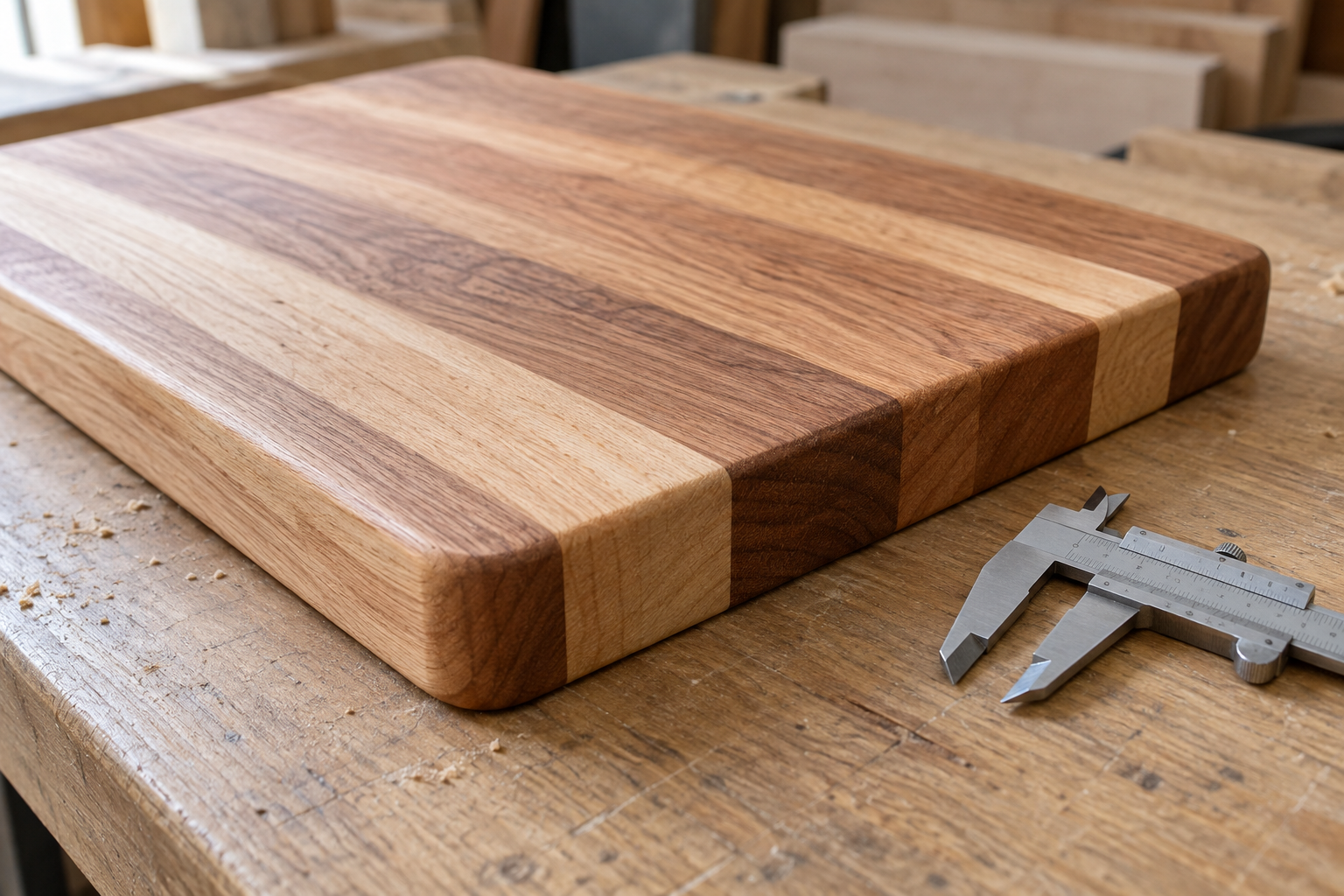
A cutting surface is not the place for vague language. Ask the manufacturer what finish is proposed for the board, whether the same treatment is applied to all exposed faces and edges, and how the board should be cared for after sale. If the brand has a particular appearance in mind, approve that appearance on the sample; different wood pieces can take a treatment differently.
Also ask whether the product includes a care leaflet, what it says, and who is responsible for approving the wording. Care guidance should match the product and the buyer’s market requirements. It should not promise that the board is maintenance-free or suitable for uses the buyer has not confirmed. This is especially important for a private-label board, where the brand owns the customer-facing expectation.
4. Treat the sample as a product test, not a photo approval
Request a sample that represents the intended construction, material direction, finish and logo. A stock sample can show general workmanship, but it cannot approve a new board size, custom groove, branded packaging or final color. Name the sample type in writing so the supplier and buyer are not approving different things.
| Sample check | What to look for | Why it belongs in approval |
|---|---|---|
| Flatness and stability | Place the board on a known flat surface and check for rocking. | The board must be usable before it reaches the customer. |
| Surface and edges | Feel the cutting surface, rounded edges, handle opening and groove transitions. | Rough sanding or sharp areas can become a customer complaint. |
| Joints and appearance | Review glue lines, visible variation, inlays and any filled features against the approved direction. | The retail appearance needs a clear limit for production review. |
| Finish and logo | Confirm sheen, color effect, logo placement and legibility. | These are difficult to correct after a full run is complete. |
| Pack-out | Check protective materials, care card, retail presentation and outer-carton information. | The imported unit includes its packaging, not just the board. |
Use a short approval record with photos of the accepted sample, the revision date and the agreed material/finish notes. This is more helpful than an email thread that says only “looks good.” The questions in our manufacturer enquiry guide can be adapted into that record.
5. Check production against the approved reference
Before shipment, inspect more than one board and compare the selected units with the sample record. Review the product’s dimensions, flatness, surface smoothness, edge consistency, joint condition, groove shape where relevant, logo, finish appearance and component completeness. If the item is a set, check that every promised board, stand, care card or accessory is present.
For natural wood, the goal is not to eliminate every grain or tone difference. The goal is to stop an unexpected change in construction, poorly finished edges, open joints, cracking or a board that does not sit properly. Photograph issues against the agreed specification and decide the corrective action before goods are released. Our wooden product quality-control checklist provides a broader structure for this step.
6. Inspect the carton as carefully as the board
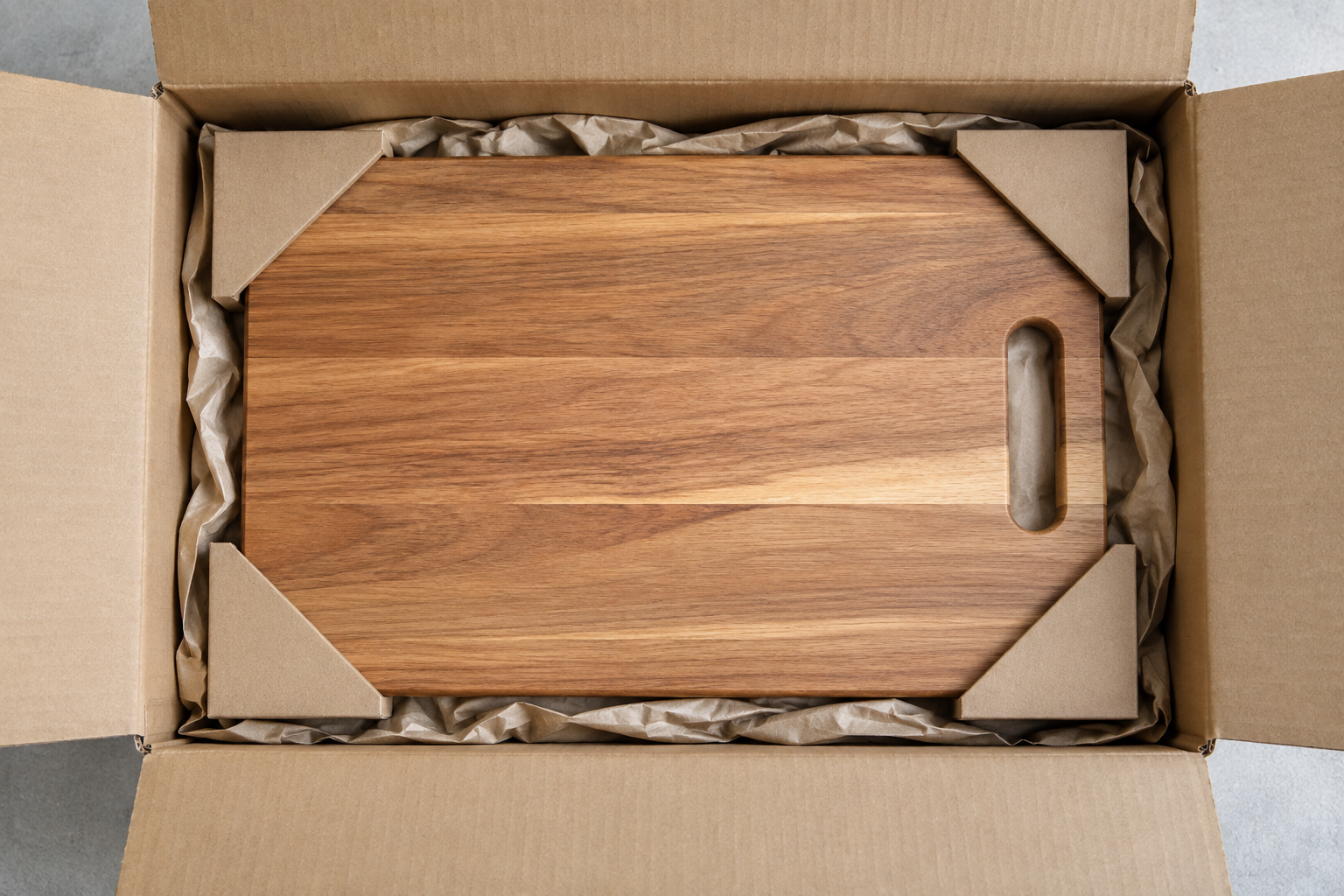
Cutting boards have vulnerable faces, corners and handle areas. The outer carton, inner wrap and corner protection need to be approved as part of the product. A plain export carton may be appropriate for a wholesale order; a retail program may require a printed box, insert, barcode position and care information. Those are separate decisions and should not be assumed from a product photo.
Open a packed unit before the shipment is released. Check that the board is protected from rubbing against hard surfaces, that paper material or inserts do not mark the finish, and that all print or label information matches the approved files. Review the carton dimensions and packing list with the party arranging freight. The wooden product packaging guide explains the handoff points in more detail.
Buyer checklist for a wooden cutting board manufacturer
- Define the board’s intended use, shape, construction direction and destination market.
- Ask each supplier to quote the same material, finish, logo and pack-out scope.
- Confirm the construction, wood selection approach and acceptable natural variation.
- Make the food-contact finish and care guidance a documented approval item.
- Identify whether the sample is stock, feasibility or pre-production.
- Approve flatness, edges, joints, surface, logo and packaging with a written record.
- Inspect bulk boards and packed units against that approved reference.
- Resolve nonconformities before the shipment is released.
FAQ
How do I choose a wooden cutting board manufacturer?
Choose a supplier that can discuss your intended board construction, materials, finish, logo and packaging in specific terms, then confirm that capability with a representative sample and documented inspection plan.
What should importers check on a wooden cutting board sample?
Check flatness, surface smoothness, rounded edges, handle or groove machining, joints, finish appearance, logo, included care material and the final pack-out.
What wood construction should a buyer specify for a cutting board?
The right construction depends on the intended product, appearance and price position. Ask the manufacturer to identify the proposed build and approve the resulting sample rather than relying on a general “solid wood” description.
How should a cutting board finish be specified?
Ask for the proposed finish system, the expected appearance, the faces and edges it covers, and the related care guidance. Confirm any market-specific food-contact requirement with the buyer’s own compliance process.
How should wooden cutting boards be packed for export?
Pack the finished board so its faces, corners and handle area are protected, every required insert is present, and the agreed retail or shipping labels are correct. Inspect a packed unit before release.
Discuss a cutting-board brief before sampling
Cao County Qingtan Muyu Crafts Co., Ltd can review a wooden cutting board enquiry that includes the intended use, dimensions, material direction, logo and packaging goal. Start with a clear brief, then use the sample to settle the details that matter in bulk production. Contact our team to discuss a custom wooden product project.