
How to Source Custom Wooden Furniture from China
A practical sourcing guide for importers covering furniture drawings, materials, hardware, samples, assembly checks, bulk QC and export packaging.

Sourcing custom wooden furniture from China is an engineering and logistics project, not a catalogue purchase. The supplier needs a controlled drawing, material schedule, finish reference, hardware list, packaging plan and inspection standard. A good-looking sample only matters when the same specification can be repeated in bulk.
Quick answer
To source custom wooden furniture from China, first define the product’s use, dimensions, expected load, material construction, finish, assembly method and destination market. Shortlist manufacturers with relevant furniture processes, verify what they make in-house, and request a quotation against the same specification. Approve a production-representative sample, perform a full assembly check where applicable, inspect random finished units before shipment and validate the packed product—not only the furniture outside its carton.
Decide what “custom” means for the project
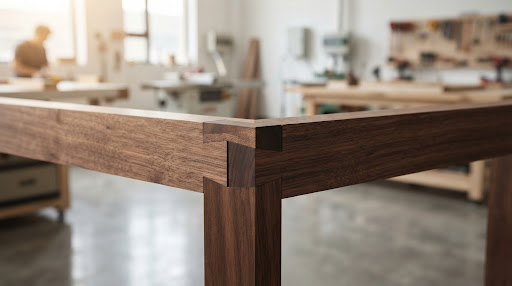
Custom furniture can mean a new size of an existing table, a different finish on a standard cabinet, private-label packaging, or a completely new structure developed from drawings. Those projects do not carry the same cost or risk. A finish change may only affect coating setup and sample approval. A new knock-down desk may require revised joints, fittings, drilling fixtures, assembly instructions and packaging.
State the customization level in the first RFQ. Buyers should identify which details are fixed and which may be adjusted for manufacturing. If an external designer supplied the concept, ask who will convert it into production drawings and who is responsible for confirming the final structure.
Prepare an RFQ that factories can quote consistently
A photograph and overall size are not enough for a reliable quotation. Suppliers may price similar-looking products with different panel thicknesses, supports, veneers, hardware and packaging. The comparison is meaningless unless the assumptions are written down.
The RFQ should include:
- dimensioned drawings or a clear reference with critical measurements;
- intended use, installation location and expected loading conditions;
- solid wood, plywood, MDF, veneer or mixed-material preferences;
- visible faces, grain direction, colour and surface sheen;
- assembled, knock-down or partly assembled delivery format;
- hardware, feet, slides, hinges, inserts and spare-parts requirements;
- logo, labels, assembly instructions and retail packaging;
- quantity by model, colour and destination;
- target inspection and delivery milestones.
The custom wood product RFQ checklist can be used as a starting structure. Send the same controlled file to each shortlisted supplier and record every revision.
Verify capability for the actual furniture construction
“Furniture factory” covers very different operations. A workshop experienced in solid-wood tables may not be set up for veneered cabinets with concealed fittings. A supplier that makes decorative shelves may not routinely test larger load-bearing furniture. Ask for process evidence relevant to the construction you intend to buy.
Useful checks include material storage, panel cutting, CNC drilling, edge treatment, sanding, joinery, trial assembly, coating, hardware fitting and packing. Clarify which stages are completed in-house and which are subcontracted. Outsourcing is not automatically unacceptable, but the contracting supplier must control incoming components and remain responsible for the finished product.
Confirm the legal company receiving the order and the production location. Platform badges and showroom photographs are useful leads, not substitutes for a sample, technical discussion or factory verification. Our guide to questions for a wooden products manufacturer covers this screening stage.
Select materials as a construction system
Material choice affects appearance, weight, movement, machining, finish and packaging. Solid wood provides natural grain and can work well for frames, legs and exposed edges, but species, grade, lamination and moisture condition need to be controlled. Plywood offers stable panel construction and visible veneer options. MDF provides a smooth surface for opaque paint but requires suitable edge sealing and should be matched to the intended environment.
| Construction choice | Buyer should define | Common inspection focus |
|---|---|---|
| Solid-wood frame | Species, grade, section sizes, grain selection and joints | Cracks, knots at stressed areas, joint fit and colour range |
| Veneered panel | Core material, veneer species, matching direction and edge treatment | Flatness, lifting, bubbles, chipped edges and shade consistency |
| Painted MDF | Board thickness, edge sealing, colour and sheen | Edge coverage, dents, coating defects and odour after curing |
| Mixed wood and metal | Metal grade, coating, fixing method and contact surfaces | Alignment, corrosion marks, scratches and stability |
Do not approve only a wood species name or colour description. Link the substrate, visible surface and finish together. A walnut-coloured veneer over plywood is not the same construction as solid walnut, even if the sales photograph appears similar. See the wood-material selection guide for a fuller comparison.
Lock the drawing before approving the sample
The production drawing should show overall dimensions, component sections, hole positions, joints, clearances and hardware references. Identify critical dimensions that affect installation, stability or mating parts. For tables and seating, the geometry of the base and frame is as important as the visible top. For cabinets, check door gaps, drawer travel, shelf support and wall-fixing provisions where relevant.
Give each drawing, finish sample, artwork file and instruction sheet a revision number. Written approval should refer to those exact revisions. If the factory proposes a different fitting, panel or joint after sampling, require the change to be reviewed rather than accepting an undefined “equivalent.”
Test the furniture as the buyer will receive it
A display sample assembled by experienced factory staff can hide problems that appear during customer assembly. For ready-to-assemble furniture, use the supplied hardware and instruction sheet to build the sample from the packed condition. Watch for missing components, unclear steps, misaligned holes, stripped inserts, tools that do not fit and parts that can be installed in the wrong direction.
After assembly, place the furniture on a level surface. Check rocking, joint closure, drawer and door operation, edge feel and whether fasteners remain accessible. Loading and stability checks should reflect the product type, destination requirements and intended use; the factory and buyer should agree the method before testing. Avoid copying a generic load figure from an unrelated product.
Approve colour and finish under controlled conditions
Natural wood grain and tone will vary, so the approval needs an acceptable range rather than a demand for identical pieces. Use a physical reference or approved sample set showing the permitted colour boundaries. Review coordinated components together, because a tabletop, legs and extension leaf can absorb stain differently.
Specify whether the finish is opaque paint, clear coating, stain, oil or another system, and record the target sheen and touch. Inspect edges, undersides, recesses and repaired areas, not only the most visible face. Products should not be wrapped before the finish is sufficiently cured; trapped odour or marking from protective material can become a destination complaint.
Understand sample and MOQ decisions
Furniture samples can be expensive to make and ship because they consume material, machining, finishing and bulky freight. That does not make the sample optional. Buyers can first use drawings, finish swatches, hardware samples and video reviews to resolve details, then order the complete physical sample when the design is stable.
MOQ may be driven by timber or board purchasing, coating batches, custom fittings, upholstery, printed cartons or the number of colour variants. Ask the supplier to explain the constraint by model instead of negotiating only the total quantity. A first program is easier to control when related SKUs share materials, finish and hardware.
Build a bulk quality-control plan
The approved sample is a reference, but it does not replace a checklist. Bulk inspection should cover material and dimensions, structural joints, flatness, stability, finish, hardware, assembly, labels and packaging. Random units need to be selected from the completed batch rather than prepared separately for photographs.
For knock-down products, open finished cartons and perform a complete trial assembly using the packed instructions and fittings. Count hardware against the bill of materials and secure the hardware pack where customers will find it without allowing metal parts to scratch wooden surfaces. Record defects with locations and photographs so corrective action is specific.
The wooden furniture quality-control framework explains how to turn sample approvals into inspection points.
Design packaging before the furniture is finished
Furniture packaging must manage surface abrasion, corner impact, concentrated pressure and movement inside the carton. Flat packing can reduce volume, but it also creates stacked panels, exposed edges and loose hardware. Separate finished faces, reinforce vulnerable corners and prevent heavy components from shifting onto lighter parts.
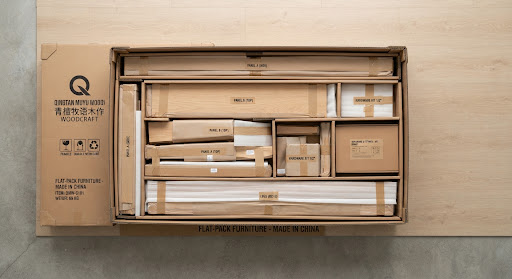
Approve the product and pack-out together. Record carton dimensions, packed weight, component orientation, protective materials and carton marks. Packaging should be evaluated for the actual route: palletized wholesale delivery, warehouse handling and individual parcel fulfilment expose the product to different risks. The wooden product packaging guide provides additional checkpoints.
Buyer checklist before placing the order
- Define the customization level and intended furniture use.
- Issue controlled drawings, material and finish specifications.
- Verify capability for the exact construction and assembly method.
- Clarify in-house and subcontracted processes.
- Approve hardware, instructions and packaging with the sample.
- Complete a trial assembly for knock-down furniture.
- Set acceptable grain, colour and finish variation.
- Write bulk inspection criteria before production.
- Inspect random finished and packed units before shipment.
- Confirm shipping responsibility, documents and delivery scope in writing.
Frequently asked questions
How do I find a custom wooden furniture manufacturer in China?
Search by the specific furniture construction rather than a broad product label. Compare suppliers using the same drawing and material assumptions, verify the company and production location, review relevant process evidence, and approve a physical sample before bulk production.
What should a custom furniture sample include?
It should use the intended material, joints, hardware, finish, logo, labels and production-style packaging. For knock-down furniture, it should arrive with the actual fittings and instructions so the buyer can complete a realistic assembly check.
How can importers control sample-to-bulk consistency?
Link the purchase order to approved drawing, sample, material schedule, colour reference, hardware list, artwork and packaging revision. Require written approval for substitutions and inspect random bulk units before shipment.
Is flat-pack furniture always cheaper to import?
Not automatically. It can reduce shipping volume, but it adds fittings, drilling, instructions, assembly risk and more complex internal protection. Compare the complete packed volume, hardware cost, damage exposure and customer assembly experience.
What should be inspected before custom furniture ships?
Check quantity, material, critical dimensions, joints, stability, operation, finish, hardware count, trial assembly, labels and the complete pack-out. Inspection criteria should come from the approved specification, not subjective phrases such as “good quality.”
Start with drawings, not promises
Cao County Qingtan Muyu Crafts Co., Ltd, operated by Cao County Qingtan Muyu Crafts Co., Ltd, works with importers, wholesalers and private-label buyers on custom wooden products. To discuss a furniture project, send your drawings or reference images, expected quantities, finish direction, assembly preference and destination channel through the inquiry page. The first useful response should identify missing technical details before quoting.