
One Pegboard, Three Ways to Build a Collection
A retail buyer guide to building entryway, home-office and display kits around one wooden pegboard, with compatible accessories, SKU planning, samples and packing.
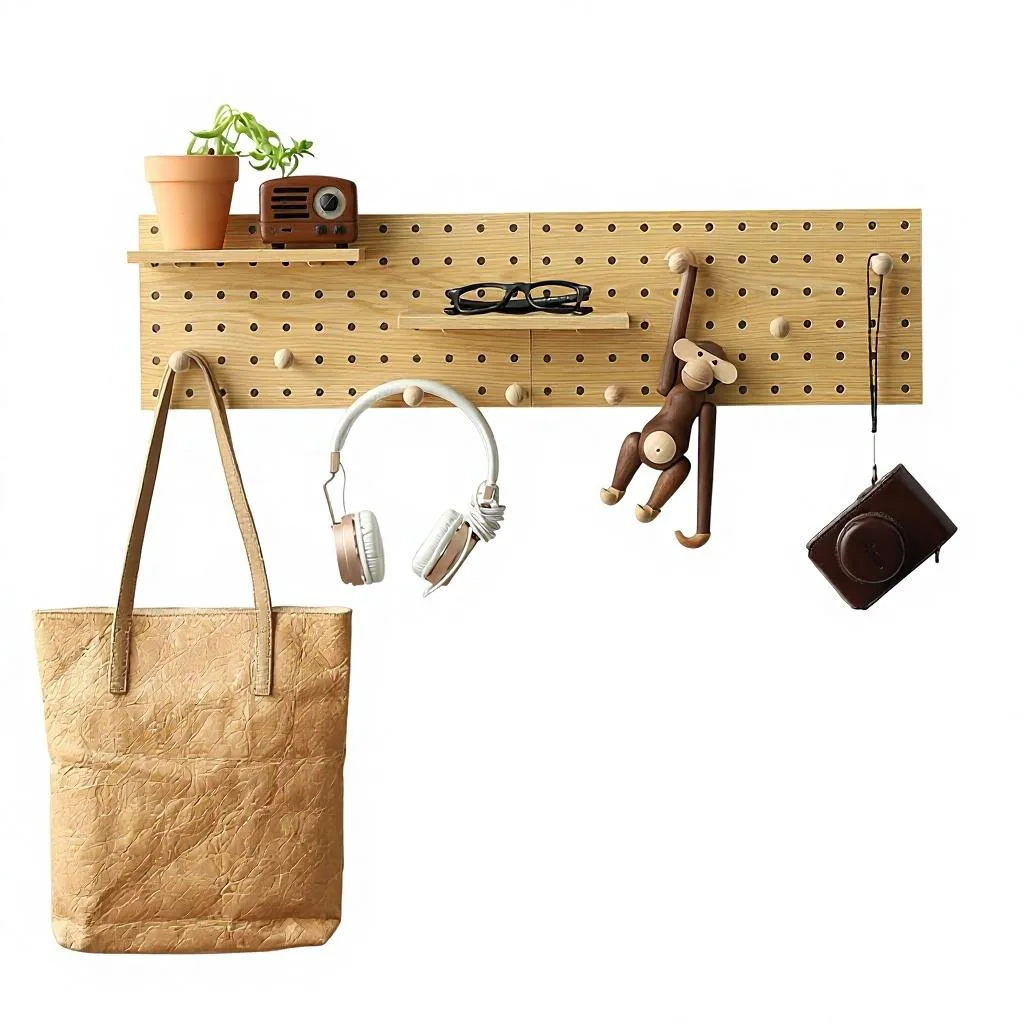
One wooden pegboard can support a collection if the panel and hole grid stay consistent while accessories change for a clear use. An entryway kit, home-office kit and compact display kit can share the same board. The buyer must define each kit, prove accessory fit and make the box contents clear.
Quick answer
Start with one approved panel, mounting method and accessory interface. Build three proposed kits around distinct jobs: everyday drop-zone storage, desk organization and light retail or home display. Use the same hole pattern, compatible pegs and a controlled finish across all kits. Give each kit its own component list, assembly or installation instructions, carton label and product photography. Sample the complete kits, not just the bare board. These are possible assortment routes, not existing Qingtan Muyu customer orders.
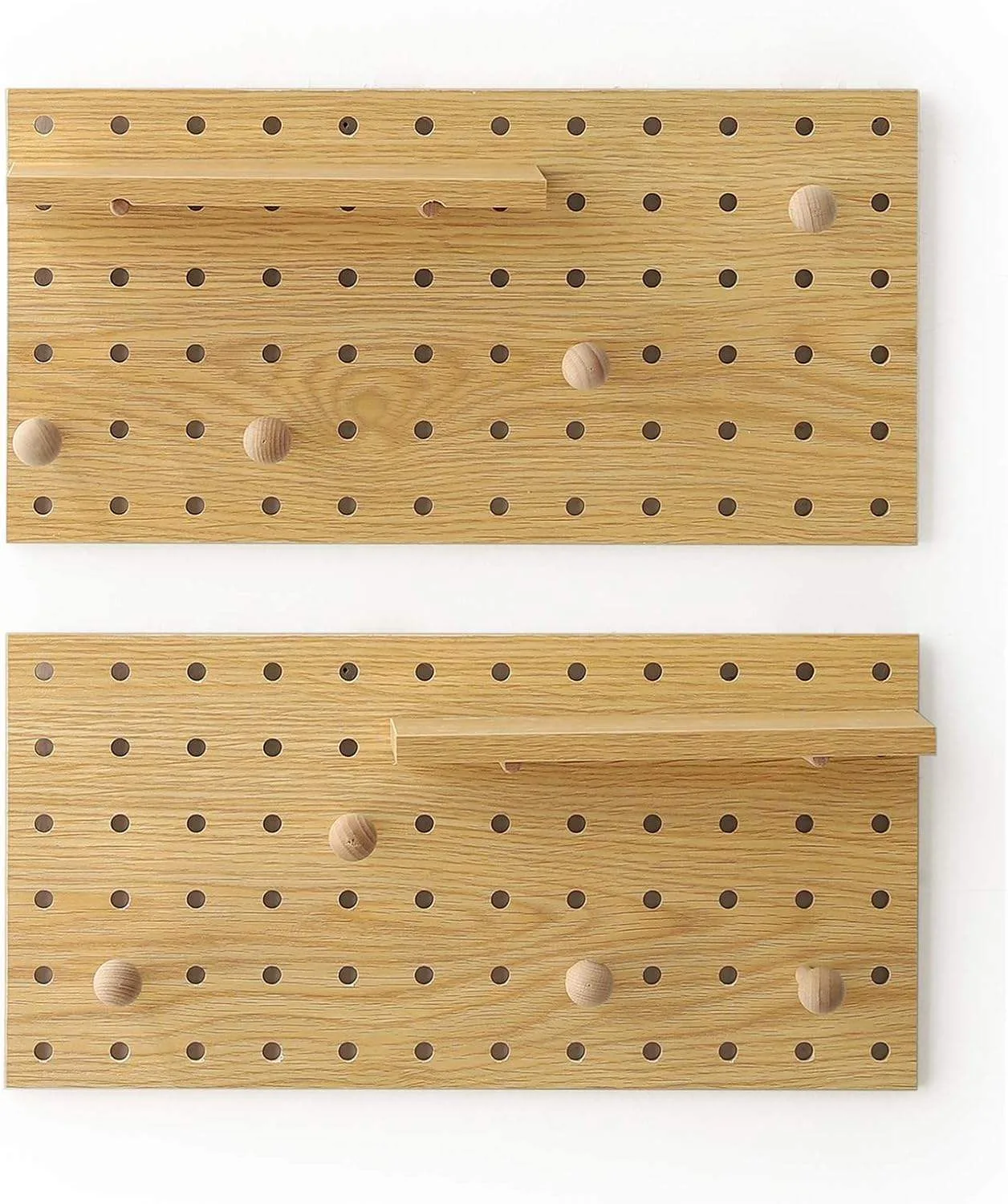
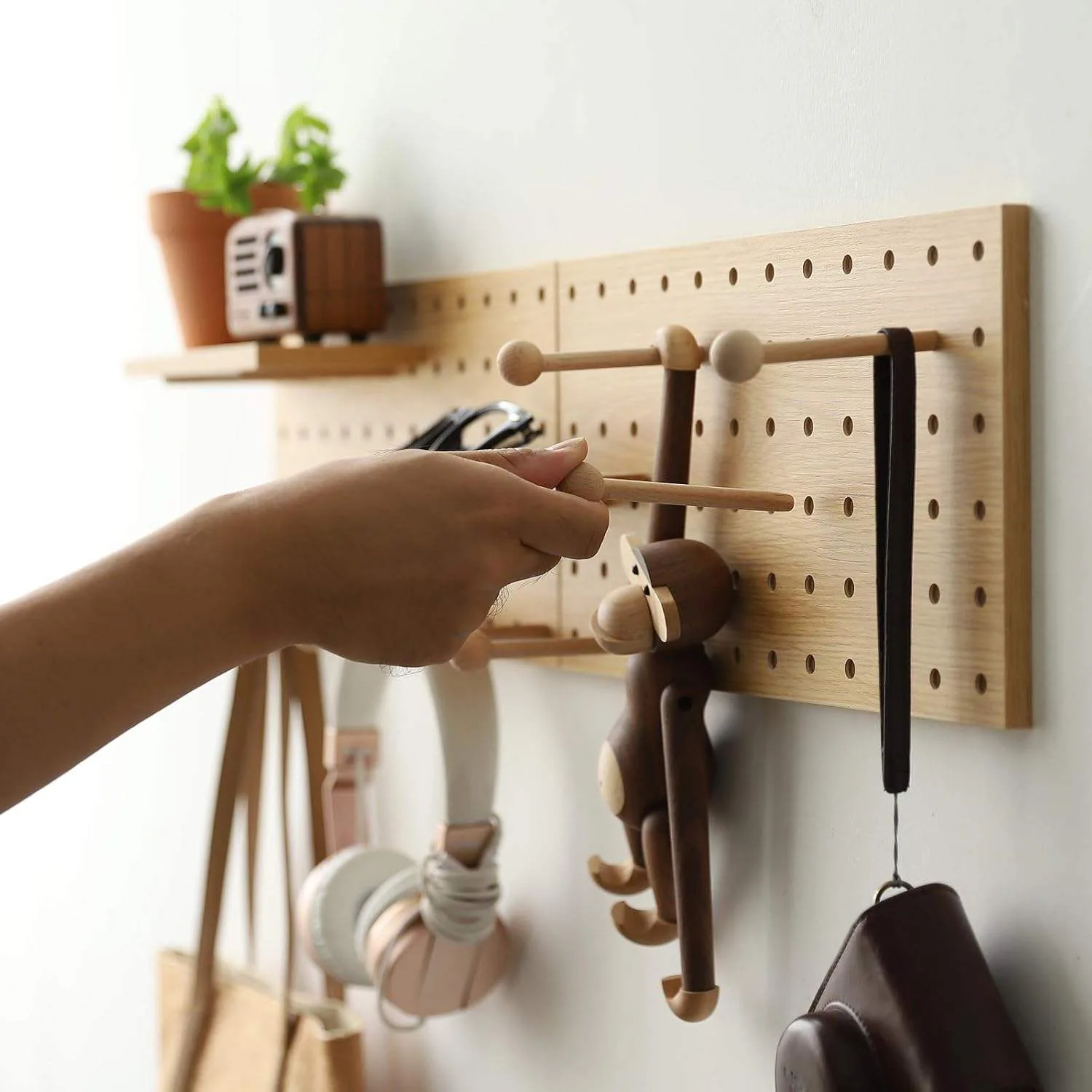
This article is for importers, homeware brands, retail buyers and e-commerce sellers planning a private-label wooden pegboard range. Cao County Qingtan Muyu Crafts Co., Ltd is the trade name of Cao County Qingtan Muyu Crafts Co., Ltd; its modular pegboard hook rack is an existing product reference. The photographs below show that product’s panel and accessories. They do not document three finished commercial kits.
First define the common platform
The panel is the part the customer recognizes and the buyer replenishes. Keep its overall size, thickness, hole diameter and spacing, edge treatment, visible finish, mounting points and stand-off arrangement under one revision. If an accessory changes the hole size it needs, it belongs in a new interface or requires a clear compatibility notice. A peg that fits a preproduction hole may become loose or tight after drilling variation and coating; approve fit on finished boards from production-representative material.
For this type of OEM program, a “universal pegboard hook” is too vague. The supplier should receive the actual peg, shelf support, hook or basket bracket proposed for the range. A sample board should be tested with every accessory in the plan. Check insertion force, how the accessory sits after repeated removal, and what happens when the intended object is taken off a hook. Public buyer discussions repeatedly describe hooks lifting out or accessories that do not fit the board they were sold for. That is a concrete return risk for a collection built on repeat purchases.
State which mounting parts are supplied and what customers must verify about their wall. A shelf, key hook and display peg place different forces on the panel, so avoid one blanket load claim. The wooden pegboard shelf sourcing guide covers panel construction and mounting in depth.
Way one: an entryway kit
An entryway buyer needs a place for keys and small items that are handled every day. A practical proposed bundle might pair a shallow shelf with pegs or hooks placed where a bag, cap or leash can be reached without disturbing the shelf. The precise items and loading need approval against the intended panel. If the kit is sold as an entryway organizer, show the usable hook and shelf positions in the listing; a beautiful empty board does not explain the use.
A deep shelf may block holes; a peg beneath it may leave too little hanging clearance. A hook near the edge can concentrate load close to a joint. Put the intended objects on the sample and remove them normally. Check that hooks stay seated and the board remains stable.
Way two: a home-office kit
The same panel can serve a desk wall with shorter shelves for stationery, pegs for headphones and open space between them. Check shelf level and whether pegs protrude into the desk area. Draw the layout around the objects the brand will photograph and sell.
Decide which accessories are common with the entryway kit and which are exclusive. Common parts are easier to replenish and explain; exclusive parts need a separate component code and a reason to exist. A shelf with a changed support length is a different part even if the front edge looks identical. Do not silently substitute it when packing another kit.
Way three: a compact display kit
A boutique or small retail counter may want a panel that can move between a wall, shelf backdrop and short-term display. The buyer should define whether that means a wall-mounted board only or a separate freestanding support. A wall board cannot be advertised as freestanding just because it looks good in a styled photograph. Any new base, bracket or mounting method needs its own drawing and stability test.
For a display kit, the accessory arrangement should let a retailer rearrange small packaged goods without repeatedly loosening hooks. Count the usable positions after shelves are installed. Check the reach and visibility of the items on the top and lower rows. If the range is for a store fixture rather than a household product, agree on the intended loading and installation conditions before making a claim on the box or product page.
These are planning options. A brand can launch fewer kits or sell the panel and accessories separately. Customers need to know what changes and what stays compatible.
Turn the idea into SKUs that can be ordered and replenished
A retailer can offer a complete carton for each use or one core panel with separate accessory packs. The latter reduces repeated panel inventory but requires clear compatibility labels. A base kit can also gain an expansion pack after launch. Choose according to how customers shop and the available display space.
| Assortment part | What stays common | What needs its own record |
|---|---|---|
| Core panel | Hole grid, finish reference, mounting interface | Panel drawing, carton and installation instructions |
| Use-specific kit | Approved panel and compatible accessory dimensions | Accessory quantities, layout image, SKU label and packed weight |
| Expansion pack | Fit to the approved grid | Part codes, compatibility statement and small-part packaging |
The table is a representative assortment plan, not a statement that these kits are already sold. Give every component a part code, including pegs that differ only in length or finish. Put the same code on the drawing, purchase order, packing list and replacement-part record. This prevents a later order from mixing an older panel with a newly revised peg.
Quote the actual structure. One panel run may serve several kits, while unique shelves, cartons or finishes may have separate minimums. Ask for panel, common-accessory and kit-specific quantities. A blended price hides which change requires another setup. For broader range planning, see the coordinated wooden storage collection guide.
Approve one fit system, then approve every complete kit
Send Cao County Qingtan Muyu Crafts Co., Ltd a panel drawing or reference, the intended hole interface, the real accessories, target uses, material and finish preference, branding files and delivery market. A factory can review cutting or CNC drilling, sanding, coating, assembly and packing against those requirements. Ask for a finished sample that includes the mount, pegs, shelves, labels and carton. Review any proposed change in material or finish against the working accessory fit.
Install the sample as a customer would. Try every accessory position shown in the instructions. Remove and reinsert pegs; load and unload shelves with the intended objects. Inspect hole edges for splinters, coating buildup or crushing. Keep the approved board and accessories as physical references. The sample approval checklist explains the production handover.
Packaging and bulk inspection have to follow the kit
A board may arrive undamaged while an unprotected shelf edge is dented or a small peg is missing. Pack shelves so they do not rub the finished panel. Bag and identify small parts; protect visible faces and corners. The instruction sheet should show exactly the components in that carton and the orientation of the wall fixings. For e-commerce, open a finished parcel and check whether the buyer can identify the correct parts without comparing multiple kit listings. The wooden product packaging guide covers the export carton decision in more detail.
Before shipment, inspect both the common panel and the variation that makes each kit distinct. Check hole position and diameter, finish, board flatness, peg and shelf fit, mounting hardware, logo, accessory count and carton label against the approved samples. Pull units from more than one kit code. If a batch of panels is shared across the three uses, a panel defect affects every kit; if a specific hook is wrong, only the kit containing that hook may fail. The importer quality-control guide provides a wider inspection framework.
Buyer checklist
- Choose the panel size, material construction, finish and mounting route.
- Freeze the hole grid and test every proposed accessory on a finished sample.
- Define one use and one component list for each proposed kit.
- Mark exclusive and shared parts with separate codes.
- Confirm that photographs, carton contents and instructions describe the same layout.
- Get MOQ and price assumptions for the panel, shared accessories and unique components.
- Approve a complete packed sample of every kit.
- Inspect common-panel quality and kit-specific completeness in bulk.
- Keep retained samples for later accessory and panel reorders.
FAQ
Can one pegboard panel support several retail kits?
Yes, when its hole grid, mounting method and finish are controlled and every supplied accessory has been tested on the finished panel. Each kit still needs its own contents list and listing photos.
Should accessories be sold with the board or separately?
Both can work. A complete kit is easier to understand at first purchase; separate packs can extend the range. Whichever route you choose, state compatibility and the exact contents on the carton and product page.
Will any pegboard hook fit a wooden panel?
No. Hole diameter, spacing, panel thickness, finish buildup and hook geometry all affect fit. Approve the actual hook or peg with the finished production panel.
Can the three kits share one MOQ?
The common panel may share a production batch, but unique accessories, finishes or printed cartons can have separate minimums. Request an itemized quote by component and kit.
What should buyers inspect before a bulk shipment?
Check the shared panel specification, accessory fit and finish, then open packed units of every kit to verify the right parts, labels, instructions and protection.
If you are planning a pegboard range, send the panel concept, intended kit uses, accessory drawings or samples, finish reference, brand artwork, target market and estimated quantities to Cao County Qingtan Muyu Crafts Co., Ltd through the inquiry page. The team can review which parts can share a production platform and which need a separate sample before quotation.