
Custom Wooden Desk Organizers: What to Specify Before Sampling
A buyer specification for custom wooden desk organizer samples: clear openings, phone and cable fit, material, finish, branding, QC and export packing.
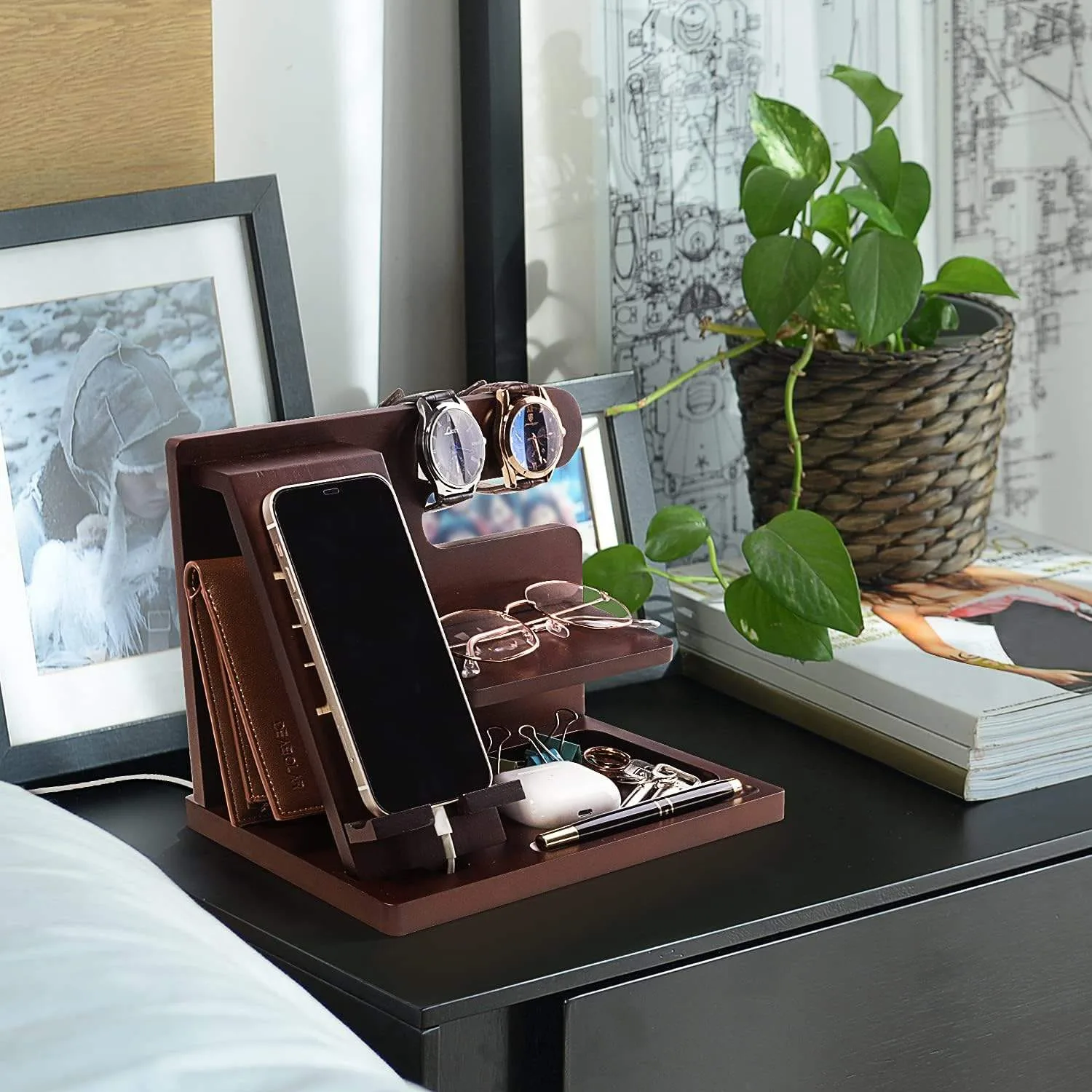
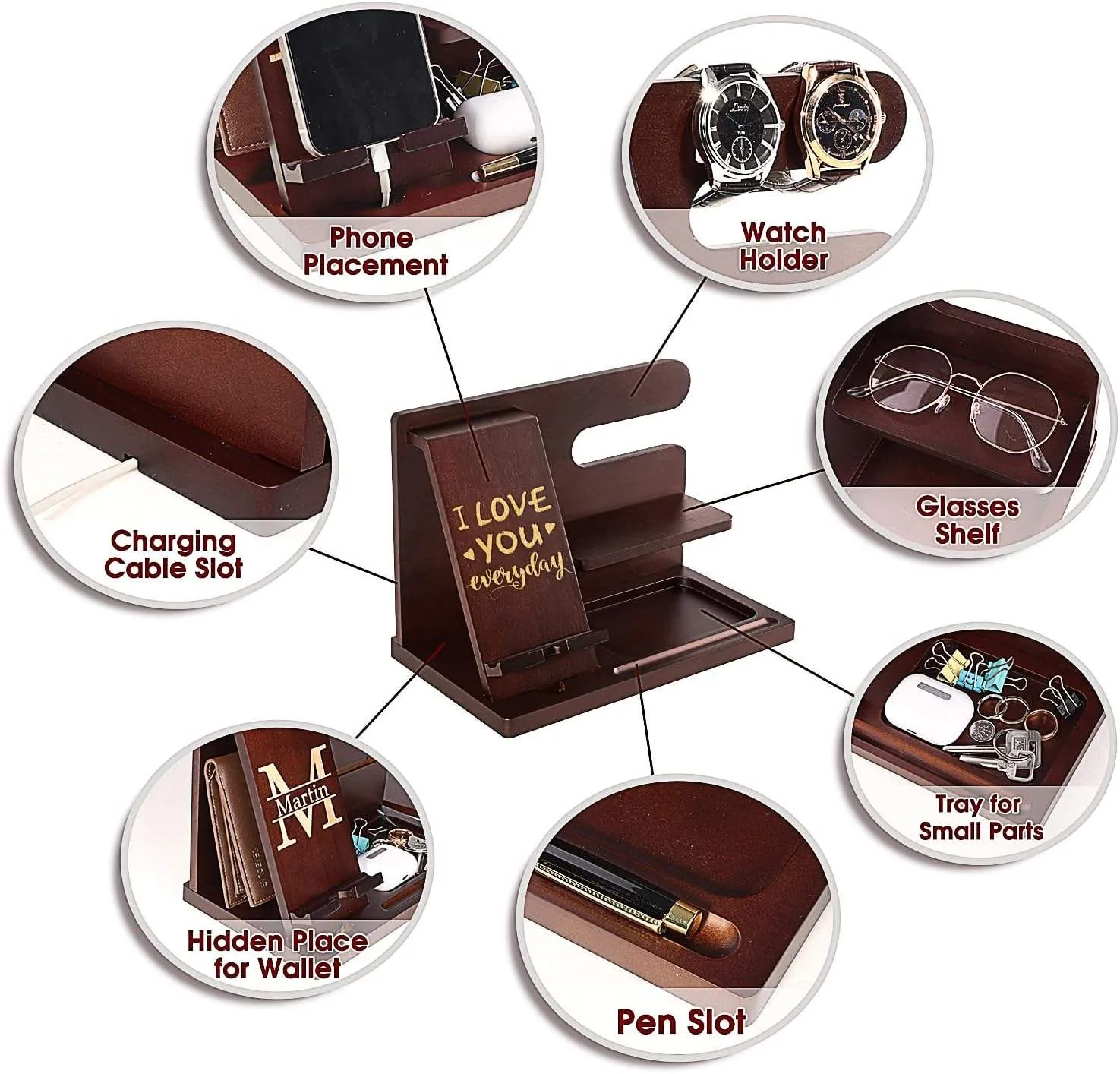
A useful desk organizer starts with a list of objects, not a silhouette. Before paying for a custom wooden desk organizer sample, tell the manufacturer what must fit, how each item will be taken out, where a charging cable enters, and how much desk area the finished piece may occupy. A photograph can start the conversation; it cannot settle the clearances or construction.
Quick answer: what should a buyer specify?
Send a marked drawing with the outside footprint, finished internal dimensions of every usable space, the actual devices or stationery the organizer will hold, cable and hand access, material and finish, logo placement, underside protection, and packing method. Identify which features are essential and which can change after sampling. Ask for a sample made in the intended material and finish, then test it with the real contents on a normal desk.
Define the desk job before drawing compartments
“Desk organizer” can mean a pen tray, a phone-and-watch valet stand, a small drawer unit, or a modular group of trays. A stationery buyer may need shallow units beside a keyboard. A charging-station brand needs the cable route and viewing angle to work with phone cases. A gift buyer may need visible branding and individual packaging.
For each SKU, state where it sits, what it holds, what the user touches daily, and whether it is sold assembled. A tray with six attractive recesses is still a poor product if customers use only two.
Outside size and usable size are separate numbers
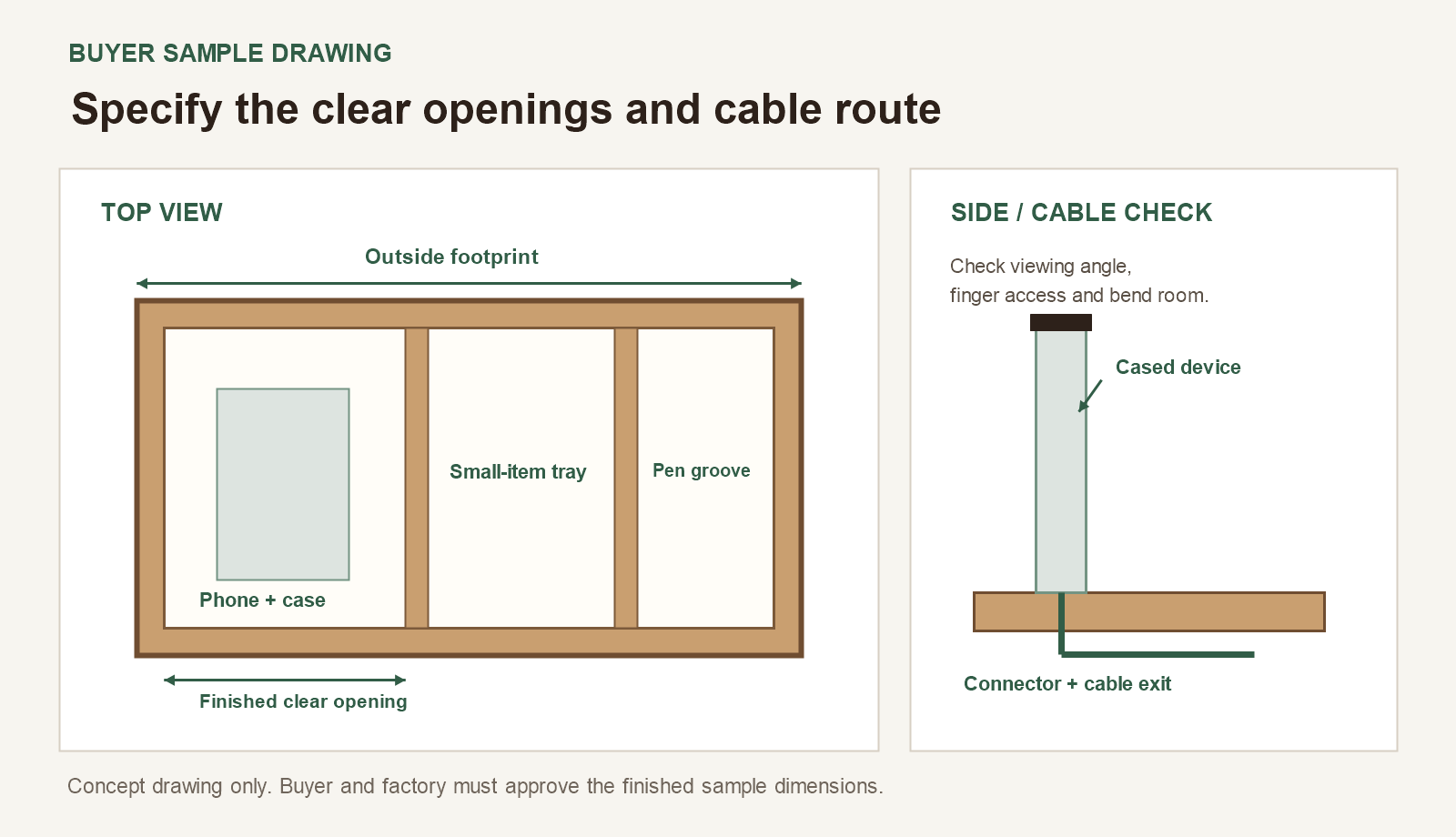
First decide the maximum footprint and height on the desk. Check the space beside the monitor base, keyboard, lamp or laptop stand in the intended setup. Then define the finished clear width, length and depth of each pocket or slot. Wall thickness, dividers, a rear panel and finish buildup take space from the inside. If the drawing only states the outside dimensions, the factory may build an attractive object that does not fit the contents.
Give the supplier the objects or physical templates used for the fit check. For a phone slot, specify the phone with its case, the charging connector while inserted, the direction the cable leaves, and the desired viewing angle. For pens, distinguish a loose horizontal groove from individual drilled holes. For a notepad or card bay, state whether fingers must reach the bottom. Mark the minimum opening needed to lift keys, earbuds or clips out of a recessed tray. A deep well with no finger room can look generous in a drawing and feel awkward in use.
Use one drawing revision and one unit system. Label each dimension as outside, finished clear opening, or center-to-center position. Revise the drawing when a size changes before approving the sample.
Make the cable path usable, then decide whether to add electronics
Public desk-setup discussions repeatedly return to a simple problem: people want charging wires within reach without leaving loose cable across the work surface. For a wooden organizer, that suggests a cable entry that is reachable when the phone is removed, a smooth exit that will not pinch the lead, and enough room around the connector for the intended case. Ask the sample maker to show the route from the rear or underside as well as the front. Test the phone while charging, then remove and replace it several times.
A routed slot for a buyer-supplied cable is different from an integrated electrical product. If a private-label range adds a charging module, agree who supplies it, how heat and service access are handled, and what market compliance evidence is required. A wooden housing photograph does not establish that electronics are included or certified.
Choose material for the shape and repeat order
Solid wood can suit a compact carved tray or visible edge, but grain direction and moisture movement need attention on wide, thin parts. Plywood can offer a stable flat component; its exposed edge needs an intentional finish. Bamboo offers another visual and processing route. Ask the manufacturer to explain construction for the exact organizer. Our wood material guide covers the trade-offs.
Identify visible faces, acceptable grain and color variation, joinery, edge radius, and the surface touching the desk. Test the attachment and position of underside pads; an uneven pad can make a small stand rock. Compare the assembled finish across components under normal room light.
Show how the organizer will be made and branded
Cao County Qingtan Muyu Crafts Co., Ltd, operated by Cao County Qingtan Muyu Crafts Co., Ltd in China, works on custom wooden homeware and storage products for OEM and private-label buyers. A desk organizer brief may call for CNC routing of pockets and cable channels, drilling pen holes, sanding small openings, edge rounding, assembly and finish application. The right sequence depends on the design. Ask which details are cut before assembly and which surfaces can still be sanded and coated afterward. An inaccessible inside corner is a common place for roughness to survive into the finished product.
Specify branding as a position and method, not just an artwork file. Laser engraving can vary with grain and dark stain; printing and a badge create different visibility and handling concerns. Give the supplier vector artwork, target size, orientation and a photo showing the preferred location. Approve the mark on the actual finished material. If the item is presented as a gift, inspect the logo from the viewing angle it will have in the box, not only from directly above.
Approve a working sample, not merely a good photograph
For a private-label desk organizer, the sample should answer four questions: does it fit the contents, feel stable, look consistent with the brand, and survive the planned packing? Put the sample on a real desk, preferably with a keyboard and monitor stand nearby. Load each pocket with the intended items. Reach for them as a user would. Move the charging cable and check that its connector does not rub an edge. Press gently on the phone support and watch for rocking or joint movement. Run a fingertip along all openings and the underside.
Record changes directly on the drawing and keep an approved sample as the comparison point for bulk production. A supplier may show a neat prototype made by hand, while the production route uses different tooling or assembly order. Ask what in the approved sample will be repeated in the bulk process and what is only for appearance. The sample approval guide provides a fuller sign-off method.
Give the factory a quote it can actually price
| RFQ item | Information to send | What to check in the sample |
|---|---|---|
| Use and contents | Target buyer, intended objects and whether the piece is a tray, stand or modular set | Every object can be placed and removed without awkward reach |
| Geometry | Outside footprint, finished clear openings, slot positions and viewing angle | Measured dimensions and fit with the actual phone case, pens or cards |
| Material and finish | Species or panel option, color reference, visible-face requirements and edge treatment | Grain/colour range, surface feel and underside contact |
| Branding | Vector logo, method, location and orientation | Mark legibility on the chosen finished wood |
| Packaging | Retail box, inserts, assembly state, barcode and export carton requirements | Part protection and correct contents after unpacking |
Ask for an itemized quotation if you are comparing several layouts or finishes. Material, extra routing, separate pads, custom print and retail packaging can each affect the production route and minimum order. There is no responsible universal MOQ or sample lead time for every organizer shape; request a project-specific answer with the drawing revision attached.
Check bulk consistency and packing early
Before production, agree which dimensions and visual details are critical, how they will be checked, and what variation the buyer can accept. Check especially the phone support width, cable exit, tray depth, flatness, joint fit, edge feel, finish coverage and logo position. For repeat orders, retain the approved sample and finish reference. The importer QC checklist helps turn these into an inspection plan.
Small protruding shelves, rails and backrests can take damage inside a carton even when the main block is sound. Show the factory the intended selling channel: a wholesaler receiving master cartons, or an e-commerce buyer opening one parcel. Agree on protection around projections and finished faces, then inspect a packed sample. Include labels and any assembly instructions in the approval. See our wooden product packaging guide for the larger export decisions.
Buyer checklist before authorizing the sample
- List the actual items and cases that must fit each zone.
- Mark the maximum desk footprint and every finished clear opening.
- Show hand access, phone angle, cable entry and exit on the drawing.
- State material, grain/colour expectations, edge finish and underside pads.
- Define logo artwork, method, position and viewing direction.
- Specify assembled or knock-down delivery, retail pack and export protection.
- Agree how sample changes will be recorded and which checks carry into bulk QC.
FAQ
What is the most common missing detail in a desk organizer RFQ?
Finished usable dimensions. An outside footprint does not show whether a cased phone, pen, card stack or charging connector can be handled comfortably.
Should the factory copy a reference photo exactly?
Use the photo to communicate the intended appearance, then issue a drawing for your own layout, materials, brand mark and packing. Check design ownership before asking a supplier to reproduce a third-party product.
How do I specify a phone slot?
Provide the device and case sizes, connector orientation, cable route, desired viewing angle and clearance for lifting the phone out. Verify these with the finished sample.
Can a wooden organizer include wireless charging?
It can be designed around a specified module, but the electrical scope, mounting, service access and market compliance need separate agreement. Do not assume the wooden sample includes an approved charger.
What should be checked before bulk production?
Approve the physical sample against the drawing: fit, stability, edges, finish, branding and packed presentation. Record the critical dimensions and acceptable appearance range for later inspection.
If you are developing an OEM desktop range, send Cao County Qingtan Muyu Crafts Co., Ltd your intended contents, marked dimensions and reference images through the inquiry page. Our wooden charging organizer product page shows one layout example; the sample for your brand should be built to your approved specification. You can also review the broader wooden storage and organization range before deciding which format to sample.