Custom Wooden Entryway Racks: Hooks, Shelves and Mounting
A practical OEM guide to hook spacing, shelf usability, wall mounting, sample tests and packing for custom wooden entryway racks.
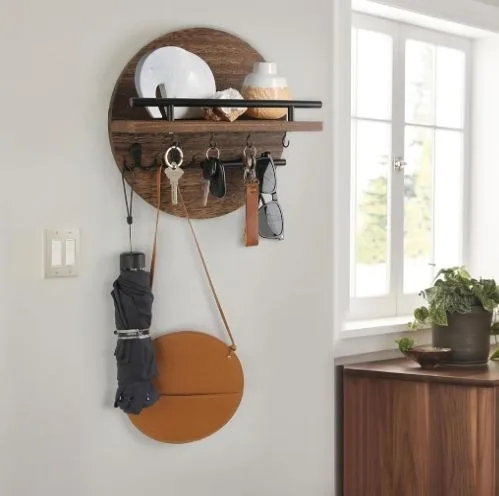
A custom wooden entryway rack has to work after it is fixed to a wall and loaded with everyday items. For an importer, the critical specification is the relationship between hooks, shelf, backboard and mounting points. A front photograph tells you little about whether a bag will block the keys, a shelf will interfere with coats, or the fixing method suits the buyer’s wall.
Quick answer for B2B buyers
Before sampling, define the intended objects, wall type assumptions, rack width and projection, hook positions and geometry, usable shelf depth, mounting-hole coordinates, supplied hardware, installation instructions, finish, logo and retail packing. Approve a fully assembled sample mounted to a representative test backing. Check it with the actual objects, then agree a load test for the rack-and-fixing combination before making any load claim.
Start with the entryway routine
Entryways collect different things: keys used twice a day, mail waiting to be sorted, a dog lead, a wet coat, a backpack and sometimes a bag of shopping. Giving all of them one undifferentiated shelf creates a pile. A better brief names the items that need permanent positions and the items that merely pass through. The rack should make the frequent actions easy without becoming an invitation to store everything by the door.
For a retail range, choose a clear use case. A key-and-mail rack can have shallow hooks and a letter ledge. A family rack needs room for sleeves and bags. A pet-owner version may need a reachable lead hook. These are possible product directions. If versions share a backboard, sample each hook and mounting configuration; common appearance does not make loads equivalent.
Specify hooks as a layout, not a count
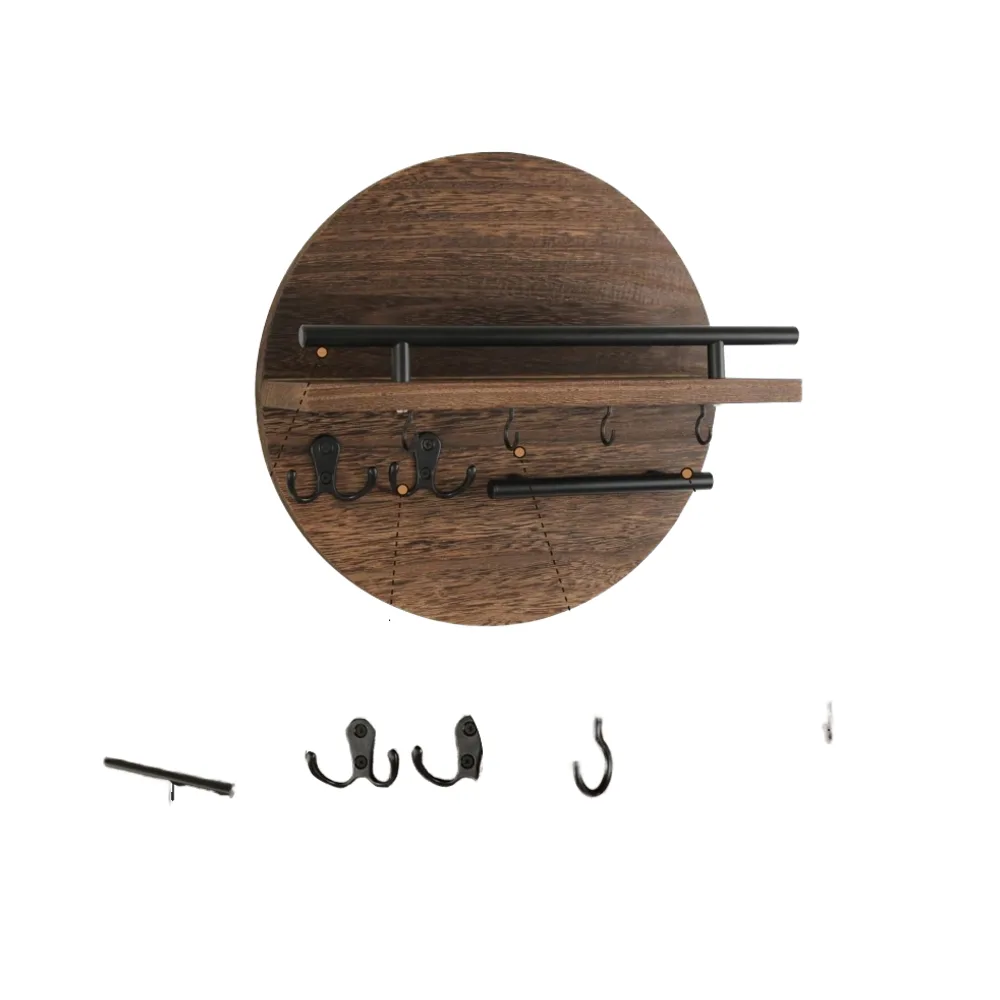
“Five hooks” is not enough information for a factory. Mark each hook center on a dimensioned drawing, including its distance from the ends and from the shelf above. Identify the hook style, opening direction, projection from the board and whether its tip is rounded. A key ring, a narrow bag strap and a thick coat loop behave differently on the same hook. Put representative items on adjacent hooks in the sample: if a large bag covers the neighboring key hook, the spacing or sequence needs work.
Decide where heavier items may hang. A hook mounted close to the edge of a thin wooden panel puts a different demand on the connection than one over a reinforced section. Check the screw engagement in the wooden board, not just the metal hook’s advertised strength. If the design uses pegs, test fit and retention after finishing. If it uses a rail, check how accessories are secured so they do not lift off when a coat is removed.
Ask for a hardware schedule by SKU: hooks, screws, inserts and spares. The sample should carry the same hardware intended for bulk packing. Substitute screws tell you little about repeat production.
Give the shelf a defined job
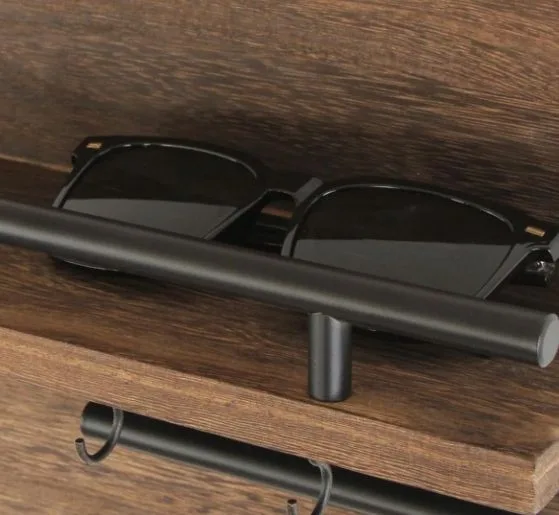
A shelf for letters needs a clear depth and a retaining lip that holds paper without hiding it. A shelf meant for a small plant must account for its footprint, access and the finish’s exposure to water. A display ledge used only for lightweight decor has a different loading assumption. State what is permitted to sit there, then measure usable depth after any front rail and backboard are installed. Also specify the vertical space above the shelf if it will be mounted below another feature.
Look at the relationship between shelf and hooks from the side. A deep shelf can make the hooks hard to see or reach. A coat hung below can brush the underside or cover mail on a lower ledge. Check sharp edges, water-trapping corners and whether the shelf can be cleaned. If the shelf is a separate piece, identify the joint and how movement or repeated handling will affect it.
The mounting design is part of the product
Public discussions about fallen coat racks often describe anchors pulling from drywall, wall gaps, or holes that do not match a useful fixing position. Those reports do not establish a universal safe anchor. They do show why a buyer should ask the manufacturer for a mounting plan rather than accept an unlabeled bag of generic plugs.
Draw the fixing-hole centers, edge distances, hole shape and access for a screwdriver. State whether the design allows fasteners into framing, needs a mounting rail, or has concealed keyhole slots. Then define the wall conditions for which the supplied hardware and instructions are intended. Drywall, masonry, timber framing and hollow or layered walls are not interchangeable. The retailer should tell the end user to identify the wall and use suitable fixings; a factory cannot guarantee one anchor for every wall construction.
The rack itself has a load path: hanging item to hook, hook fastener to backboard, backboard to wall fixing, fixing into the actual wall. Weakness at any point defeats a strong hook. A shelf adds a forward pull that may increase leverage on the upper mounting points. Ask for the installed sample to be checked for rocking, board flex, hook rotation and loosening after repeated hanging and removal. Any advertised load rating should specify the wall/test setup, installation method, distribution of load and test evidence. Do not copy a metal hook rating onto the complete wooden rack.
Material and finish for a wall-mounted product
Solid wood offers visible grain and can suit a shaped backboard, but the factory should consider grain direction and movement across a wide panel. Plywood or another engineered board can provide a flatter base; its edge needs an agreed treatment. A mixed wood-and-metal rack needs consistent metal color and corrosion protection as well as a controlled wood finish. Compare options on the actual shape, not only on a small color chip. The wood material guide provides broader selection questions.
Agree an acceptable range for knots, grain variation, color and repaired areas. Examine the underside of the shelf and the back edge of the board, where rough sanding can be missed. Test the finish around drilled holes and hook screws; installing hardware after finishing can chip the coating, while finishing around installed hooks can leave uneven edges. For a damp-coat use case, do not claim that a finish is waterproof without a relevant test and care instructions.
OEM details that affect the quotation
Cao County Qingtan Muyu Crafts Co., Ltd, operated by Cao County Qingtan Muyu Crafts Co., Ltd, is a Chinese custom wooden homeware manufacturer. For an OEM entryway rack, a useful RFQ includes front and side drawings, intended load/use, material and finish, hook and shelf specifications, fixing approach, logo artwork, packed dimensions and destination market. CNC cutting, drilling, sanding, assembly and coating must be planned around the mounting design; changing a hidden slot or metal bracket after tooling can alter both cost and instructions.
Branding may be a laser mark on the backboard, a printed mark on the shelf edge or a label on the retail box. Approve position and legibility on the finished material. If several rack versions are offered, ask for a component-by-component quote. Shared boards do not automatically mean shared minimums when hook sets, finishes, cartons or installation kits differ. Request the project’s actual sample terms and MOQ; no single number applies to every construction.
Sample approval: test use, mounting and packing together
Mount the production-intent sample using the proposed instructions and hardware on a stated test backing. Photograph the front, side, rear and fastener access. Measure overall width, projection, shelf’s clear depth, hook centers and mounting-hole centers. Hang the representative keys, bags and coats; remove them repeatedly. Check whether the shelf contents remain accessible, the rack sits flat, hooks rotate or the backboard opens a gap against the wall. Record a controlled load test if a rating is needed, rather than relying on a photograph of a loaded rack.
Next, inspect a packed sample. Projection from hooks and shelf rails makes those parts vulnerable in a carton. Confirm whether hooks are preinstalled or packed separately, and check that the right screws, wall-fixing guidance, drilling template and instructions are present. A paper template is useful only if its holes match the finished rack. Open the pack as an end buyer would and verify that the finish has not rubbed against loose metal parts. Our sample approval guide and packaging guide cover the wider sign-off process.
Buyer RFQ and QC checklist
| Decision | State in the RFQ | Check on the sample |
|---|---|---|
| Use | Keys, mail, leads, coats or bags; intended hanging positions | Items remain reachable when adjacent hooks are occupied |
| Geometry | Board size, projection, shelf clear depth, hook and fixing centers | Measured dimensions and a level fit against test backing |
| Construction | Wood/panel, shelf joint, hook attachment and finish | No rocking, loose hooks, splinters or coating damage |
| Mounting | Wall assumptions, fixing route, supplied parts and instructions | Installable with the proposed kit; holes and template match |
| Pack | Assembled state, retail box, carton, labels and protection | Correct parts and undamaged projections after unpacking |
For bulk inspection, compare critical measurements and finish with the signed sample, then open packed units from the production run. Check the hardware count and instructions as carefully as the visible wood. The importer QC checklist helps make this repeatable.
FAQ
Wooden Wall Key Holder with Hooks
Base the count and spacing on the intended objects and available wall width. Test adjacent occupied hooks; a bag can hide a key hook even when the nominal spacing looks generous.
Can one hardware kit work on every wall?
No. Wall construction and the intended load govern fixing choice. State the tested installation condition, give wall-identification guidance and specify what the customer must obtain for other conditions.
What is the most important shelf dimension?
Usable depth after the front rail and backboard, together with projection from the wall. Test the actual mail, decor or small objects intended for it.
Does a strong metal hook establish the rack’s capacity?
No. The hook fastening, wood board, shelf and wall fixing all form the load path. Test the installed assembly before publishing a rating.
What should a buyer approve before mass production?
Approve the mounted sample, finished appearance, hook and shelf access, stated load-test method where applicable, and a complete packed unit with matching fixing template and instructions.
The wall key and tool storage rack is one existing product example, not a universal mounting specification. If you are developing a private-label entryway line, send Cao County Qingtan Muyu Crafts Co., Ltd your intended objects, wall-market assumptions and marked drawing through the inquiry page. The wider wooden storage range can help frame complementary products without forcing one rack to solve every entryway problem.