
Wooden Pet Bed Wholesale: Custom Options for Pet Product Retailers
A buyer guide to wooden pet bed wholesale programs: sizes, frame materials, removable cushions, OEM branding, quality checks and export packing.
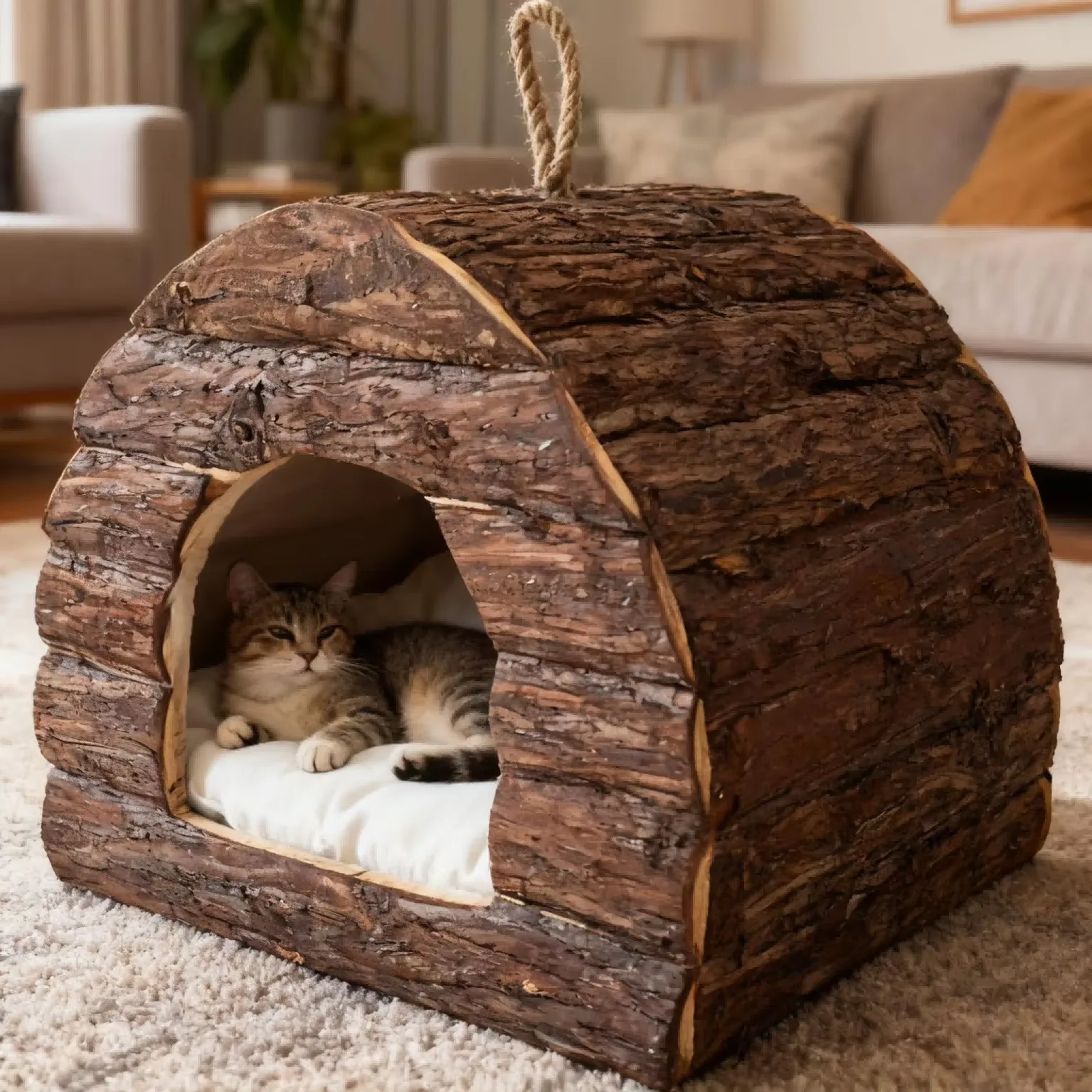
A retailer buying wooden pet beds wholesale needs a specification for the whole bed, not just a photograph of the frame. The sleeping area, entrance, cushion, finish, assembly method and shipping carton all affect what the customer receives. If those details are left open, a good sample can become a range of inconsistent bulk units.
Cao County Qingtan Muyu Crafts Co., Ltd makes custom wooden pet products for wholesale and private-label buyers. This guide focuses on the decisions a pet retailer should make before ordering a wooden bed range: which format belongs in the assortment, how to size it, what to approve on the sample and how to inspect the packed order.
Quick answer: what should a buyer specify?
Start with the intended animal and sales channel. State the usable sleeping space, entry height, overall footprint and any load or stability target that the chosen design must meet. Identify the frame material and construction, the cushion and cover specification, surface finish, logo location, assembly method and retail and export packaging. Ask the manufacturer to confirm which parts are included in the quoted unit and what will be checked against the approved sample before shipment.
For an ecommerce listing, the size chart must describe the actual space inside the bed, not only its outside dimensions. A customer cannot judge whether a curled-up cat or a stretched-out small dog will fit from a decorative product photo.
Decide which bed format belongs in the range
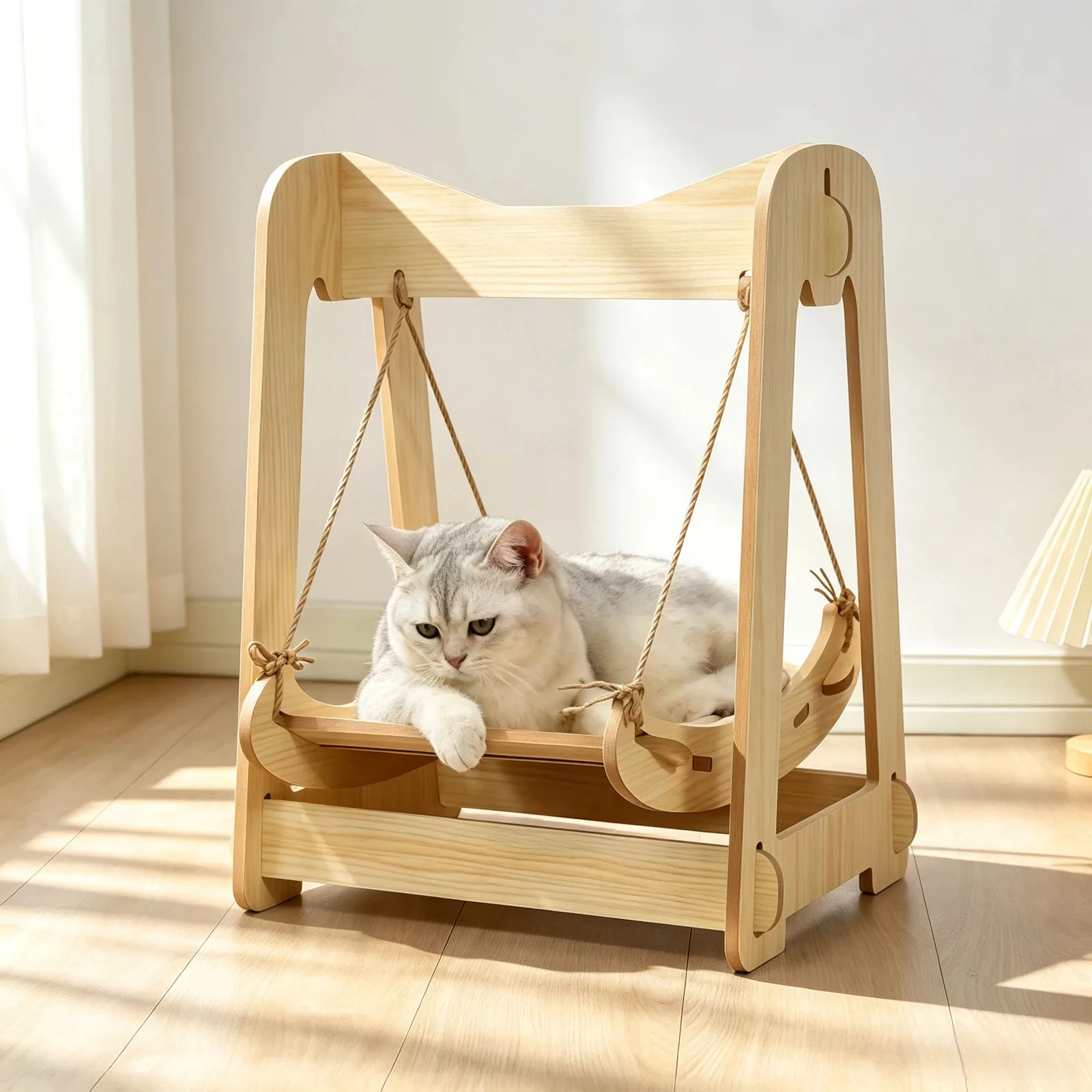
“Wooden pet bed” can describe several different constructions. A low open frame provides easy access and leaves the cushion visible. An enclosed wooden shelter gives a more private resting space but makes the entrance and cleaning access important. An elevated or suspended design adds hardware and stability questions. A sofa-style bed has a furniture appearance and may need a different cushion and packaging plan.
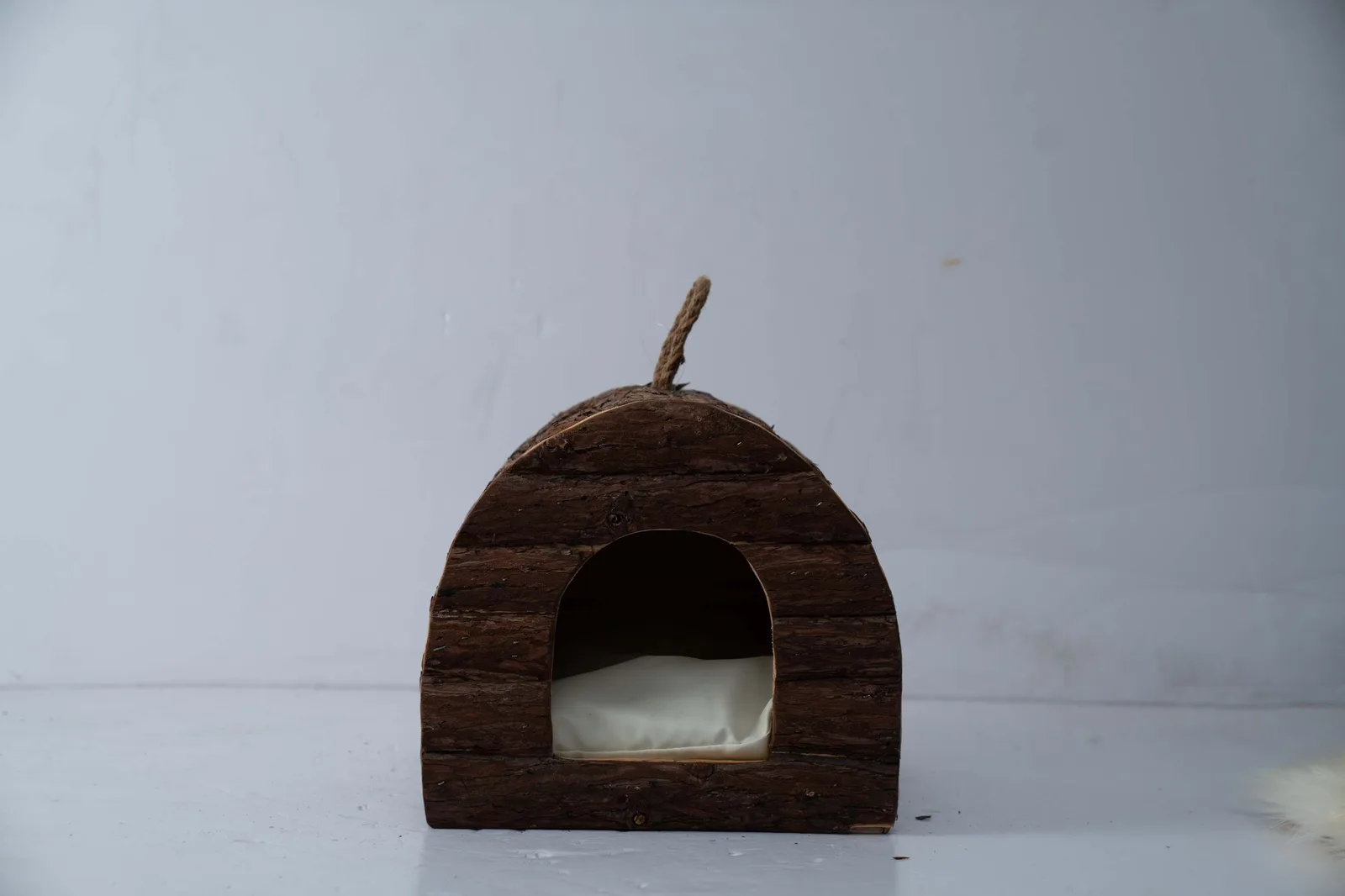
Choose one format for each target customer rather than treating every shape as a colour variant of the same SKU. The portable round wooden pet bed on woodhomeware.com illustrates a sheltered format with a front opening and soft interior. The wooden cat hammock cradle shows a separate construction with a suspended resting surface. These product examples give a buyer something concrete to discuss; the order specification still has to define the final version.
Measure the space a pet will actually use
For a wholesale size range, record both exterior and interior dimensions. Exterior dimensions determine shelf fit, parcel size and carton layout. Interior floor area and clear opening dimensions determine whether the intended animal can enter, turn and settle. On an elevated bed, add the height from the floor to the sleeping surface. On a sheltered bed, check the interior headroom and the shape of the entry.
Do not label a bed “small” or “medium” without the measurements behind those words. Ask for a dimensioned drawing, then check the sample with the intended cushion installed. A thick cushion can reduce usable headroom; a raised rim can reduce the flat sleeping area. If you sell multiple sizes, give each version its own SKU, drawing, cushion dimensions and carton specification.
Agree how size is presented online and on the pack. A photograph with an animal helps, but it is not a measurement method. Avoid promising breed fit without checking the product and size guidance.
Choose materials around the structure and finish
The material decision starts with the frame’s job. A low shelter, an open platform and a suspended cradle place different demands on panels, joints and connectors. Ask the supplier whether each visible component is solid wood, plywood, another panel material or a mixed construction. The answer affects appearance, edge treatment, fixing methods and the way the product should be inspected.
For a natural finish, approve a realistic range of grain and colour rather than one unusually even sample. On painted frames, inspect corners, inside edges and the underside where coverage can be missed. Surfaces that a pet can touch or chew should be smooth, without loose splinters or accessible sharp hardware. Request the finish and material information needed for the destination market; do not accept a broad “pet safe” claim without the relevant product details and supporting documents.
The wood-material selection guide offers a broader comparison framework. For a bed order, the practical question is how the chosen material behaves in the particular frame, especially around openings, screw locations and load-bearing members.
Make the cushion easy to remove and maintain
Pet owners notice the cushion long before they notice the joinery. Public discussions about pet beds repeatedly raise the same maintenance problems: hair collecting in seams, a cover that is difficult to remove, bedding that shifts during use and replacement covers that cannot be bought later. A retailer can address those issues in the specification.
Define the cushion’s finished dimensions, thickness, fill and how it stays in place. If the cover is described as washable, identify whether the cover alone or the complete insert can be washed, the care method stated by the textile supplier and how the retailer will communicate it. Test the zipper or closure on the actual sample. A cover that technically removes but is awkward to refit will still disappoint a customer.
Consider separate SKUs for spare covers. This affects fabric purchasing, colour matching and packaging. The final sample must combine the cushion and finished frame; their fit cannot be judged from a drawing alone.
Check stability, joints and assembly as a customer would
A bed has to remain steady when an animal steps in, turns around or leans on an edge. For an elevated format, ask how the base, legs, hangers or suspended platform are connected and what product-specific load target is being validated. Do not use a generic load figure taken from a different bed. Inspect the assembled sample on the floor surface relevant to the intended use, and check whether it rocks, loosens or exposes a fastener.
If the item ships flat, assemble it using only the parts and instructions supplied in the retail carton. Check hole alignment, hardware count, tool requirements, cushion fit and how long the finished assembly remains secure under normal handling. The assembly sheet should identify parts clearly enough that a buyer can reproduce the steps without a factory technician.
Put private-label choices into the sample
Custom wooden pet bed wholesale programs can vary in dimensions, wood tone, paint colour, cushion fabric, logo method, retail label and carton design. Those choices should appear on the same approved sample or in a controlled set of sample records. An engraving approved on a flat board may look different on a curved or textured bed component. A fabric swatch does not prove the finished cushion fits the frame.
Give the factory an artwork version, logo position and acceptable appearance on the substrate. Review care and assembly wording before printing. Decide which components can be shared across SKUs so the wrong cushion, hardware bag or instruction sheet does not enter a similar-looking bed carton.
Sampling and minimum order quantities depend on the design, material, fabric and packaging mix. Ask for an itemized quotation by SKU, including the sample scope and any shared or separate components. Avoid assuming that a standard product’s MOQ applies to a custom size or private-label pack.
Approve the packed bed, not only the product
A wooden frame can arrive with a dented edge even when its production inspection passed. The packing review should show how finished surfaces are separated, how corners and protruding parts are protected, where the cushion and hardware bag sit, and how the outer carton prevents movement. For a direct-to-consumer parcel, check the mail-order pack rather than relying only on a palletized master carton.
Ask the supplier to pack one sample exactly as the bulk unit will be packed and open it as a customer would. Confirm the product, textile, instructions, spare hardware if specified, labels and carton marks. The packaging guide for importers covers the broader export decisions, while the sample-approval guide shows how to freeze the reference before production.
Buyer checklist before a wholesale order
- Define the intended animal, retail channel and bed format for each SKU.
- Record exterior dimensions, usable sleeping area, entry size and assembled height.
- Identify frame materials, joints, hardware and the intended finish.
- Approve cushion size, cover, fill, removal method and care wording.
- Test stability and assembly on the complete physical sample.
- Confirm logo artwork, labels, instructions and all components in the pack.
- Review a packed sample and the export or parcel carton configuration.
- Set the inspection points and a written rule for changes after approval.
Use the wooden product quality-control checklist to turn these points into a pre-shipment inspection plan. The article on private-label wooden pet products covers range and artwork control across several pet SKUs.
FAQ
What can a retailer customize on a wooden pet bed?
Depending on the construction, buyers can review size, frame material, finish, cushion fabric and fill, logo, labels, instructions and packaging. Confirm each choice on the final sample and quotation rather than assuming every option suits every design.
How should a retailer choose pet bed sizes for a range?
Use the target animal and intended posture, then specify usable interior space and entrance dimensions as well as the outside footprint. Check the sample with its actual cushion installed and keep a separate size record for each SKU.
Does a wooden pet bed need a removable cushion?
Not every design uses one, but a removable cushion makes cleaning and replacement easier to plan. If the listing says a cover is washable, verify exactly what can be removed and follow the textile supplier’s tested care instructions.
Should an elevated wooden pet bed ship assembled or flat?
Decide by the frame design, customer assembly experience, carton size and protection needs. Assemble a retail sample from its packed components and check stability, hardware and instructions before approving a flat-pack version.
What should buyers inspect before a wooden pet bed shipment?
Compare bulk units with the approved sample for dimensions, surface and edge quality, joint security, cushion fit, logo, complete hardware, assembly instructions and packed-carton protection. Use a product-specific inspection plan.
Start with a bed the customer can understand
For a custom program, send Cao County Qingtan Muyu Crafts Co., Ltd—Cao County Qingtan Muyu Crafts Co., Ltd—the bed format, target size, reference image or drawing, material and cushion preferences, logo artwork, quantity by SKU, destination and packaging plan. The team at woodhomeware.com can review those details for an OEM or private-label quotation. Contact us with the brief, and note any fit, cleaning or assembly issue the product must solve.