Custom Wooden Gift Boxes: OEM and Private Label Guide
A B2B guide to OEM and private-label wooden gift boxes: SKU control, branding, samples, quality checks and retail-to-export pack-out.
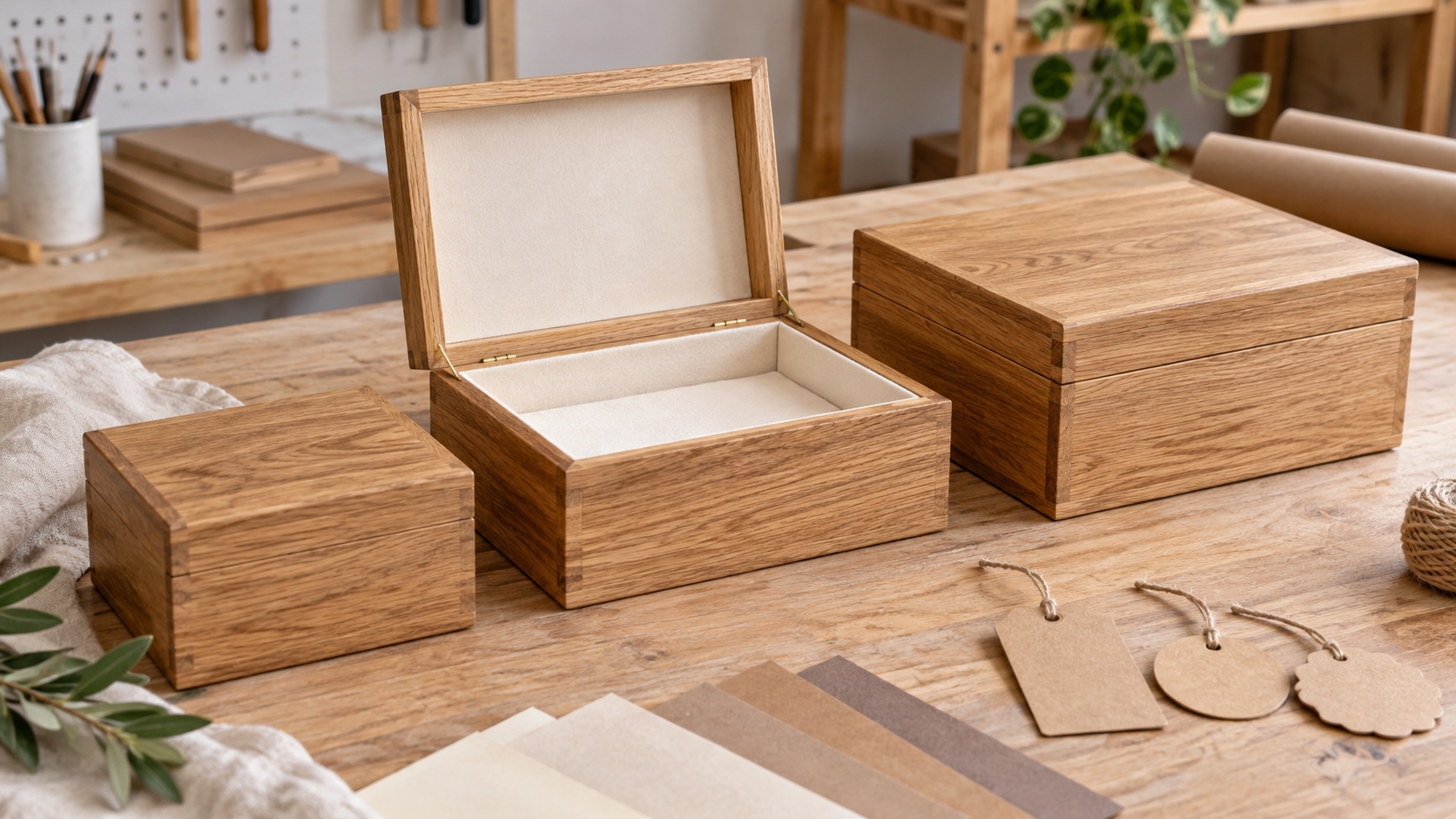
Private-label wooden gift boxes need more than a logo added to a standard box. A brand buyer has to control the product range, visible materials, interior presentation, artwork versions and retail pack-out so the final shipment feels like one coherent line. OEM work can include a new box structure or a defined modification; private label adds the discipline of making every branded version traceable and repeatable.
Quick Answer
Develop custom wooden gift boxes for OEM or private label by separating the project into four linked records: the box build, the interior layout, the brand assets and the packing configuration. Approve a physical sample that represents those records together, then release bulk production against the approved version. This protects the brand from a common failure: the wooden box, logo, insert and retail components are individually acceptable but do not work as one finished SKU.
OEM and private label are related, but not identical
In a wooden gift-box project, OEM usually means the buyer asks the manufacturer to make a box to a defined design or to adapt a construction, size, lid style, interior or finish. Private label means the item is made for the buyer’s own brand presentation: brand mark, packaging system, inserts, retail information and controlled SKU identity are part of the deliverable.
A project can include both. A brand may start with a familiar hinged box construction but require its own interior dimensions, oak finish, logo placement, insert and carton presentation. Or it may introduce several box sizes with a common visual language. The important point is to decide what is fixed for every SKU and what varies by size, contents or market.
Define the range before refining a single box
Private-label buyers often have more than one gift-box size. That makes a range brief more useful than three separate requests. List each SKU with its outer size, usable internal space, intended contents, lid type, hardware, finish, insert, logo treatment and individual packaging. Note which elements must look the same across the range and which are deliberately different.
This gives the manufacturer a chance to identify conflicts early. A logo placement that works on a broad lid may not suit a smaller lid. The same insert material may have a different visual depth in a shallow box. A finish can look warmer or darker across different grain patterns. These are not reasons to avoid a coordinated range; they are reasons to approve the range with clear visual priorities.
Use a simple SKU map
For each SKU, name one current product version and one current artwork version. Attach the matching drawing, product image, insert layout and packaging layout. When a revision is made, replace the record rather than sending an informal series of updated files. This helps the buyer, supplier and inspection team identify what belongs to each box without relying on memory.
Build the wooden box around its retail role
A gift box can be a presentation case, a reusable keepsake box, a multi-piece set box or a protective outer box for a product. The retail role influences the construction. A box that will be opened and kept may place more emphasis on the opening feel, interior finish and hardware. A transit-led box may need a different balance between visible finish, protective detail and outer packaging. Neither route is generic; each needs a clear brief.
Start with what the recipient sees and does. Which face presents the brand? Is the product visible as the lid opens? Is the interior lined? Does an accessory need its own compartment? Does the lid need a stop, a ribbon, a magnetic closure or a different mechanism? Avoid calling these “small details.” They influence dimensions, joinery, finishing and the way the box is packed.
Cao County Qingtan Muyu Crafts Co., Ltd, also known as Cao County Qingtan Muyu Crafts Co., Ltd, works with importers and brand teams on custom wooden products. A useful brief turns a style reference into production information: intended use, outer and internal dimensions, material direction, surface appearance, opening method, parts inside the box, logo location and packaging requirements.
Material and finish: specify the accepted visual range
Natural wood does not give every box the same grain or tone. That is part of its character, but a private-label buyer should still explain the intended visual range. Is color variation welcome? Is a calmer, more uniform appearance preferred? Does the approved finish need to look consistent across the lid and sides? Which interior areas are visible and therefore need the same care as the exterior?
Approve material and finish on a physical sample, not only through a color name or a rendered image. Inspect the lid, corners, routed edges and interior. Consider how the finish looks in ordinary retail light. The wood materials guide for custom products can help teams frame the material conversation before sample work begins.
Make branding a controlled production input
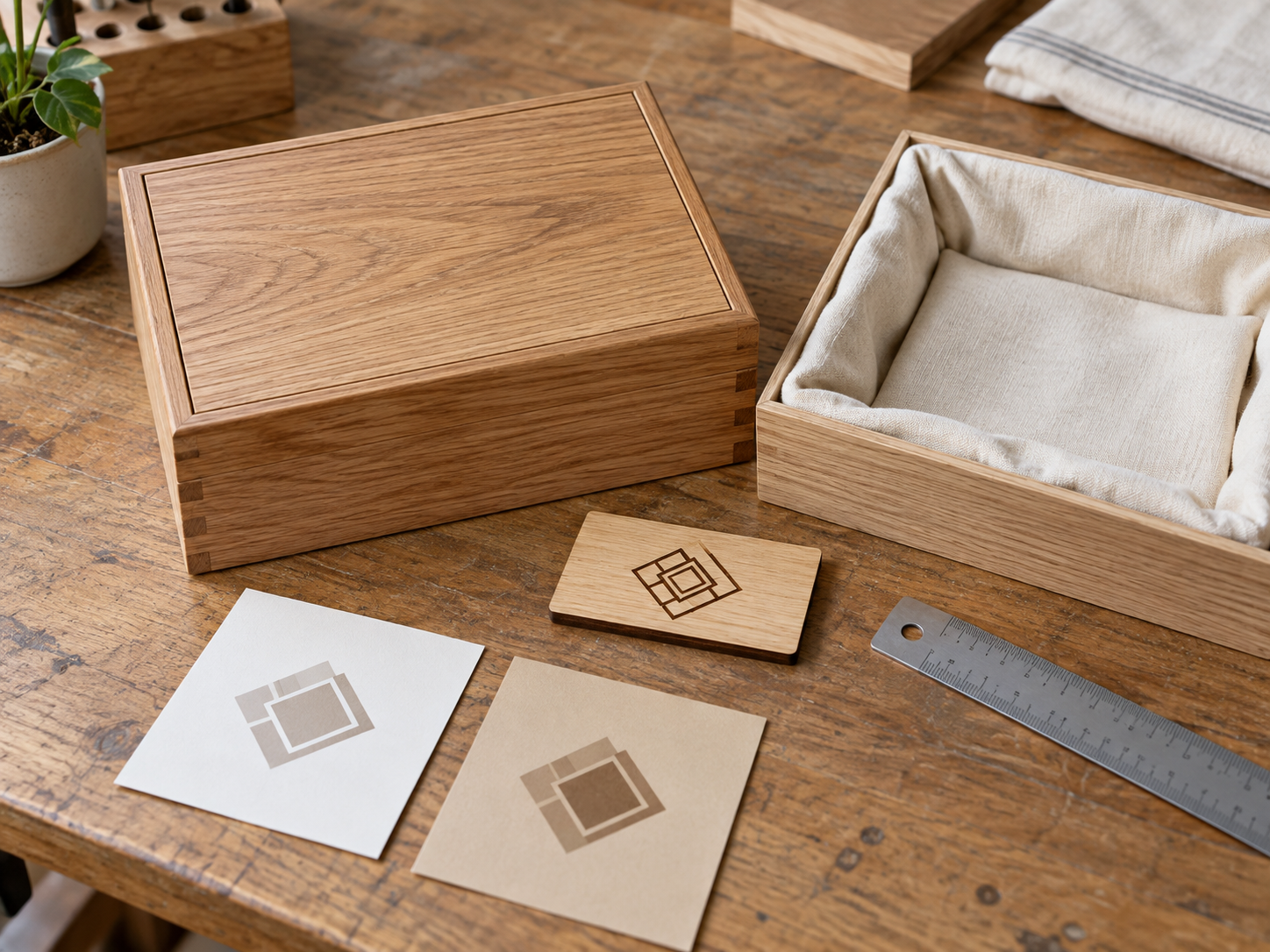
Branding can appear on the lid, side, underside, interior plaque, insert, outer box or printed component. Each placement needs a final source file, a location, orientation, size and method. The supplier should work from a named, current artwork version. The buyer should avoid treating a screenshot in a message as the permanent authority for an emblem, line weight or positioning.
For a wood surface, physical proof matters. Grain, wood tone and finish can alter the visual result of engraving or other marking methods. Approve the mark on the intended surface and at the proposed scale. If a range has multiple lid sizes, check the treatment on the smallest as well as the largest relevant format. The custom laser engraved wooden products OEM guide explains the artwork and natural-material questions in more detail.
Sample the finished SKU, not just the wooden shell
An OEM sample is useful when it tests construction. A private-label approval sample should test the complete customer-facing unit: box, finish, hardware, insert, artwork treatment, accessory position and individual packaging. Put the actual contents into the box or use a controlled equivalent. Check that the lid clears the contents, the insert holds them as intended and the recipient can remove them without pulling at fragile parts.
Then convert approval into a short production record. It should include the approved sample photos, material/finish reference, box dimensions, interior layout, hardware, artwork version, placement details, pack-out and inspection points. Our custom wooden product RFQ checklist is a useful framework for gathering that information before an order is confirmed.
Quality control for a branded gift-box range
Quality control should check both individual craftsmanship and range consistency. For each SKU, compare production pieces against the applicable approved record. For the range, compare whether the shared elements still look intentional: finish family, logo treatment, insert tone and packaging presentation.
- Confirm the correct SKU, product version and artwork version are being used.
- Check usable interior size and component fit after the insert is installed.
- Review lid alignment, opening action, hardware seating, corners and sanding.
- Check visible wood/finish character against the approved sample standard.
- Check branding for correct face, orientation, placement and accepted appearance.
- Confirm the matching insert, accessory, printed item and individual packaging remain paired.
The point is not to demand uniformity that natural wood cannot provide. It is to prevent unapproved changes in the features a brand has decided define the range. The importer quality-control checklist provides additional inspection prompts for custom wooden products.
Private-label packaging has two jobs
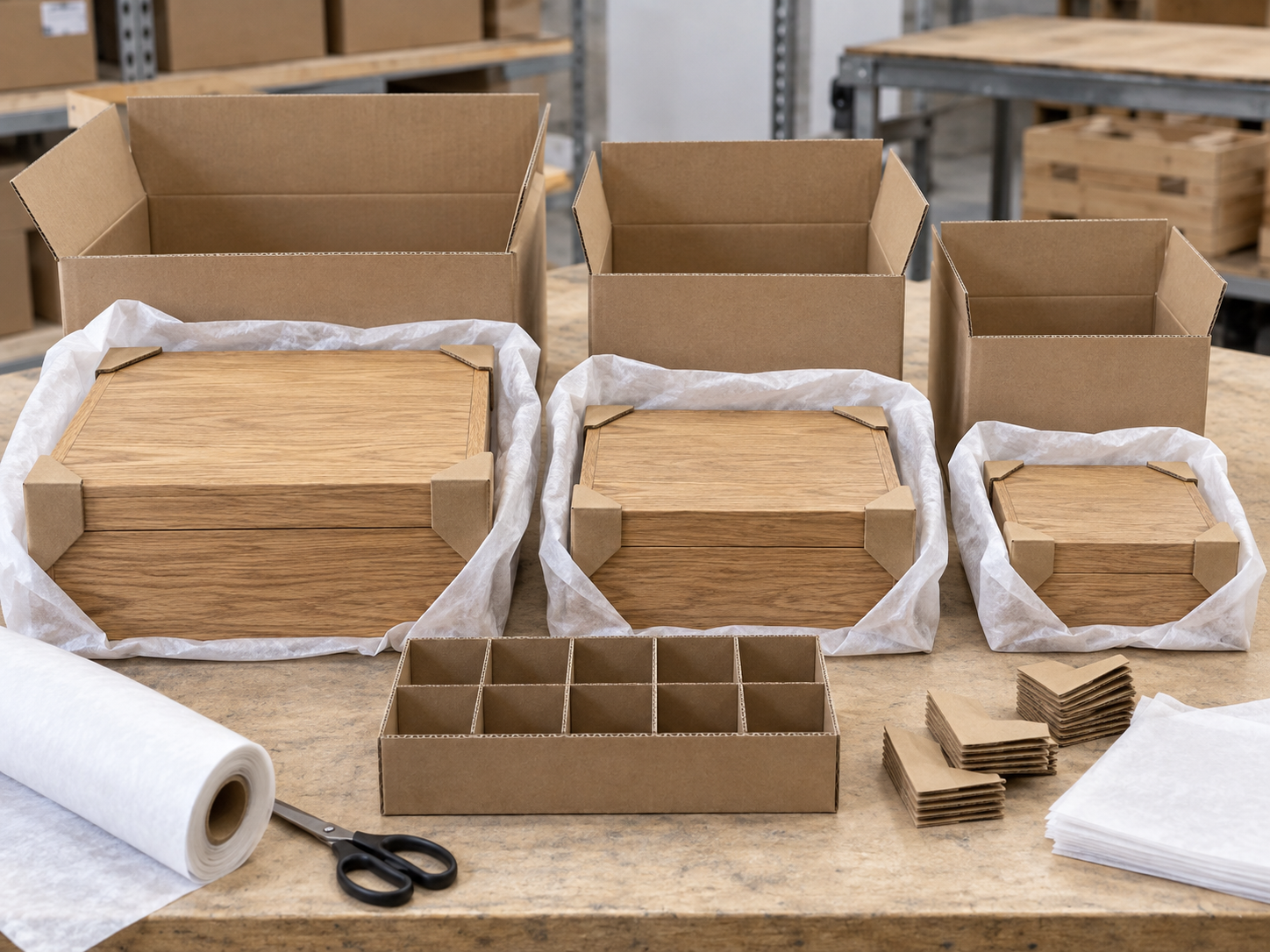
The consumer-facing package should preserve the desired presentation. The export package should protect that finished unit. Keep them distinct in the project record. An individual retail sleeve, box or insert can be attractive but may not protect corners, lids or hardware through international handling. The outer carton, separators and protective materials must be reviewed with the actual finished SKU inside.
For a multi-SKU range, define how sizes are separated and how the correct branded components stay matched. Test the completed pack-out, not only flat packaging materials. The wooden product packaging guide for importers covers the key export questions.
Buyer checklist before releasing an OEM/private-label order
- Every SKU has a current product version and named artwork version.
- Outer size, usable internal space, lid type and hardware are confirmed.
- Material, finish and acceptable natural visual variation are approved.
- The intended contents have been checked with the completed insert.
- Logo placement is approved on the actual finished surface.
- The approval sample represents the entire customer-facing unit.
- Production and final inspection use the same SKU records.
- Individual and export pack-out protect the finished boxes and keep variants paired.
FAQ
What is the difference between OEM and private-label wooden gift boxes?
OEM work concerns the box design or defined modification. Private label adds the buyer’s branded identity, controlled artwork, packaging and SKU management. A project can include both.
How do I create a private-label range of wooden gift boxes?
Make a SKU map that lists the box build, dimensions, insert, finish, logo treatment and packaging for every size. Define the visual elements shared across the range, then approve samples and records for each relevant format.
What should be approved before a custom wooden gift-box bulk order?
Approve the box construction, material and finish, hardware, usable internal space, insert, branding, accessories and completed pack-out. Record the final product and artwork versions together.
How should a private-label logo be approved on a wooden box?
Approve the final artwork file, placement, orientation, scale and marking method on a physical sample of the proposed material and finish. Do not rely only on a digital mock-up.
How can I avoid mixing private-label gift-box versions in bulk production?
Use one controlled record per SKU with its product version, artwork version, insert and packaging reference. Apply that record at sample approval, production checks and final packing.
Build a gift-box line your brand can repeat
OEM and private-label wooden gift boxes work best when the brand experience is defined as carefully as the box construction. If you are planning a retail range, corporate-gift collection or branded presentation box, send Cao County Qingtan Muyu Crafts Co., Ltd your SKU outline, product dimensions and brand brief. We can help turn them into a production-ready wooden gift-box program.