Wooden Gift Box Supplier: A B2B Sourcing Guide
A B2B guide to sourcing custom wooden gift boxes, covering interior fit, inserts, finish, branding, quality control and export packing.
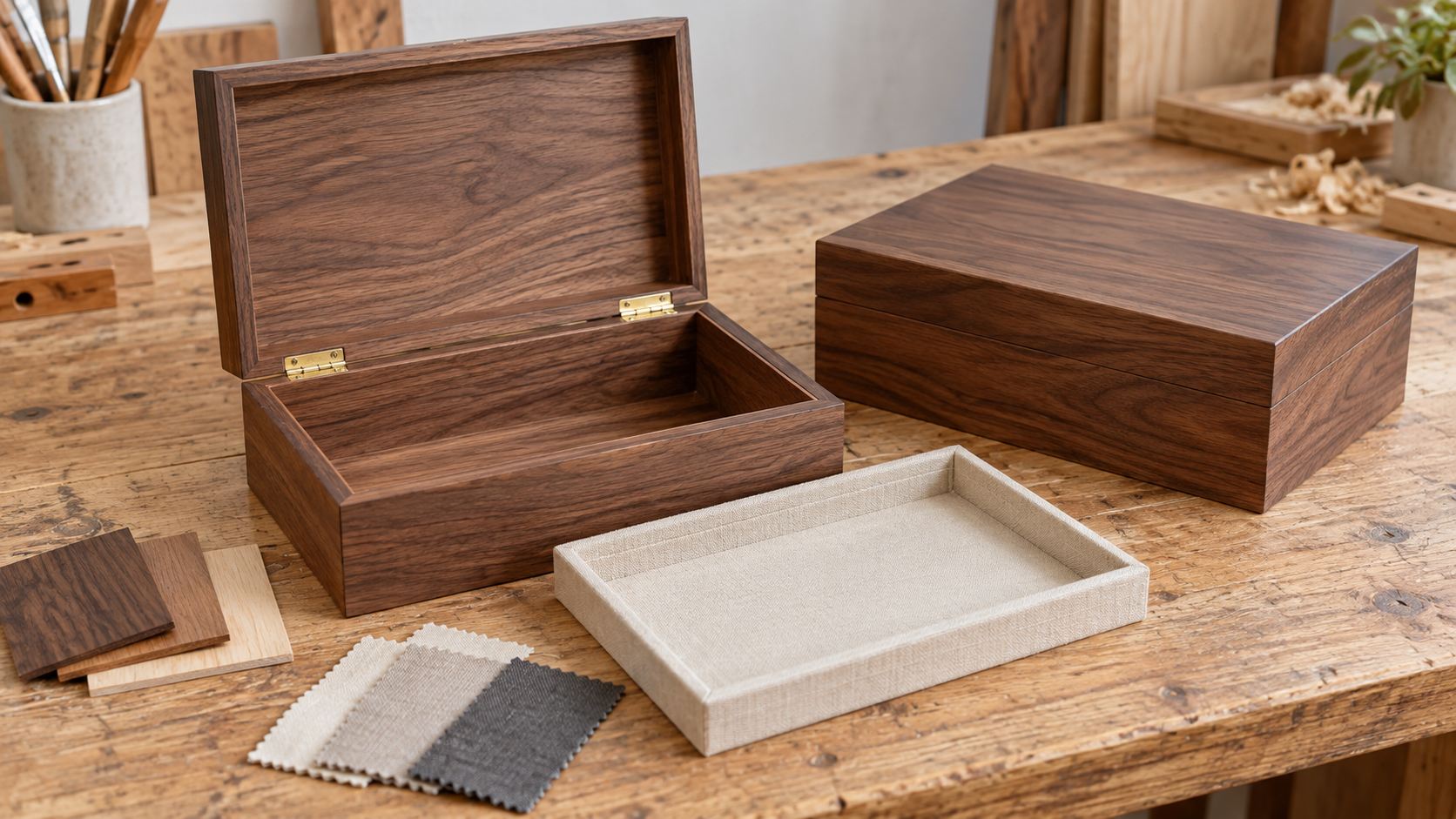
A wooden gift box is a product in its own right, not simply a container. For B2B buyers, it must present the item well, fit reliably, close cleanly, protect it in transit and remain consistent across a bulk order. The supplier conversation starts with what goes inside, then works outward through interior layout, construction, finish, branding and shipping carton design.
Quick Answer
Choose a wooden gift box supplier by checking whether they can turn your actual product and presentation requirements into an approval sample and a controlled bulk specification. Confirm internal usable space, insert construction, lid action, hardware, material and finish, logo method, packaging and inspection points before a bulk release. A beautiful closed box is not sufficient evidence that the contents fit, the lining is secure or the box will arrive in the intended condition.
What counts as a wooden gift box in B2B sourcing?
A wooden gift box can be a hinged presentation box, sliding-lid case, lift-off-lid box, compartmented set box or fitted display package. It may carry homeware, fragrance, stationery, a corporate gift or a retail set. Its job is to contain, protect and present a defined item or group of items.
That makes it different from a generic storage box. The box’s interior dimensions, clearance around the product, insert material and lid relationship all matter at the same time. A small variation in wall thickness or insert depth can affect how the item sits. A finish that looks right on a flat lid may behave differently at a routed edge. These are normal product-development questions, and they should be handled before the buyer locks a large order.
Start with the object that the gift box must hold
Send the supplier the actual product, a reliable physical stand-in or its complete dimensions. Include its weight, fragile points, the direction it should face when opened, any accessory that shares the box and the amount of clearance needed to lift it out. If an insert must hold a particular shape, a top view alone will not define it. Show side profiles and explain whether the product must be restrained, displayed flat or packed with an accessory.
Buyers frequently concentrate on the outside dimensions because they are easy to see. Internal usable space is the more useful measurement. It must account for lining thickness, divider walls, a pull ribbon if used, lid clearance and any movement expected during transport. A box can look spacious before the insert goes in and become impractical afterwards.
Make the presentation decision early
Decide whether the customer should see the product immediately on opening, remove a cover layer, lift a tray or open a separate compartment. These choices affect the box depth, hinge position, insert construction and the risk of parts rubbing. They also determine what needs to be sampled. For example, a simple removable insert may be enough for a stable single product, while a multi-piece set may need dividers that keep every component in its intended position.
Specify the wooden box beyond its external shape
A useful RFQ identifies the visible form and the build behind it. Give the supplier a reference image, sketch or sample along with the desired external dimensions, internal layout, opening method, preferred wood appearance, finish direction, hardware color, logo location and packaging expectation. If a point is open for the supplier’s suggestion, mark it as open instead of implying that a photo is a fixed requirement.
Cao County Qingtan Muyu Crafts Co., Ltd, or Cao County Qingtan Muyu Crafts Co., Ltd, develops wooden homeware and custom wooden products for B2B buyers. On gift-box projects, practical questions are often hidden in the reference: does the lid sit flush, does a hinge need to be concealed, will the lining cover all interior faces, and how will the brand mark relate to the opening?
Choose material and finish for the visual standard and the use
Natural wood brings grain and color variation. A buyer should decide whether that variation is part of the desired character or whether a more uniform visual direction is needed. The material, construction and finish should be discussed together. A clear finish may make grain contrast more visible; a stain changes the visual range; a matte surface may show handling differently from a glossier surface.
Ask to see the proposed wood and finish in the sample, rather than approving a finish description in isolation. Consider the outside, the exposed inner faces and the edge around a routed recess. If the gift box will sit in a retail environment or be handled during gifting, inspect it under ordinary light, not only a carefully styled photo. The wood materials guide for custom products is a useful starting point for the questions to ask.
Design the insert as a functional component
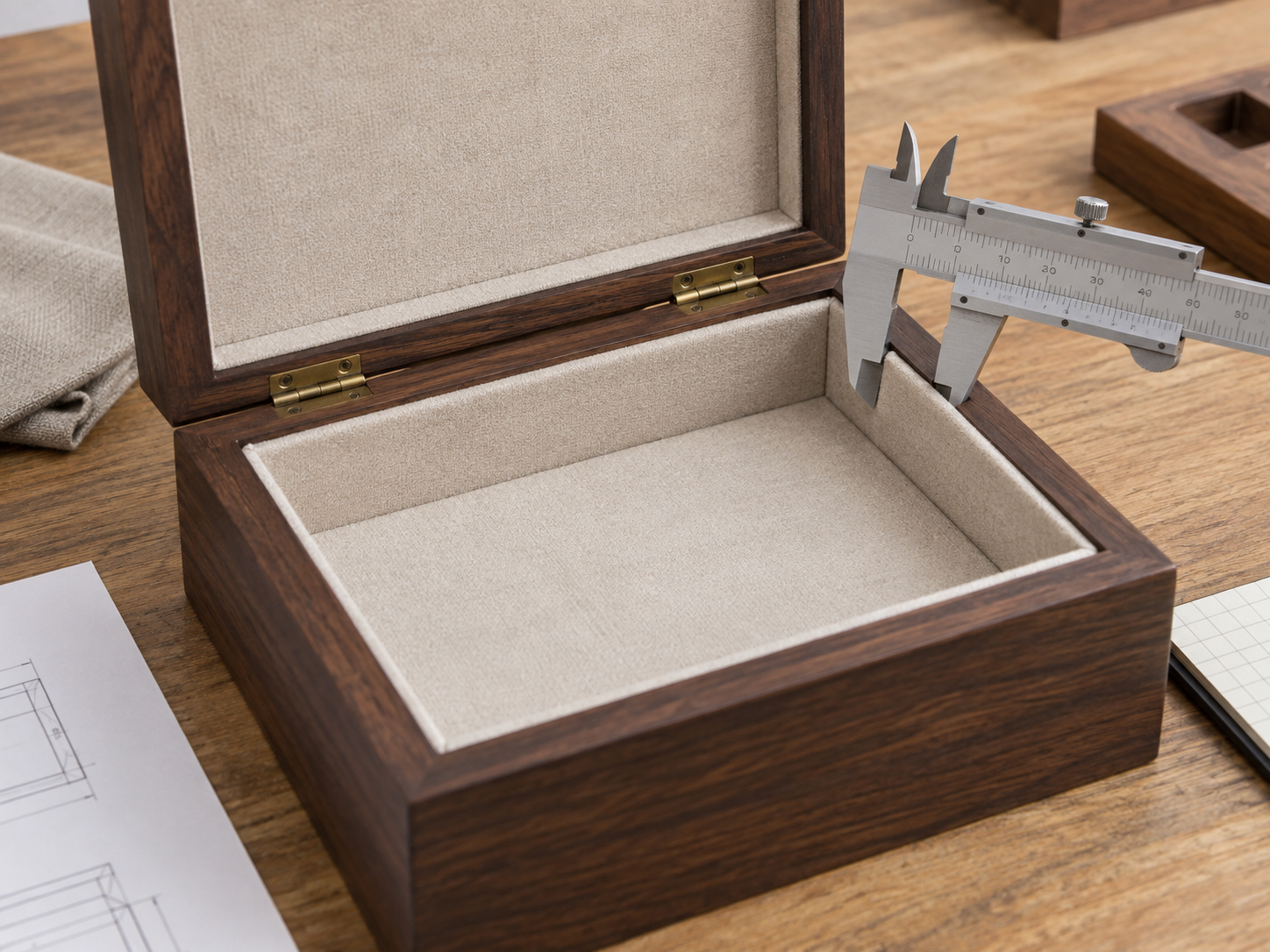
An insert can be a simple lined tray, a divider system, a foam form, a paper-based holder or another construction suited to the contents. The right choice depends on product shape, presentation, surface sensitivity and the journey from factory to destination. The buyer should provide the product or a controlled substitute so the insert can be checked for fit and removal.
Ask clear questions: Does the item sit at the intended height? Does it remain in place if the box is carefully turned? Can the user lift it out without damaging the lining? Do accessories have their own position? Does the lid close without pressing the contents? These checks are more useful than a generic statement that the insert is “custom.”
Sampling: what needs approval before bulk production
The approval sample should represent the agreed project as closely as practical: wood, construction, lid movement, hardware, finish, interior treatment, logo and pack-out. View the box from every side. Open and close it repeatedly. Check the lid alignment, corner finish, hardware seating and whether the interior is clean and properly fitted. Put the intended product inside; if it has multiple parts, test the complete set.
Written sample comments matter. “The lid feels loose” does not direct a consistent correction. “Use the approved opening feel, retain the inside clearance shown in the sample, centre the logo on the lid and keep the insert edge below the lid line” gives the team a record that production and inspection can apply. The custom wooden product RFQ checklist can help turn a visual reference into a more usable brief.
Branding: approve it on the actual surface
A logo on a digital mock-up is not the same as a logo on a finished wooden lid. Grain direction, tone, finish and the chosen marking method can change the visual result. Define the artwork file, placement, orientation, size and which box face carries it. If the project needs individual names, serial information or changing artwork, agree on the source data and review process before any production run.
For projects using engraving, buyers can also review our OEM guide to custom laser engraved wooden products. It explains why physical approval is valuable when the same artwork will appear on a natural material.
Quality control points that matter for gift boxes
Gift boxes are judged up close, so quality checks should cover what a recipient will touch and see. Compare finished boxes with the approved sample and documented record. Check:
- external and usable internal dimensions where fit is important;
- lid alignment, opening action and hardware fixation;
- corners, joints, sanding and exposed edges;
- consistent finish appearance, including visible interior areas;
- insert fit, cleanliness, attachment and relationship to the lid;
- logo placement, orientation and accepted appearance;
- correct pairing of box, insert, accessory and any printed component.
These points should match the actual design. A sliding box calls for a different functional check than a hinged presentation case. The broader wooden product quality-control checklist can support the final inspection plan.
Plan export packaging with the finished box
A retail-ready wooden gift box still needs transport protection. The final pack-out should protect the lid, corners, finish and hardware from contact with other boxes and the outer carton. If the box contains a removable insert or multiple contents, confirm that each is held in the correct position before sealing the individual package.
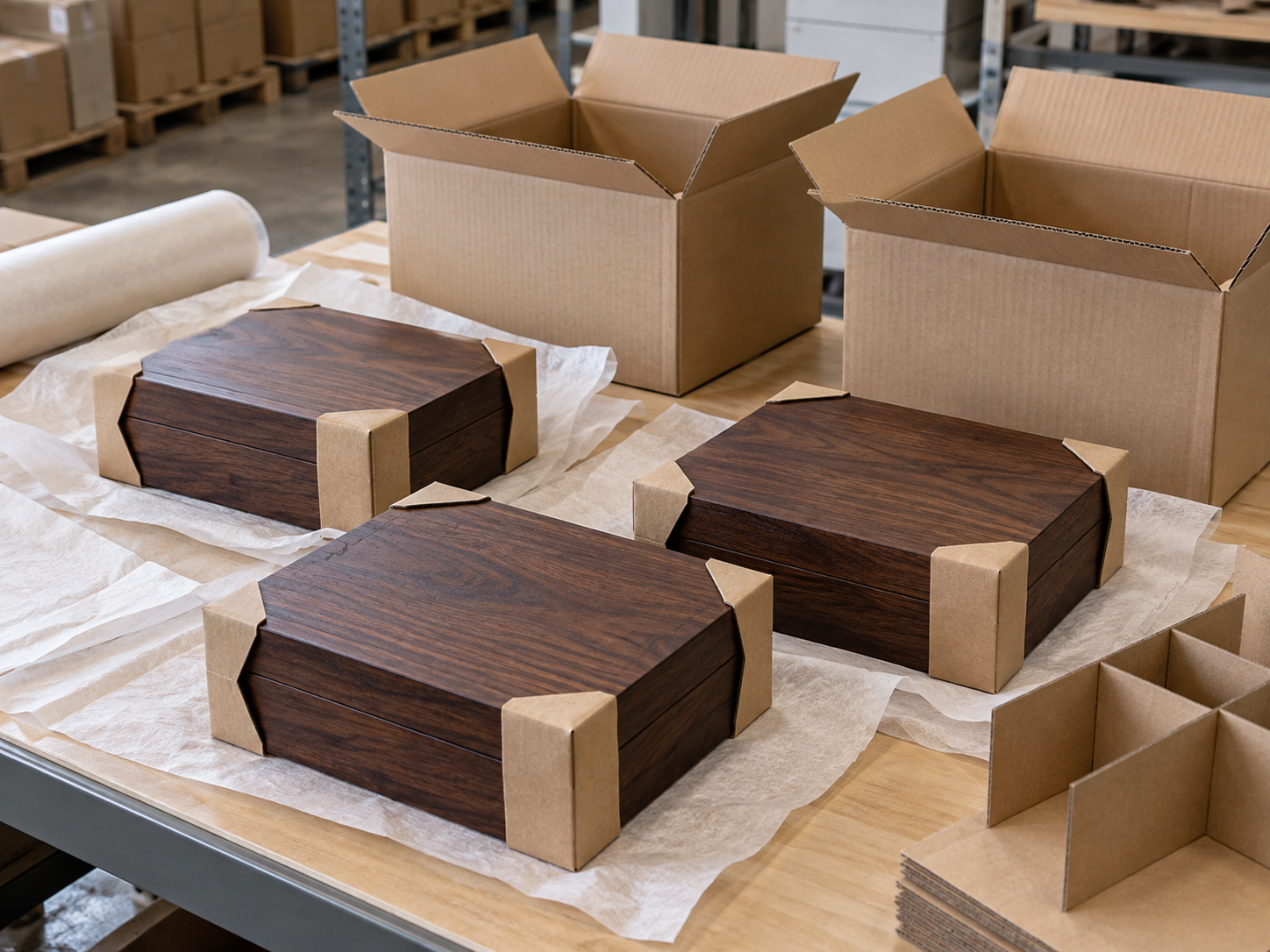
Check the completed unit package and a filled outer carton, not just a flat carton drawing. The wooden product packaging guide for importers sets out the key questions for export protection without treating a gift box as self-protecting.
Buyer checklist for a wooden gift box supplier
- Provide the actual contents or complete controlled dimensions.
- Confirm usable interior dimensions after the insert and accessories are included.
- State the opening experience and any required lid, hinge or closure features.
- Approve wood, finish, visible grain character and interior lining together.
- Review the logo on the real material and finished surface.
- Use a physical sample to test fit, opening, removal and component pairing.
- Document the accepted sample and production details before bulk release.
- Test the protective pack-out with the completed box and its contents.
FAQ
How do I choose a wooden gift box supplier?
Choose a supplier that can review the actual contents, make an approval sample, define the box and insert construction, and compare bulk output to a controlled record covering fit, finish, branding and packaging.
What should I send for a custom wooden gift box quotation?
Send a reference image or sketch, outer and internal requirements, product dimensions or a physical item, intended material and finish, insert layout, opening type, logo files, packaging expectation and target market information that affects the project.
How do I check whether a gift-box insert will fit?
Test the intended product in the physical sample with the finished insert installed. Check its position, removal, lid clearance, movement and the fit of any accessories rather than relying on the empty box dimensions.
What quality points should be checked on wooden gift boxes?
Check dimensions, lid alignment, hinges or closure, joints, sanding, finish, lining, insert fit, logo placement, component matching and the approved protective pack-out.
How should wooden gift boxes be packed for export?
Protect finished surfaces, corners, lids and hardware from contact and movement; keep inserts and contents correctly paired; then test the individual package and filled outer carton using the finished product.
Move from a visual idea to a release-ready gift box
The best wooden gift box sourcing projects do not rely on a reference image alone. They define what goes inside, how it should be seen and held, and how the presentation survives the journey to the buyer. If you are preparing a private-label, wholesale or corporate-gift project, send Cao County Qingtan Muyu Crafts Co., Ltd your reference, product dimensions and presentation brief. We can help turn them into a practical development route.