
How to Source Custom Wooden Pet Furniture from China
A practical sourcing guide for buyers specifying custom wooden pet furniture in China, from factory verification and samples to inspection and export pack-out.

Sourcing custom wooden pet furniture from China is manageable when the buyer controls the build, approved sample, packed carton and shipment release. A catalogue photo is only a starting point. It does not tell you whether a cat house can be packed flat, whether the cushion is included, or whether the factory can repeat the finish and hardware shown in a sample.
Quick answer
Start with a brief that describes the intended pet furniture as a sellable, shippable unit. Shortlist suppliers using evidence related to that build, ask each to quote the same specification, approve a sample against a written checklist, and inspect both the finished item and its export carton before the shipment is released. Keep the final drawing, components, finish, logo artwork and packaging as one controlled decision record.
What counts as custom wooden pet furniture?
Custom wooden pet furniture includes products such as cat houses, cat trees, feeding stations, pet steps, small pet beds, litter-box cabinets and wooden pet storage. “Custom” can mean a new size, a revised structure, a different wood or board material, a new finish, a logo, a cushion specification, retail packaging, or a combination of these changes.
That distinction matters during sourcing. A supplier may be able to apply a logo to an existing item but not be set up to develop a new load-bearing structure. A buyer asking for a flat-pack cat house also needs more than a product photo: the request needs the panel construction, hardware, assembly method and carton constraints. Cao County Qingtan Muyu Crafts Co., Ltd treats those details as part of the enquiry, not as details to settle after a price is accepted.
1. Write a brief that makes supplier quotations comparable
Begin with the product’s commercial purpose. Is it a ready-to-assemble retail item, a furniture-style piece for a specialty retailer, or a private-label listing that needs branded packaging? Then describe the product in enough detail that two quotations refer to the same thing.
- Product name, intended use and the animal or use range it is designed for.
- Overall dimensions and reference images or drawings.
- Preferred material direction, such as solid wood, plywood, engineered board, woven elements or a mixed construction.
- Every included part: cushion, textile cover, scratching surface, feet, fasteners, wall fittings or accessories.
- Finish appearance, edge treatment and any color reference.
- Logo position and artwork format, plus the retail label or outer-carton marking needed.
- Whether the product must arrive assembled, partly assembled or flat packed.
A useful RFQ also says what is still undecided. For example, a buyer can ask a factory to recommend a practical construction for a flat-pack wooden cat cabinet rather than pretending a preliminary sketch is an engineering drawing. The point is to make the open decision visible. Our custom wood product RFQ checklist is a practical starting structure for this exchange.

2. Verify the supplier against the actual product build
Supplier verification should answer a narrower question than “is this company legitimate?”: can this company make and pack this particular product consistently? Ask the supplier to connect its evidence to the materials and construction in your brief. A factory visit, live video call, current workshop photos, sample history, a material discussion and a clear company identity are more useful together than a generic factory slide deck.
Look for traceability in the conversation. If a wooden pet bed includes a removable cushion, ask how its size is controlled and who confirms it fits after assembly. If the item uses concealed hardware, ask to see the proposed joint or a comparable construction. These questions reveal whether the supplier understands the product as a system.
For buyers considering Cao County Qingtan Muyu Crafts Co., Ltd, the factory information and the wooden pet supplies range provide a sensible first reference. The next step is still a product-specific enquiry and a sample plan.
3. Turn the quotation into a controlled commercial record
A price without scope is difficult to compare. Before choosing a custom wooden pet furniture manufacturer in China, ask each shortlisted supplier to state what the price includes and what remains conditional. The buyer needs a quotation that can be checked against the brief, not a single number attached to a product photo.
| Quotation item | What the buyer should clarify | Why it matters |
|---|---|---|
| Material and components | Wood or board type, visible components, hardware, cushions and accessories | Small omitted parts can change the final product and cost. |
| Finish and logo | Color reference, sheen, logo method and exact logo location | A logo is not approved merely because artwork was emailed. |
| Packaging | Retail box or plain carton, inner protection, assembly leaflet and shipping marks | The shipped product must survive handling and match the selling format. |
| Commercial conditions | Order quantity basis, sample terms, delivery assumption and shipping term | These conditions affect whether two offers are genuinely comparable. |
Keep revisions in writing. If a cushion fabric, bracket or carton layout changes after the first quotation, record the change against the SKU. This is how an OEM pet furniture project stays coherent when product, purchasing and packaging teams are all involved.
4. Know which sample you are approving
“Sample” can describe three very different things: a stock sample to judge general workmanship, a feasibility sample to test a new idea, or a pre-production sample that represents the approved bulk specification. Treating them as interchangeable is one of the easiest ways for a sourcing project to drift.
Ask the factory to identify the sample type in writing. A stock cat tree might be useful for checking sanding or assembly logic, but it cannot approve your final dimensions, material combination or logo. A feasibility sample may expose a construction problem; that is useful, but it should not be signed off as the bulk reference before the changes are incorporated.
Build a sample approval checklist around the buyer’s risks
Inspect the sample as the customer will receive it. Check the product’s stability on a level floor, alignment of panels and doors, exposed edges, hardware fit, functional movement, surface feel, finish consistency, cushion fit and the appearance of the logo. For a flat-pack item, assemble it using the supplied parts and instructions. If a component changes during sampling, update the decision record rather than relying on memory.
The right sample is not necessarily the prettiest sample. It is the one that makes the remaining decisions visible and gives the buyer a reference for production. Our guide to questions to ask before placing an order can help turn those decisions into a short written approval list.
5. Lock the sample-to-bulk handoff
Once the buyer approves a pre-production sample, gather the pieces of evidence that define it: the final drawing, component list, material and finish notes, logo artwork, packaging layout, label copy and any revised assembly instruction. This bundle is the useful reference when questions arise during bulk production.
Separate visual approval from production approval. A buyer might approve a wooden pet feeding station’s tone but still need to confirm underside hardware, carton inserts and the assembly leaflet. Release bulk production only when both are decided.
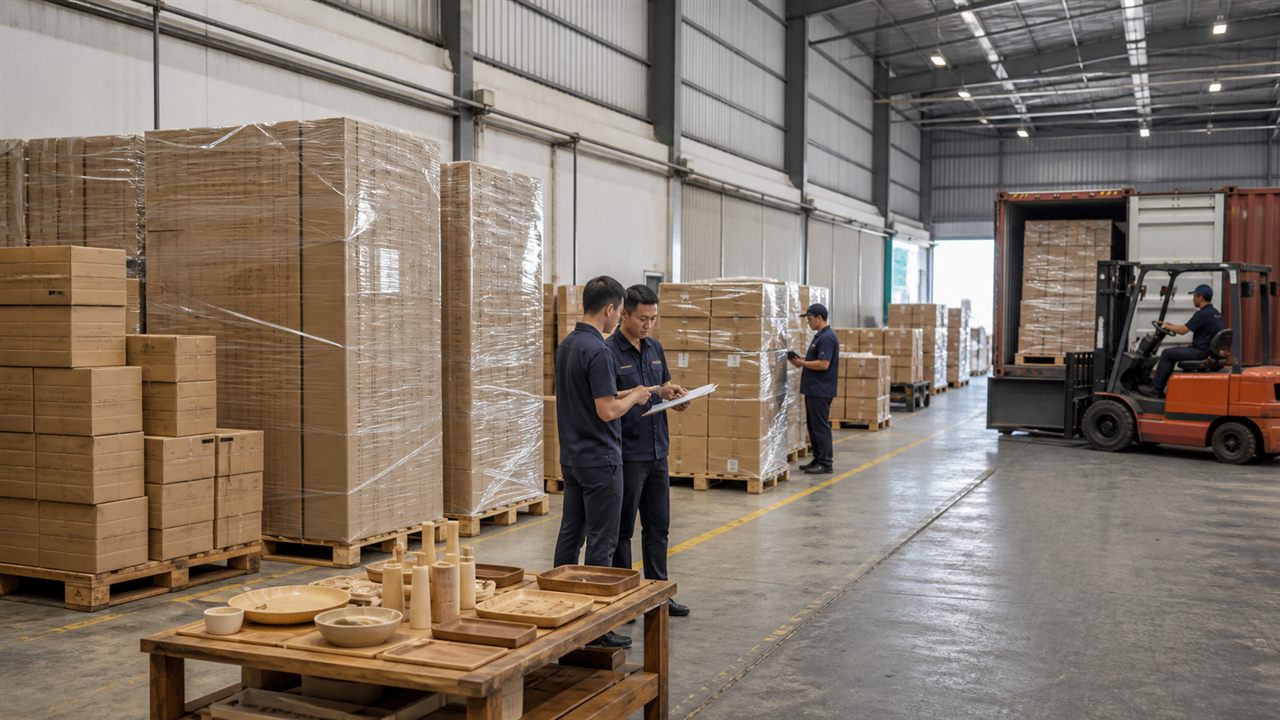
6. Inspect the item and the export pack-out
Inspection should follow the approved record. For wooden pet furniture, review the relevant dimensions, visible surfaces, joints, hardware, moving parts, logo, component completeness and assembly outcome. Check a realistic mix of units rather than only a factory-selected display piece. If color variation is commercially sensitive, compare pieces together under an agreed viewing condition and decide what is acceptable before bulk production.
Then inspect the pack-out. Confirm that the final carton contains the right components and instructions, that protective materials protect the vulnerable corners and surfaces, and that the outer marks match the buyer’s agreed information. A well-finished cat house that reaches a warehouse with crushed panels or missing hardware is not ready for sale. See our wooden product quality-control checklist and export packaging guide for a broader review framework.
7. Prepare the shipment handoff before goods are ready
Decide early who will arrange freight and what documents or carton data that party needs. The manufacturer, buyer and freight provider should work from the same confirmed product description and packing information. Ask for the required information while there is time to correct missing marks or packing details.
Do not make the final inspection a vague finish line. State who reviews the result, how a nonconformity is recorded, and what must be resolved before the goods are released. This gives a purchasing manager a practical transition from production control to logistics without assuming that every supplier provides the same freight service.
Buyer checklist: custom wooden pet furniture from China
- Define the sellable product, including all components and the intended assembly state.
- Send the same structured RFQ to each shortlisted supplier.
- Verify each supplier against the proposed construction, not only its catalogue.
- Ask what is included in the quotation and document every revision.
- Name the sample type and approve it with a written, product-specific checklist.
- Lock the drawing, components, finish, logo and packaging before bulk release.
- Inspect both the product and the export carton against the approved record.
- Confirm the shipment handoff, packing information and release decision.
FAQ
How do I source custom wooden pet furniture from China?
Use a detailed RFQ, verify suppliers against the proposed product build, approve a clearly identified sample, document the bulk specification and inspect the finished goods and packaging before release.
How do I verify a pet furniture supplier in China?
Verify the company identity and ask for evidence tied to your material, construction, assembly and packaging needs. A product-specific discussion and sample plan are stronger evidence than a generic catalogue alone.
What should a custom pet furniture RFQ include?
Include dimensions, material direction, every component, finish, logo, packaging, assembly expectation, quantity basis and the decisions that remain open.
What should buyers check on a wooden pet furniture sample?
Check stability, dimensions, component fit, edges, hardware, surfaces, finish, logo, assembly and the connection between the product and its packaging.
How should custom pet furniture be packed for export?
The approved packaging should protect the item’s vulnerable parts, hold every required component and instruction, and carry the agreed outer-carton information. Inspect the final pack-out, not only the product.
Discuss a product-specific sourcing plan
If you are developing a wooden cat house, pet bed, feeding station or other custom pet furniture range, send Cao County Qingtan Muyu Crafts Co., Ltd the intended product, material direction, assembly format and packaging goal. We can review the brief with you and identify the decisions that should be settled before sampling. Contact our team to begin with a clear product enquiry.