Custom Wooden Storage Products: OEM Guide for B2B Buyers
A practical OEM guide for B2B buyers planning custom wooden boxes, bins, organizers and wall storage with controlled specifications, QC and packaging.
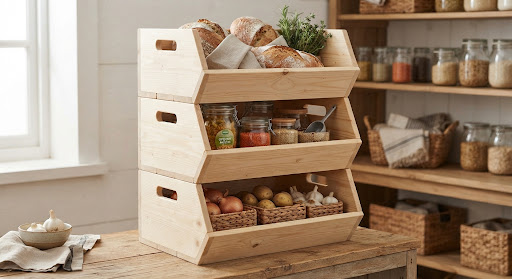
Custom wooden storage products are easier to source as an OEM program when the buyer defines the whole range before requesting a price. A box, wall organizer, stackable bin and countertop caddy may share a colour and logo, but they do not share the same load, joinery, hardware or packaging requirements. The useful starting point is therefore a product brief that separates common brand standards from the technical specification of each SKU.
Quick answer
To order custom wooden storage products, first define where each item will be used, what it must hold and how it will reach the customer. Then specify the material construction, dimensions, critical loads, exposed edges, finish, logo, labels and pack-out for every SKU. Approve physical samples and a written specification together. During production, inspect material identity, moisture condition, dimensions, assembly, colour, logo placement and packed-carton completeness against those approved references.
Cao County Qingtan Muyu Crafts Co., Ltd is the export-facing brand of Cao County Qingtan Muyu Crafts Co., Ltd, a Chinese wooden products manufacturer developing storage, organization, décor, small furniture and other custom wooden products for importers, wholesalers and private-label buyers. Buyers can review the current wooden storage and organization range before preparing a custom brief.
What counts as a custom wooden storage product?
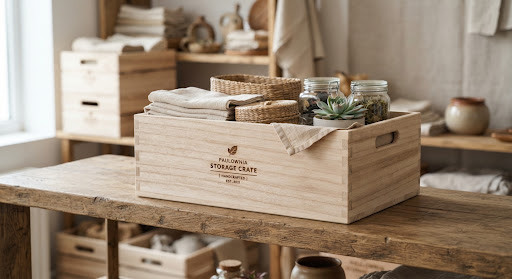
The category includes more than lidded boxes. It covers open crates, pantry bins, desktop organizers, cutlery holders, wall pegboards, shelves, key racks, compartment boxes and mixed-material products that combine wood with metal hooks, fabric liners or woven baskets. “Custom” may mean a new structure, but it can also mean changing an existing design through dimensions, material, stain, paint, logo, label or packaging.
That distinction matters to quotation. A colour and logo change uses a different development route from a new load-bearing wall organizer. Ask which parts are existing, which need new drawings or fixtures, and which processes are subcontracted.
Which B2B buyers are a good fit?
OEM wooden storage programs suit homeware importers, organization brands, kitchen and bath distributors, retail chains, promotional-product buyers, Amazon sellers and e-commerce brands building coordinated collections. They are especially useful when several SKUs need one recognizable material and colour language.
Do not force every item into identical construction. A decorative bin may use a different panel solution from a wall shelf, while a flat-pack organizer needs repeatable holes, complete hardware and clear instructions. Define brand consistency through measurable appearance standards while retaining product-specific engineering.
Choose materials by structure and use
| Material route | Useful characteristics | Questions for the buyer to settle |
|---|---|---|
| Paulownia or lightweight solid wood | Low weight and visible natural grain for boxes and bins | Required wall thickness, dent tolerance, knot and colour range |
| Pine or poplar | Versatile machining and natural or painted finishes | Grade, permitted repairs, grain variation and finish reference |
| Plywood | Panel stability and efficient repeat production | Face veneer, core quality, exposed edges and adhesive requirements |
| MDF | Smooth painted faces and routed profiles | Moisture exposure, edge sealing, weight and destination requirements |
| Bamboo panel | Distinct linear appearance and useful panel construction | Panel build, colour range, edge appearance and coating system |
The material name alone is not a complete specification. State whether the quoted construction is solid wood, finger-jointed stock, plywood, MDF, bamboo panel or a combination. Define visible faces, thicknesses and permitted substitutions. For a fuller comparison, use the wood materials guide for custom products.
Wood movement also needs a product-specific plan. Instead of copying one moisture percentage into every RFQ, ask how the factory conditions and stores the selected material, where readings are taken, how out-of-range stock is isolated, and how the destination climate affects the construction. Wide solid panels, cross-grain joints and one-sided coatings deserve particular attention.
Build one collection without losing SKU control
A multi-SKU storage range needs two linked documents. The first is a brand standard covering shared stain or paint references, logo artwork, label format, packaging graphics and acceptable natural variation. The second is a technical sheet for each SKU covering dimensions, material construction, joint method, hardware, load or function, assembly and pack-out.
This separation prevents a common sourcing mistake: approving a colour on one sample and assuming it will look identical on every wood species and panel. A stain can appear darker across end grain, plywood veneer and solid components. Ask for the approved colour on each production-representative substrate. If several factories or material lots are involved, keep dated physical references and controlled photos.
Typical OEM example—not a customer case
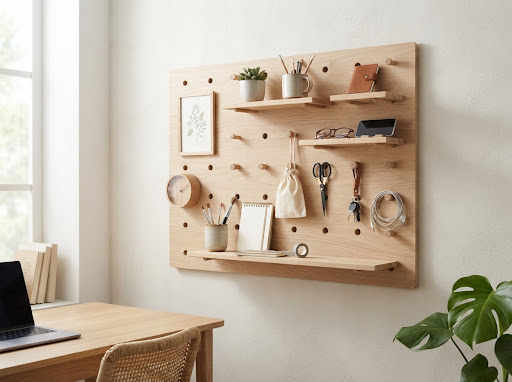
A home-organization brand may plan a three-SKU launch: a stackable pantry bin, a desktop organizer and a wall pegboard. The range can share a light natural finish, one logo size family and coordinated cartons. It should not share one generic inspection line. The pantry bin needs stacking and handle checks; the desktop organizer needs divider fit and internal dimensions; the pegboard needs mounting hardware, hole spacing and load-related checks. This representative scenario illustrates specification structure only and is not a record of an actual order.
Manufacturing steps that affect the result
A relevant production route may include incoming-material inspection, cutting, CNC routing or drilling, edge profiling, sanding, trial assembly, gluing or fastening, surface finishing, logo application, final inspection and packing. Not every storage product uses every process. Buyers should ask the supplier to map the route for the proposed design and identify the stages at which a defect becomes difficult to correct.
Dimension control should focus on function. Internal openings affect what the organizer can hold. Hole position affects assembly and wall mounting. Base flatness affects wobble. Divider width affects fit. Handle cut-outs need smooth edges and enough surrounding material. A drawing should mark these critical points rather than assigning unnecessarily tight tolerances to every decorative dimension.
OEM and private-label decisions
Customization can include size, compartment layout, handle profile, wall-mount system, wood or panel, colour, clear coating, distressed effect, laser engraving, printing, metal badge, woven label, barcode, instruction sheet and retail or mail-order packaging. Confirm these decisions before the final sample so the approved unit represents the intended bulk order.
Logo approval should record the artwork revision, process, size, position, orientation and acceptable tone or colour range. Natural grain can change the appearance of laser engraving. Printed marks may behave differently over porous wood, sealed surfaces and paint. The supplier should test the proposed logo on the actual production material and finish, not on an unrelated scrap.
Samples and MOQ
A sample confirms the agreed design; it does not automatically prove that a full production run will remain consistent. Keep the approved sample, drawing, colour reference, artwork and packaging file connected through one revision record. State that substitutions or process changes require written approval.
Qingtan Muyu publishes a typical MOQ reference of 50–100 pieces per design and typical sampling of 5–10 days after specifications and artwork are aligned. These are planning references, not commitments for every project. Final MOQ depends on material purchasing, machining setup, finish batches, packaging print quantities and the number of SKU, size and colour combinations. Ask what actually drives the minimum rather than negotiating one headline number.
Quality control for bulk storage products
Start inspection with identity: correct SKU, revision, material and finish. Then check the characteristics that affect use and customer complaints:
- outside and internal dimensions at the agreed measurement points;
- flatness, squareness, stability and stacking engagement;
- joint closure, glue residue, cracks, splits and loose components;
- smooth hand-contact edges, recesses and handle cut-outs;
- hardware type, quantity, finish, position and tightening;
- surface sanding, colour range, coating coverage, cure and odour;
- logo method, artwork revision, position and legibility;
- barcode, label, instructions, accessories and carton contents.
Separate natural wood variation from workmanship defects before inspection. Grain and tone will vary; an unapproved material substitution, open joint, rough handle or missing mounting part is a different issue. The wooden product quality-control checklist provides a broader inspection framework.
Packaging and shipping
Storage products often waste carton volume if handles, tapered sides or fixed dividers prevent nesting. Packaging should be discussed while the product is still being engineered. Compare assembled, partially assembled and flat-pack options, but do not reduce volume by creating an assembly experience the customer cannot complete reliably.
Protect finished faces from abrasion, restrain hardware, cover protruding hooks and prevent units from moving inside the carton. For e-commerce, the individual parcel route may need more protection than palletized wholesale distribution. Confirm carton dimensions, gross weight, quantity, labels and any agreed transit test on the packed sample. See the wooden product packaging guide for a fuller pack-out review.
Buyer checklist
- Define the intended room, contents, user and sales channel for every SKU.
- Send dimensioned drawings and mark internal, fit and mounting dimensions.
- State exact material construction and permitted natural variation.
- Separate shared brand standards from each SKU’s technical sheet.
- Confirm finish on every production-representative substrate.
- Test stacking, stability, handles, dividers, hardware and assembly.
- Approve logo, labels, instructions and packaging as controlled files.
- Keep a dated sample and written revision as the bulk-production reference.
- Define inspection points and what happens after a failed check.
- Review the packed unit and master carton before shipment.
FAQ
How do I source custom wooden storage products from China?
Prepare one collection brief plus a technical sheet for each SKU. Compare suppliers using the same material, construction, finish, logo, packaging and quantity assumptions. Approve physical samples and written specifications before bulk production.
Can several wooden storage products share one OEM design language?
Yes. A collection can share colour, logo, labels and packaging graphics, while each item retains its own structural, dimensional, hardware and inspection requirements.
What should importers check before approving a storage-product sample?
Check material construction, critical dimensions, internal capacity, joint quality, stability, stacking or mounting function, hand-contact edges, finish, logo, accessories and the complete pack-out.
How should buyers control sample-to-bulk consistency?
Reference the approved sample, drawing, material schedule, colour standard, artwork and packaging revision in the purchase order. Require written approval for substitutions and inspect the first production pieces and packed goods against those references.
Why does MOQ change across storage SKUs?
MOQ may be driven by material purchases, machining setup, coating batches, printed packaging and the number of variants. Ask the factory to explain the limiting input for each SKU and whether shared materials or stock packaging can simplify the launch.
Prepare the project for quotation
Cao County Qingtan Muyu Crafts Co., Ltd can review drawings, reference products and written briefs for wooden boxes, bins, wall storage and other custom organization products. Start with the custom wooden product RFQ checklist, then send the intended use, dimensions, material, finish, logo, packaging, quantity and destination through the contact page. A structured brief produces a more useful manufacturing discussion than a photo accompanied only by a target price.