
Disposable Wooden Plates Wholesale: A Sourcing Guide for Importers
A practical wholesale guide to disposable wooden plates: define use, approve samples, inspect edges, control pack counts and protect export cartons.
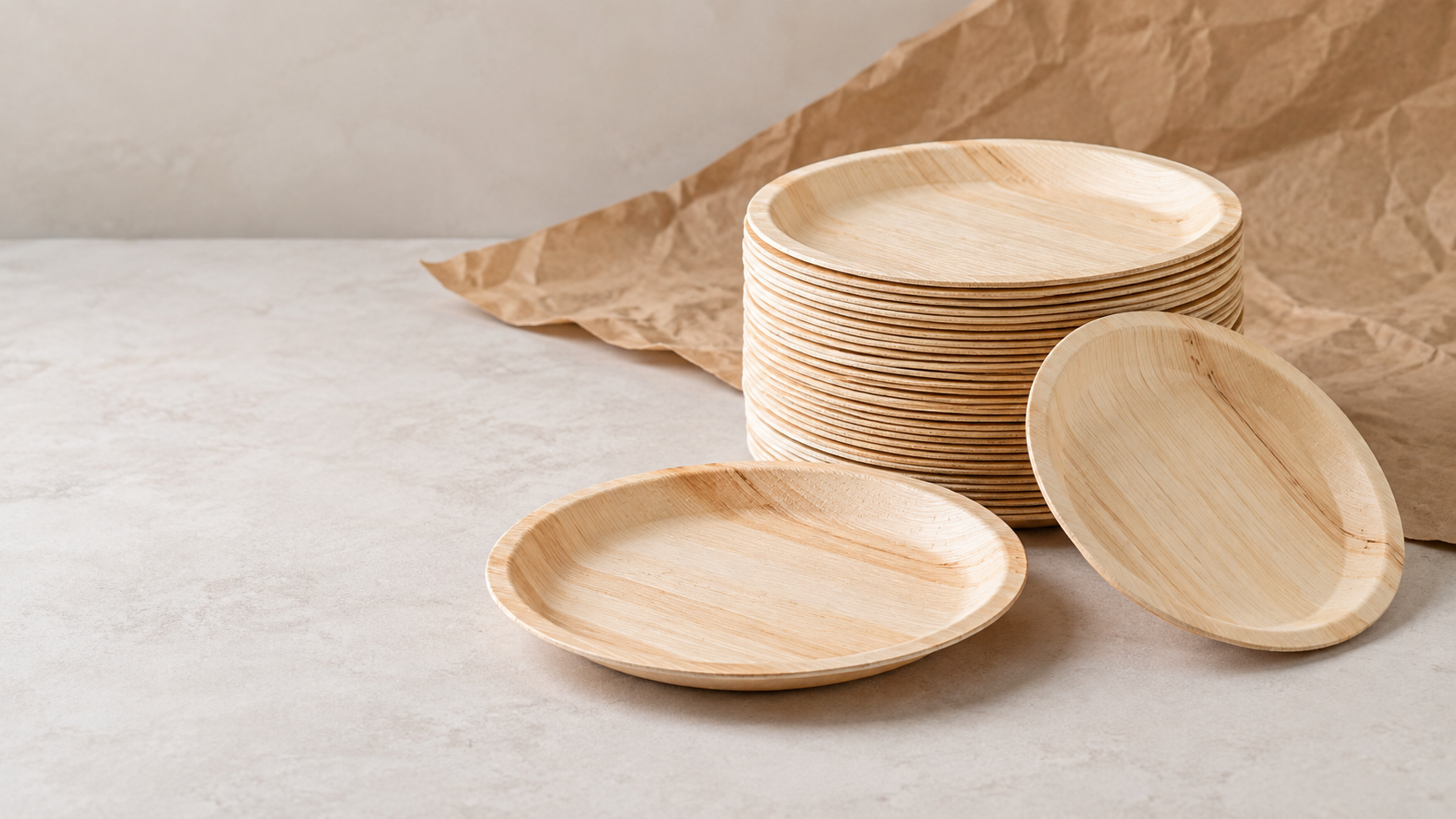
Disposable wooden plates are easy to underestimate. They look simple, but an importer is buying more than a plate shape. The order has to work for a defined serving situation, arrive with clean edges and consistent pack counts, and survive the route from factory to warehouse without creating avoidable complaints. The reliable way to source them is to approve the product around its actual use rather than around a catalogue photograph.
This guide is for wholesalers, food-service distributors, retail buyers and private-label teams buying disposable wooden plates in volume. It covers the questions to settle before bulk release: material, intended use, visible finish and finished packing.
Quick answer: how should an importer source disposable wooden plates?
Start with the intended service, not a generic request for “eco plates.” Tell the supplier the plate format, the food or serving situation you have in mind, whether the use is hot, cold, dry, oily or moist, and whether the product will be sold in a retail pack or used by catering. Then approve a physical sample, including its inner and outer pack. Check the actual plate surface and rim, the stack, the count per pack, and the protected carton before authorising production.
Do not treat “wooden” as a complete material specification. Disposable tableware can use different natural substrates and forming methods. Ask the supplier to state the exact substrate, relevant processing, plate dimensions and intended use. Define destination-market requirements before purchasing and obtain evidence appropriate to the specific product. Catalogue wording is not a compliance review.
Define the plate before comparing quotes
Two round plates with a similar diameter may not perform or pack the same way. One may have a deeper well or firmer rim; another may only suit light, dry servings. A quotation saying only “disposable wooden plate” leaves too much unanswered.
Send a short specification sheet with the request for quotation. It should identify:
- Format: round, oval, square, compartmented or another defined shape.
- Nominal dimensions: length and width or diameter, plus depth where it matters for the serving.
- Use case: for example, sampling counter, buffet, takeaway, event catering or retail sale. Describe the intended dish rather than assuming a plate is suitable for all foods.
- Material declaration: the exact substrate and any relevant processing or finish, stated by the supplier.
- Appearance standard: acceptable natural grain, colour and texture variation, and what defects are not acceptable.
- Pack structure: units per sleeve or retail pack, packs per master carton, dividers or protective sheets, and required carton marks.
That document makes supplier replies comparable. It also gives the inspection team something concrete to follow later. For a broader RFQ framework, see our custom wooden product RFQ checklist.
Match the plate to the serving situation
“Food service” is not one test. A dry canapé, warm pastry, sauced dish and oily snack each place different demands on the product. The supplier cannot judge the buyer’s menu from a product name alone.
Describe normal use clearly: dry or moist food, hot or cold service, how long food remains on the plate, and whether guests carry it at an event. A representative dish or portion is more useful than asking whether a plate is “strong.”
Use the physical sample in that situation. Look for loss of shape, a rim that feels uncomfortable, surface fibres, handling difficulty or an appearance that does not suit the customer-facing use. Record what you tested and the result you accepted. This is a sample-use decision, not a promise that one plate will suit every food and service condition.
Inspect edges, surface and natural variation
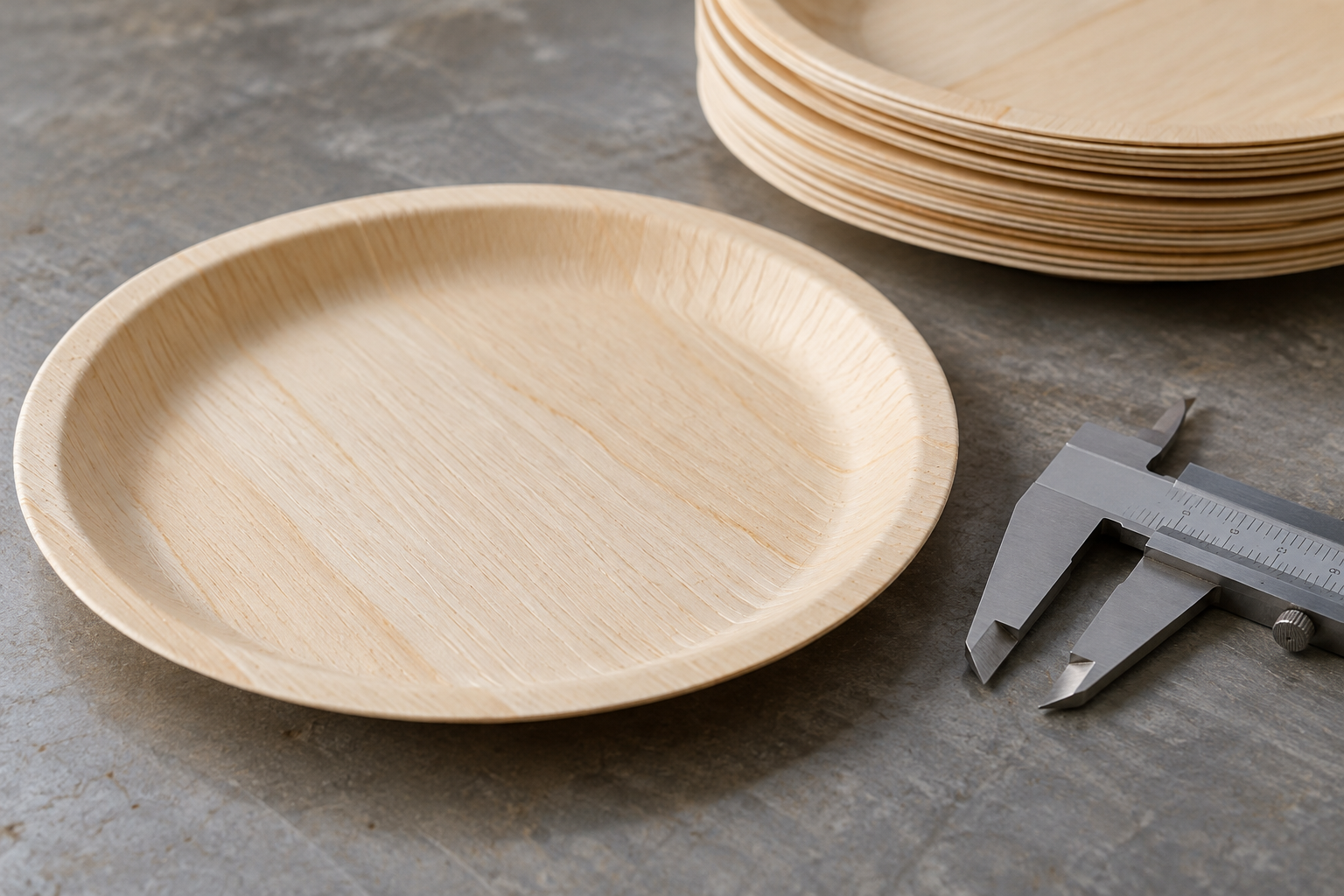
With a disposable plate, the user touches the rim and face directly. A small rough edge becomes a large customer-service issue when repeated across thousands of units. Agree a standard for splinters, rough areas, incomplete forming, broken rims, stains, embedded debris and poor nesting.
Natural-material products will not look identical. Grain direction, shade and small texture changes can be normal. Distinguish expected variation from damage or poor finishing. Approve reference samples showing what you accept and state what you reject. If shade matters to your range, say so at quotation stage.
Inspect more than one part of a stack. A good top piece says little about the pieces below it. Pull plates from the middle and lower pack; check face, underside, rim and nesting. Use the same checks in a written wooden-product quality-control checklist.
Use a sample approval that production can follow
A pre-production sample is most useful when it becomes an approval record. Attach the agreed product photo, dimensions, material statement, appearance, pack count and artwork version to the order file. If you need a private-label sleeve, sticker, carton or barcode, approve that finished pack too. A bare plate does not confirm the retail pack will fit or print correctly.
A practical approval sequence is:
- Confirm the written plate and pack specification.
- Review a product sample for form, rim, surface and intended use.
- Review the final artwork separately, including its placement and legibility.
- Approve a packed sample or pack-out confirmation before production.
- Use the approved sample and specification for the production and pre-shipment check.
This avoids treating an early supplier sample as if it already represents the final bulk pack. If the design, material source, plate profile or packing method changes, decide whether another approval is needed.
Control the pack count and carton, not only the plate
Disposable wooden plates are usually shipped as stacks. That makes the pack count and protection between stacks part of the product. A retailer needs the right number of usable plates; a distributor needs cartons that can be received and moved without stacks breaking apart.
Specify plates per inner sleeve, inner packs per master carton and total per carton. Ask how stacks stay separated and whether face or rim can rub in transit. Confirm carton size, closure and agreed marks. Verify outer-edge protection in a tight carton and movement control in a loose one.
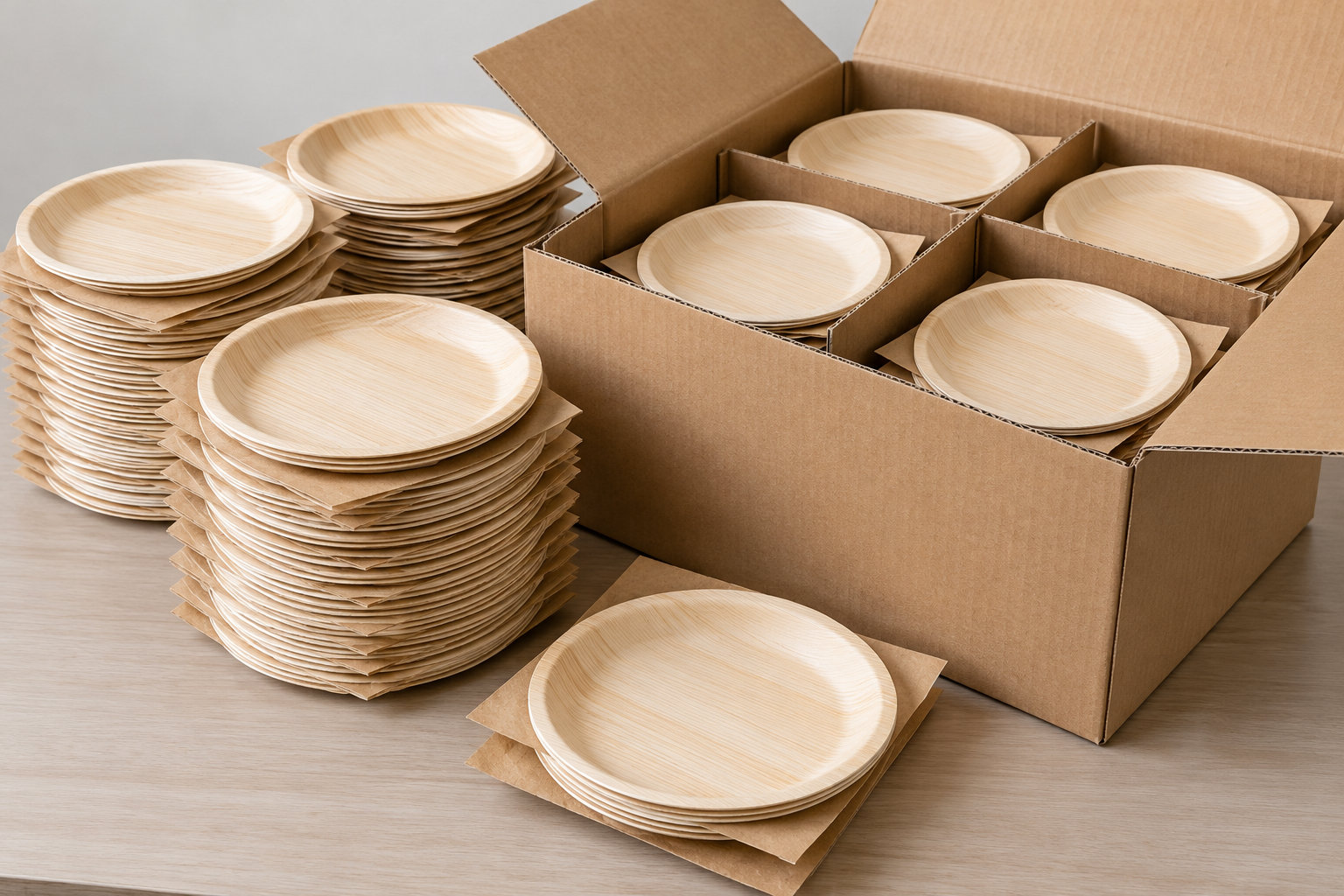
The wooden product packaging guide for importers offers a useful starting point for discussing inner protection, carton fit and shipment handling. Apply the principles to the actual plate stack and shipping route rather than copying a carton specification from an unrelated product.
What to check before a wholesale shipment leaves
Before final payment or dispatch, compare finished goods with the approved sample and written specification. Check random units across cartons, not just a display stack. The goal is to catch a mismatch while it can still be sorted or repacked.
| Check area | What to compare | Why it matters |
|---|---|---|
| Plate format | Shape, nominal size, depth and rim profile against the approval | Confirms the product fits the intended serving and pack. |
| Surface and edge | Roughness, visible defects, loose fibres, cracks, stains and damaged rims | These are direct user-contact and retail-appearance issues. |
| Stacking | How plates nest, separate and release from the stack | Poor stacking can slow service and damage edges. |
| Count | Plates per inner pack and packs per carton | Protects retailer reconciliation and wholesale inventory accuracy. |
| Pack-out | Protection sheets, dividers, carton closure and agreed marks | Reduces avoidable movement and confusion at receiving. |
For a first order, receive production photographs and pack-out confirmation before shipment, then compare final goods to the approved record. That is better control than relying on a message that the goods are ready.
Questions to ask a disposable wooden plate supplier
- What is the exact substrate and how is this particular plate formed?
- Which dimensions, shape and rim profile are included in the quotation?
- What use conditions has the supplier designed the item for, and what should be verified by the buyer’s sample test?
- What appearance variation is normal for this material, and what defects are screened out?
- Can the supplier provide a sample in the proposed retail or inner-pack format?
- How are plates counted, separated and protected in the master carton?
- What documentation can the supplier provide for the destination market requirements identified by the buyer?
- What is the process if the buyer needs custom sleeves, labels, carton marks or a private-label pack?
FAQ
How do I source disposable wooden plates for import?
Define the plate format, substrate declaration, intended serving situation, appearance standard and pack structure first. Then approve a physical plate sample and a representative packed sample before releasing bulk production.
What should I inspect on a disposable wooden plate sample?
Inspect the plate profile, rim, surface, underside, stack behaviour and visible natural variation. Use it with the food and service conditions you intend to sell it for, and record the version you approve.
Can one disposable wooden plate be used for every food?
No. The suitability depends on the product construction and the intended serving conditions. Describe your actual use to the supplier and test a representative sample instead of making a general assumption from a product photograph.
How should disposable wooden plates be packed for wholesale?
Confirm the plates per inner pack, inner packs per carton, stack separators, dividers where needed, carton closure and agreed carton marks. Inspect a finished pack-out, not only loose plates.
What should be checked before shipment?
Compare random plates and cartons with the approved sample and specification: format, rim and surface condition, stack behaviour, pack counts, protection and carton marks. Check across cartons rather than only at the top of one stack.
Bring the specification and sample together
A well-sourced disposable wooden plate is not defined by a broad material claim. It is defined by its agreed construction, intended service, acceptable appearance, pack count and finished carton. That gives an importer a practical basis for approval and receiving checks.
Cao County Qingtan Muyu Crafts Co., Ltd, Cao County Qingtan Muyu Crafts Co., Ltd, works with B2B buyers on custom wooden products and export-ready product specifications. If you are assessing a disposable wooden plate programme, send your intended plate format, service use and pack requirement; a clear brief makes it much easier to assess what needs sampling and confirming before bulk release.