Wooden Pet Products Manufacturer: An OEM Buyer Checklist
What pet brands and retail buyers should specify, sample and inspect before ordering custom wooden pet furniture in bulk.
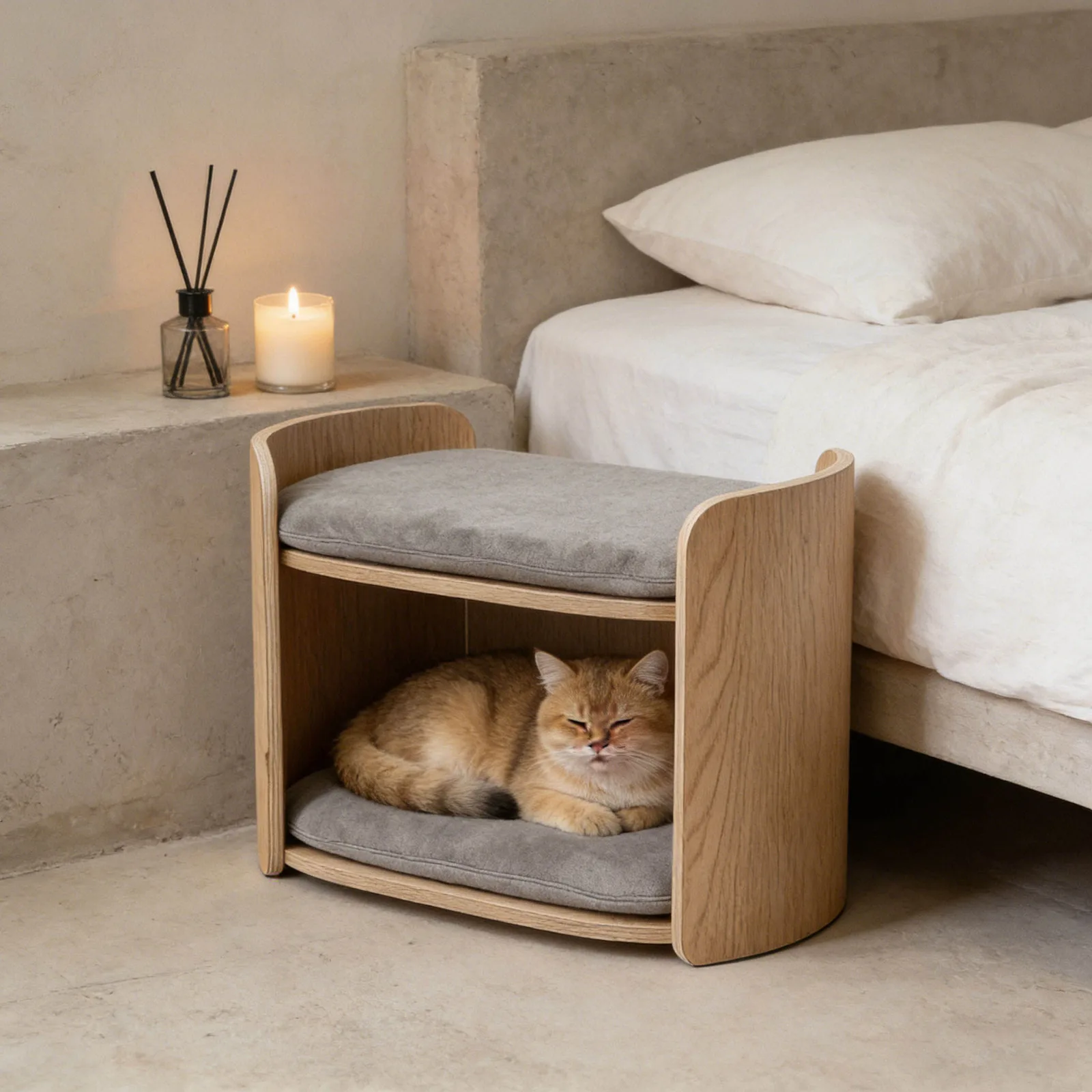
A capable wooden pet products manufacturer should be able to explain how a design carries load, stays stable, can be cleaned, and ships without panel or hardware damage. Attractive lifestyle photography does not answer those questions. For an OEM order, the buyer needs a controlled specification covering structure, wood or panel construction, cushion materials, hardware, finish, branding, assembly and packaging.
Quick answer
Shortlist manufacturers that already work with comparable wooden furniture or pet products, then test a physical sample for stability, edges, joints, removable textiles, cleaning access and packing. Confirm the intended pet size and use environment. Approve the logo, instructions and carton as separate components. Before shipment, inspect the bulk order against the approved sample and written specification rather than catalog photos.
Qingtan Muyu Woodcraft, operated by Cao County Qingtanmu Craft Co., Ltd., manufactures wooden pet furniture alongside storage, décor and small furniture. Its range includes beds, cat houses, elevated designs and products that combine wooden structures with woven or textile components.
Define the product from the animal’s point of view
“Wooden cat bed” can mean a low platform, enclosed house, side-table combination, hanging bed or multi-level sofa. Before asking for a quote, define the pet’s expected weight range, sleeping area, entry height, intended indoor or covered use, and whether the product must be assembled by the consumer.
The buyer should also decide how the cushion is removed, whether the cover is washable, how hair and debris are cleaned from corners, and whether replacement cushions will be offered. These details affect dimensions, fasteners, labels and after-sales planning.
Who buys OEM wooden pet furniture?
Typical buyers include pet brands expanding into home-style furniture, importers building a coordinated assortment, furniture retailers adding pet products, online sellers needing private-label packaging, and hospitality or specialty distributors. The best OEM projects connect product decisions to a defined channel.
For example, a retail-store item may prioritize presentation and fast assembly. A parcel-delivery product needs stronger individual packaging and clear instructions. A boutique pet brand may accept more visible grain variation but demand a tightly controlled stain and branded cushion label. An importer should tell the factory which channel matters before the sample is built.
Material choices: structure, surface and textiles
Wooden pet furniture is usually a system of materials rather than one species. A product may combine solid wood, bent or laminated plywood, flat panels, hardware, foam, fabric and non-slip feet. Ask for a component-level bill of materials.
| Component | Buyer decision | Practical review point |
|---|---|---|
| Side panels and frame | Solid wood, plywood or engineered panel | Load, edge finish, exposed layers and dimensional stability |
| Platforms | Thickness and support method | Deflection, joint location and fastening |
| Cushion | Foam or fibre specification | Recovery, odour, removable cover and replacement consistency |
| Fabric | Colour, texture and composition | Abrasion, snagging, cleanability and dye transfer |
| Hardware | Screw, insert, bracket or hidden fitting | Corrosion, loosening, assembly sequence and spare parts |
| Finish | Clear coating, stain or paint | Cure, odour, scratch resistance and intended-use requirements |
Avoid unsupported claims such as “pet safe” or “non-toxic.” Define the relevant material, coating, adhesive and destination requirements, then identify the appropriate documentation or test method before production. Requirements vary by market and intended use.
Engineering and manufacturing checkpoints
Production can involve panel cutting, CNC machining, drilling, edge shaping, sanding, assembly trials, finishing, textile preparation, logo application, inspection and packing. Curved panels and multi-level products need particular attention because small dimensional shifts can affect fit and stability.
Ask the manufacturer to identify load paths and fastener locations. Confirm which joints are permanently bonded and which are assembled by the customer. If threaded inserts are used, test repeated assembly rather than only the first build. If feet or pads are included, verify adhesion and placement on the finished surface.
Edges accessible to an animal or consumer should be smooth and consistent. Inspect holes, cut-outs and the underside, not just the hero-facing surfaces. A photograph of the assembled product should be supported by close views of joints, hardware and panel edges.
OEM and ODM customization
Custom options may include overall size, platform spacing, entry shape, panel profile, stain or paint, cushion fabric, logo method, labels, instructions and packaging. ODM support can help adapt an existing structure, while a full OEM design follows buyer drawings and requirements.
Separate cosmetic changes from structural changes. A new logo or fabric colour usually has a different risk and MOQ profile from a new curved panel, load requirement or flat-pack joint. Ask the supplier to state which parts use existing production methods and which require engineering validation.
The OEM and factory information on woodhomeware.com shows the broader process from requirement review through sampling, production and export packing.
Approve branding on real materials
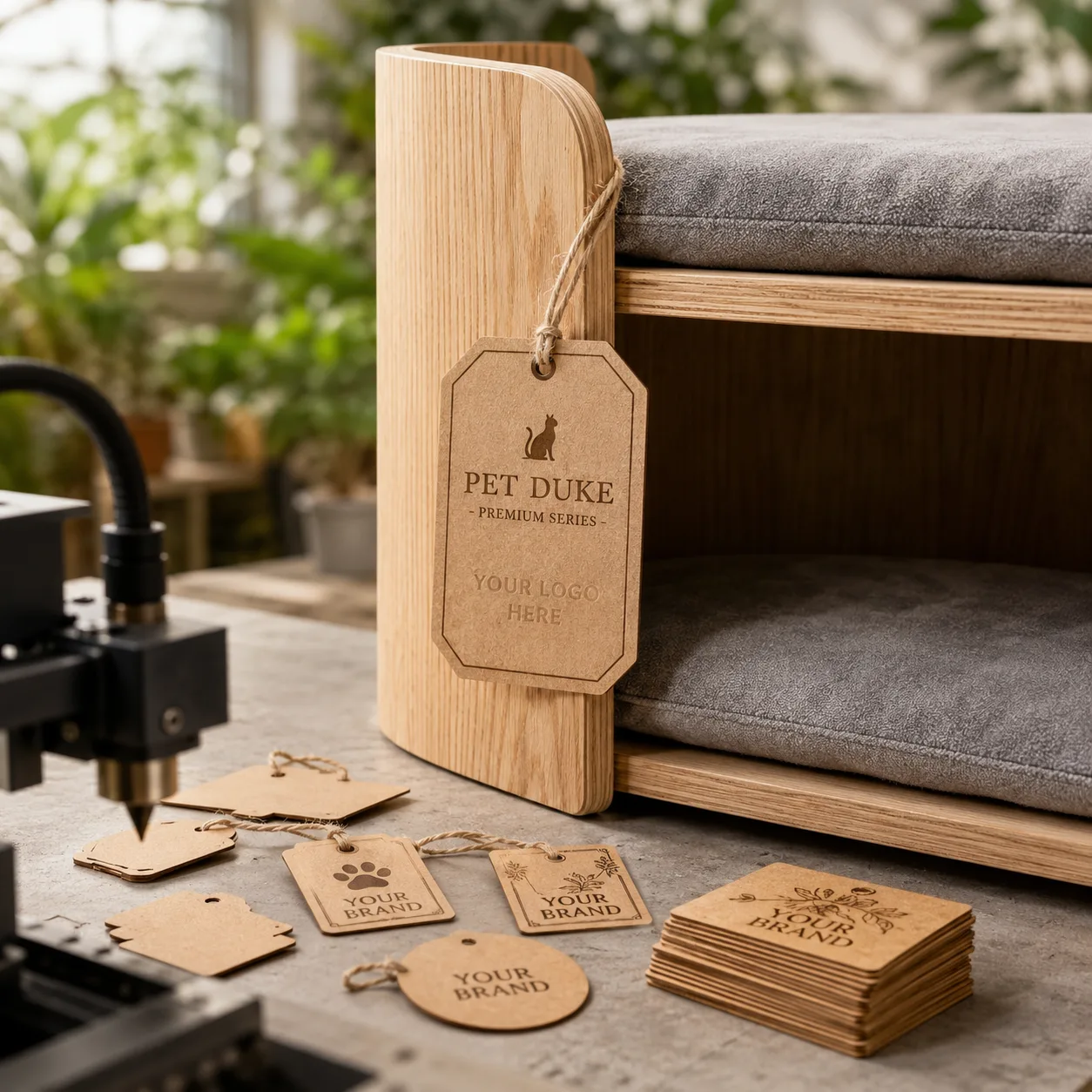
Logo approval should never rely only on a digital mock-up. Laser engraving, printing, metal badges, woven labels and hangtags behave differently. Request a test on the actual wood, finish and textile. Confirm artwork version, size, location, contrast, orientation and acceptable natural variation.
For a removable cushion, decide whether branding belongs on the wood, sewn label, care label, hangtag or packaging. Each location has functional consequences. A label should not create an uncomfortable or easily chewed feature. Instructions should identify intended use, assembly steps, care and any warnings appropriate to the destination market; the buyer should approve final legal wording.
Sampling and MOQ
The first sample should prove dimensions, appearance, assembly and function. A second sample may be justified after structural, fabric or packaging changes. Qingtan Muyu publishes a typical sampling range of 5–10 days and a typical MOQ of 50–100 pieces per design, but actual requirements depend on structure, material, textiles, finish, logo and packaging.
Do not compress every decision into the final day of sampling. Use staged approval:
- drawing and material confirmation;
- unfinished structure or assembly check when needed;
- finish and textile approval;
- logo and label approval;
- fully packed sample approval.
This reduces the risk of discovering a structural issue after branded packaging has already been produced.
Test the sample as a system
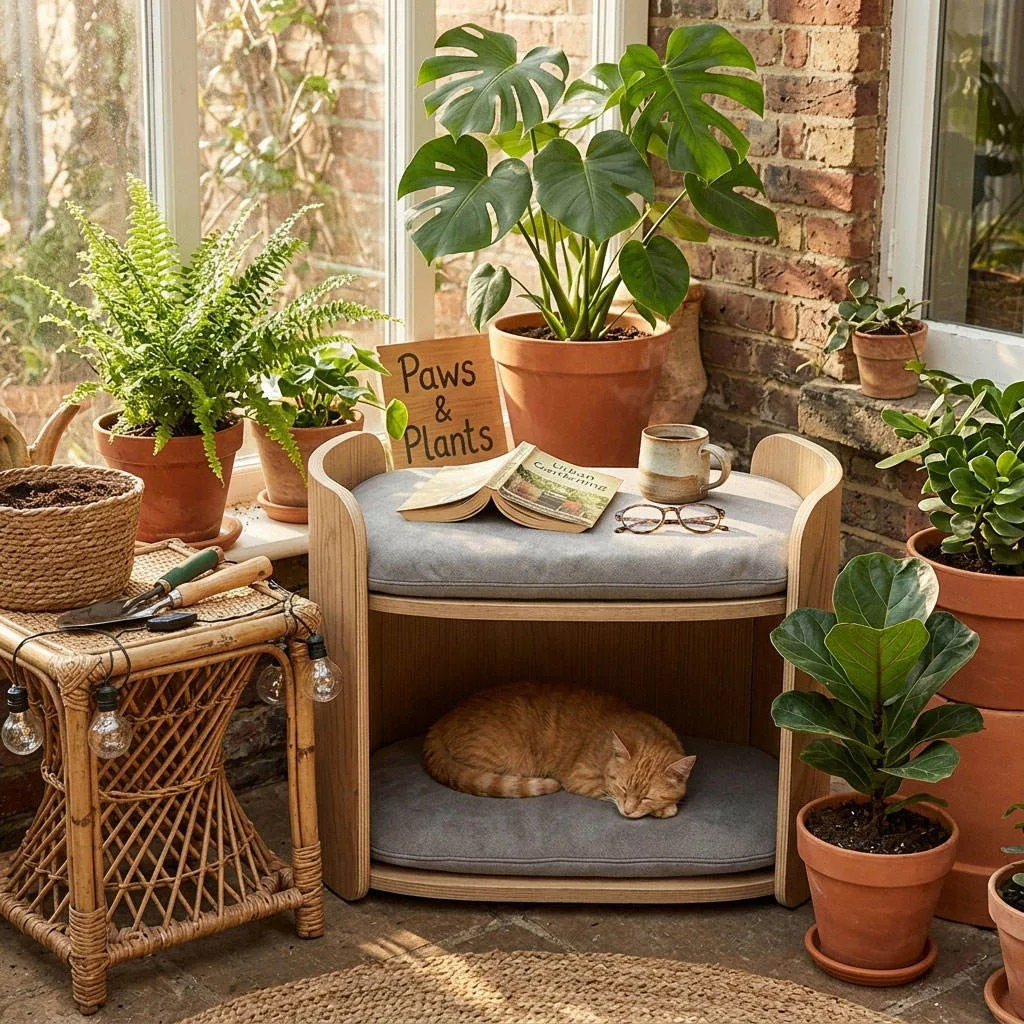
Visual approval is only one part of sample review. Assemble the product using the customer instructions and included tools. Record assembly time and unclear steps. Place it on several flat floor surfaces and check rocking, sliding and contact points. Apply the agreed representative load safely and look for deflection, joint movement or noise. Remove and refit cushions. Inspect cleaning access and any gaps where claws or small parts might catch.
The test plan must suit the exact product. A low bed, wall-mounted shelf and tall cat tower do not share the same risk profile. For load-bearing or safety-critical designs, agree qualified testing and acceptance criteria rather than inventing an informal universal limit.
Bulk quality control
Convert the approved sample into checkpoints that can be measured during production and final inspection:
- correct panel material, thickness and grain direction;
- overall and critical dimensions;
- base flatness and assembled stability;
- joint integrity and fastener torque or engagement;
- rounded and sanded exposed edges;
- finish colour, coverage, cure and odour;
- fabric colour, seams, zippers and cushion fit;
- logo, labels, barcode and instruction version;
- complete hardware set and spare-part policy;
- packaging orientation and carton marks.
One common buyer fear is a good sample followed by a weaker bulk order. The practical response is document control: name the approved sample, lock the specification revision, retain reference materials, inspect early production when risk is high, and perform a pre-shipment inspection before the remaining payment or release agreed in the order terms.
Packaging wooden pet furniture
Furniture creates a dimensional-weight and damage trade-off. Fully assembled products simplify customer use but occupy more carton volume. Flat-pack designs reduce volume but add hardware, instructions, assembly risk and possible missing-part claims.
The packed sample should protect curved panel ends, exposed corners, finished faces and hardware. Prevent loose components from rubbing against coated wood. Bag and identify hardware, keep it in a fixed carton location, and verify that the instruction sheet matches the production revision. If a cushion is compressed, confirm that recovery and odour remain acceptable after the expected packing period.
For parcel channels, evaluate the complete packed unit under a defined test method appropriate to its weight and distribution route. The export packaging guide can help buyers structure the discussion.
Buyer checklist
- State pet type, expected size range and intended use.
- Provide dimensioned drawings and critical tolerances.
- Request a component-level material list.
- Define load, stability and assembly acceptance criteria.
- Approve finish and fabric references under consistent lighting.
- Test cleaning access and removable components.
- Approve logo and labels on production-equivalent materials.
- Build and test the fully packed sample.
- Lock the specification revision before bulk production.
- Agree inspection scope, reporting and corrective-action rules.
FAQ
How do I verify a wooden pet products manufacturer in China?
Confirm the legal company identity, factory location, relevant product experience, machinery and process capability. Request current evidence for comparable structures, review a sample, and use a visit, video walkthrough or independent audit where the risk justifies it. A marketplace badge alone is not production proof.
Which material is best for wooden cat furniture?
The answer depends on load, form, finish, weight and target price. Solid wood provides a natural appearance; plywood can support stable panels and curved forms; engineered panels may suit painted parts. The complete construction and edge treatment matter more than a species name alone.
Should I order a sample before the bulk order?
Yes. Approve a production-equivalent sample before mass production, and make sure the approval includes packing, hardware, textiles and branding—not only the wooden frame.
How do I control sample-to-bulk consistency?
Use one approved specification revision, measurable checkpoints, retained references, early-production verification when needed and a pre-shipment inspection. Record every approved change.
Can wooden pet furniture use private-label packaging?
Yes. Options can include labels, inserts, instruction sheets, retail cartons, mail-order cartons and carton marks. The final solution should suit product protection, channel requirements and destination rules.
Discuss a production-ready brief
Buyers can review Qingtan Muyu Woodcraft’s wooden pet product concepts and a double-layer wooden cat sofa as starting references. For a custom project, send a drawing, use case, material preference, expected quantity, branding files, packaging channel and destination through the contact page. The next useful step is a feasibility review, not an unsupported promise.